What Is Leea amabilis?
Leea amabilis is a breathtaking tropical shrub from the rainforests of Borneo, Indonesia. It belongs to the family Vitaceae and was first formally described by H.J. Veitch in 1882. Furthermore, it grows naturally under the dense canopy of Borneo’s lowland jungle, where humidity is high and light is filtered.
Collectors around the world seek Leea amabilis for its extraordinary dark foliage. It is considered rare in the wild. Primarily, habitat loss from deforestation and human activity has reduced its natural population. Consequently, obtaining healthy seeds from a verified, ethical supplier is increasingly important.
Induare Agro sources these seeds directly from Indonesia. Additionally, every batch is tested for freshness and viability before shipping. This makes Leea amabilis not only a visual masterpiece but also a responsible purchase for the conscious collector.
Aesthetic Features Leea amabilis
Leea amabilis is visually unlike any other plant in its genus. Moreover, every physical feature — leaf, stem, and fruit — works together to create a stunning ornamental display. Below are the key aesthetic traits that make this species a must-have for rare plant enthusiasts.
Leaf Structure Leea amabilis
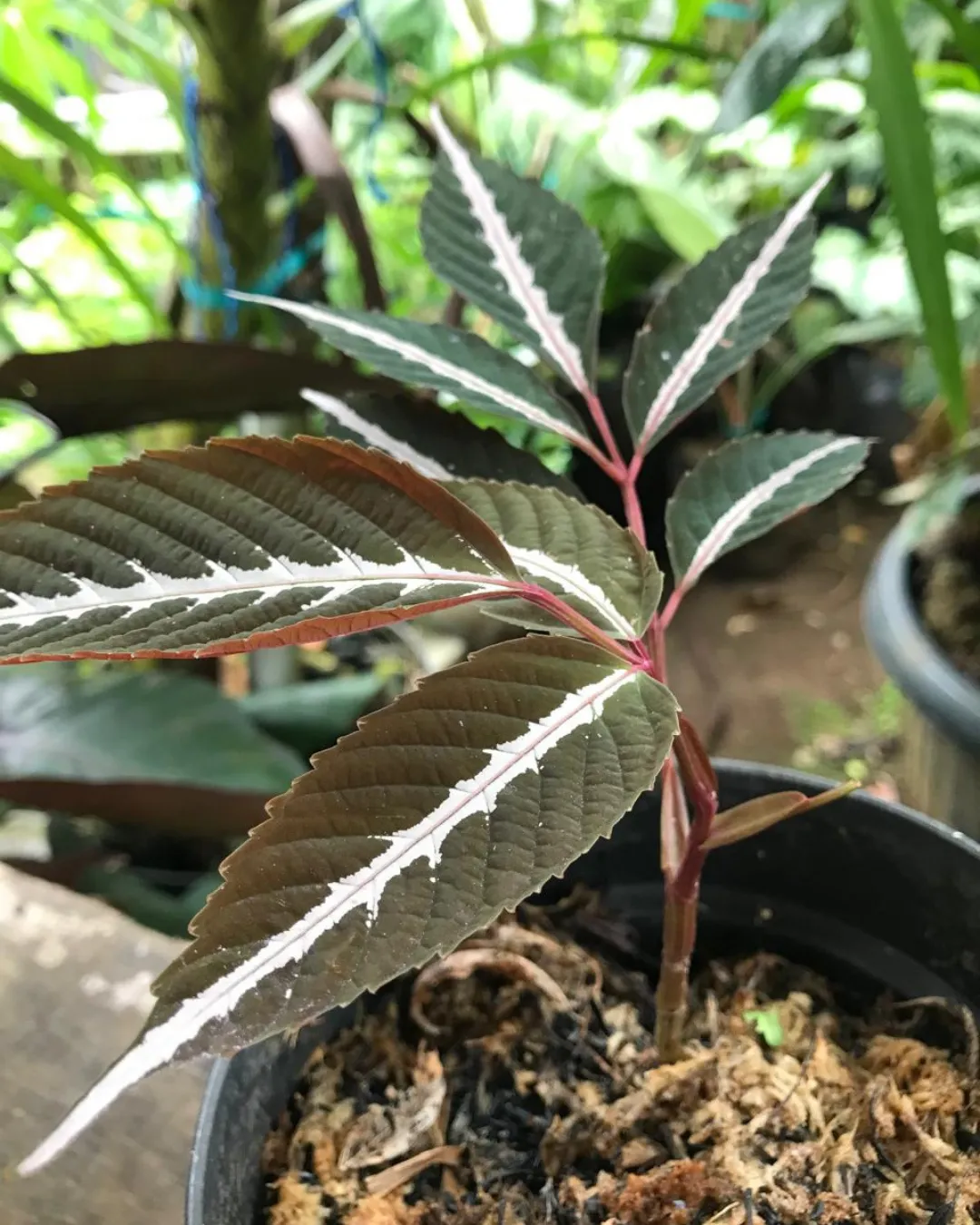
The leaves of Leea amabilis are pinnate — meaning each large leaf is divided into multiple smaller leaflets along a central stem. Each leaflet is lanceolate — long, narrow, and pointed at both ends. Furthermore, the edges are finely toothed, giving a delicate, serrated look.
The upper surface of each leaflet is a rich, velvety dark bronze-green to near-black. A bold white stripe runs along the midrib — the central vein of each leaflet. Consequently, this high-contrast pattern creates a dramatic look that collectors immediately recognise. The leaf undersides and petioles — the small stalks attaching each leaflet — are often flushed with purple.
New leaves emerge in a vivid crimson red. Additionally, they slowly transition to pale rose before maturing into the deep, dark tones the plant is famous for. This color progression turns every new flush of growth into a visual event.
Flower and Fruit Leea amabilis
Leea produces small, clustered flowers on dense, cymose inflorescences — meaning the flowers grow in a broad, branching cluster at the top or sides of the plant. The flowers are bisexual and small, typically with four to five petals. Moreover, they attract a range of pollinators including bees, butterflies, wasps, and beetles.
After pollination, Leea amabilis produces small berries. Each berry may contain up to six seeds. Furthermore, unlike its relatives in the Vitaceae family, Leea amabilis does not climb and has no tendrils — it grows as a compact, upright shrub. This makes it ideal for indoor collections, terrariums, and curated plant displays.
Growth Form and Size
In its native Borneo habitat, Leea amabilis can reach up to 3 metres — approximately 10 feet — in height. However, in cultivation and container growing, it typically remains much more compact. Primarily, this makes it suitable for both indoor environments and enclosed garden spaces.
The plant is a woody perennial shrub. Additionally, it grows slowly, which adds to its value as a collector’s specimen. Slow growth means each plant develops gradually, allowing collectors to observe every stage of its dramatic color transformation.
Global Seed Delivery & Phytosanitary Certification
Induare Agro is a professional botanical exporter based in Indonesia. Consequently, it follows all national and international regulations for the legal export of plant material. Every seed order is handled with the highest standards of care, compliance, and professionalism.
Packaging and Shipping
Seeds are carefully prepared and packed to ensure viability during transit. Induare Agro uses protective, moisture-controlled packaging designed for live botanical material. Furthermore, all orders are dispatched via Global Express courier services for fast, trackable delivery worldwide.
Additionally, Induare Agro applies for an official export permit from Indonesia’s Ministry of Agriculture for every order. This process typically takes two to three weeks. Moreover, each shipment undergoes laboratory inspection to confirm it is free from pests and disease before dispatch.
Buyer Peace of Mind
Every international seed order from Induare Agro includes a Phytosanitary Certificate. This is an official government-issued document that confirms the seeds are healthy, inspected, and legally cleared for export. Consequently, buyers can import with confidence, knowing all paperwork meets their country’s customs requirements.
Furthermore, Induare Agro is fully transparent about timelines and documentation. Buyers receive updates throughout the export and shipping process. Additionally, the team is available to assist with any customs queries. This end-to-end support makes Induare Agro a trusted partner for serious collectors and botanical institutions worldwide.
How to Grow Leea amabilis
Leea amabilis requires warm, humid conditions that mimic its Borneo rainforest origins. Follow these steps to give your seeds the best start.
Step 1 – Prepare the Growing Medium Use a well-draining, slightly acidic potting mix rich in organic matter. Add perlite or coco coir to improve aeration and prevent waterlogging.
Step 2 – Sow the Seeds Place seeds just below the surface of the moist growing medium. Cover the container loosely with a clear lid or plastic wrap to retain humidity.
Step 3 – Provide Warmth and Humidity Maintain a temperature between 20–25°C (68–77°F). Keep humidity above 70% at all times. A mini greenhouse or enclosed terrarium works very well.
Step 4 – Choose the Right Light Place the seedling tray in bright, indirect light. Avoid direct sunlight, as it can scorch the delicate new growth. An east-facing position or a spot with filtered light is ideal.
Step 5 – Water Carefully Keep the soil consistently moist but never waterlogged. Use distilled or rainwater where possible. Reduce watering slightly in cooler months.
Step 6 – Fertilise During the Growing Season Feed with a balanced, water-soluble fertiliser during spring and summer. Follow the product instructions for dilution. Additionally, avoid over-fertilising, as this can damage the roots.
Step 7 – Re-pot as Needed Once the seedling outgrows its starter pot, transfer it to a slightly larger container. Furthermore, always choose a pot with good drainage holes to protect the root system.
