What Is Amorphophallus titanum?
Amorphophallus titanum is one of the most extraordinary rare plants on Earth. It originates exclusively from the steep limestone hillsides and equatorial rainforests of western Sumatra, Indonesia. This species grows in dense forest understories at elevations where heat and humidity remain high all year round. Its native range is shrinking fast due to deforestation and land conversion for palm oil plantations. Furthermore, the IUCN Red List now classifies it as Endangered in the wild. This makes every viable seed a genuinely rare and precious resource for collectors.
The plant is also called the Corpse Flower or Titan Arum. It belongs to the family Araceae — the same family as common ornamental aroids. However, nothing about this plant is common. It holds the world record for the largest unbranched inflorescence — the formal term for a flowering structure — of any plant species on the planet. Botanical gardens around the world, from Kew in London to the Chicago Botanic Garden, have spent decades trying to grow and flower this plant. Each successful bloom attracts thousands of visitors and makes international news.
Additionally, Italian botanist Odoardo Beccari first encountered the species in 1878. He sent seeds back to Europe, and the first cultivation bloom occurred at the Royal Botanic Gardens, Kew, in 1889. Since then, fewer than 1,000 flowerings have been recorded in cultivation worldwide. Consequently, owning a seed of Amorphophallus titanum means owning a piece of living botanical history. Induare Agro makes this once-impossible acquisition straightforward and legally compliant for collectors everywhere.
Aesthetic Features Amorphophallus titanum
The visual appeal of Amorphophallus is unlike any other genus in the plant kingdom. Each growth stage delivers a different, spectacular show. Primarily, the plant produces one massive structure at a time — either a single giant leaf or a towering flower. Both are breathtaking.
Leaf Structure Amorphophallus titanum
During non-flowering years, the plant sends up a single enormous leaf. This leaf grows from an underground corm — a starchy, swollen storage organ similar to a very large bulb. The leaf stalk, or petiole, is pale green and speckled with irregular white and grey patches. It resembles the trunk of a small tree more than a typical plant stem. Moreover, at the top, the leaf branches into three main arms. Each arm bears dozens of large dark green leaflets arranged outward in a broad canopy. The whole structure can reach 4.5 to 7 metres (15 to 23 feet) tall. It looks, from a distance, exactly like a small tropical tree — yet it is a single leaf from one underground corm.
Flower and Fruit Amorphophallus titanum
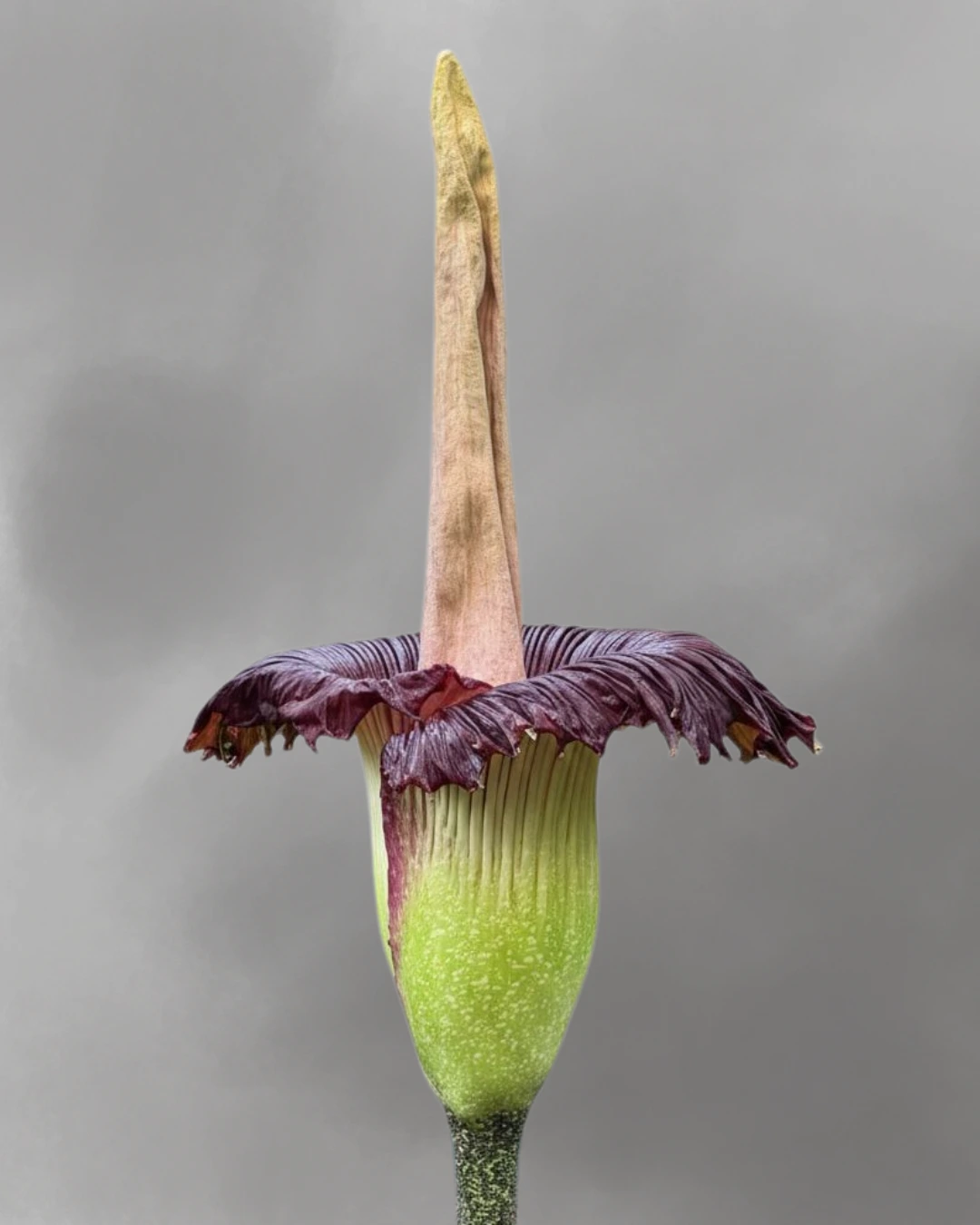
The flower is the event that makes Amorphophallus titanum globally famous. After years of leaf growth, the corm gathers enough energy to produce a bloom. The inflorescence — the flower structure as a whole — can grow up to 3 metres (10 feet) tall. It consists of two main parts. The spathe is a large, frilled, modified leaf that wraps around the outside. Its exterior is pale green. Its interior opens to reveal a dramatic deep crimson-red to purple colour. Inside the spathe stands the spadix — a tall, fleshy, central spike that generates heat during bloom. This heat carries the plant’s notorious odour — a powerful smell of rotting meat — up to 800 metres (half a mile) away. This smell attracts carrion beetles and flesh flies, the plant’s natural pollinators. The bloom itself lasts only 24 to 48 hours before the spathe closes and collapses. If pollination is successful, the plant produces large, bright orange-red berries packed with seeds. Each berry contains a viable seed. Induare Agro harvests these seeds fresh for immediate dispatch.
Dormancy Cycle
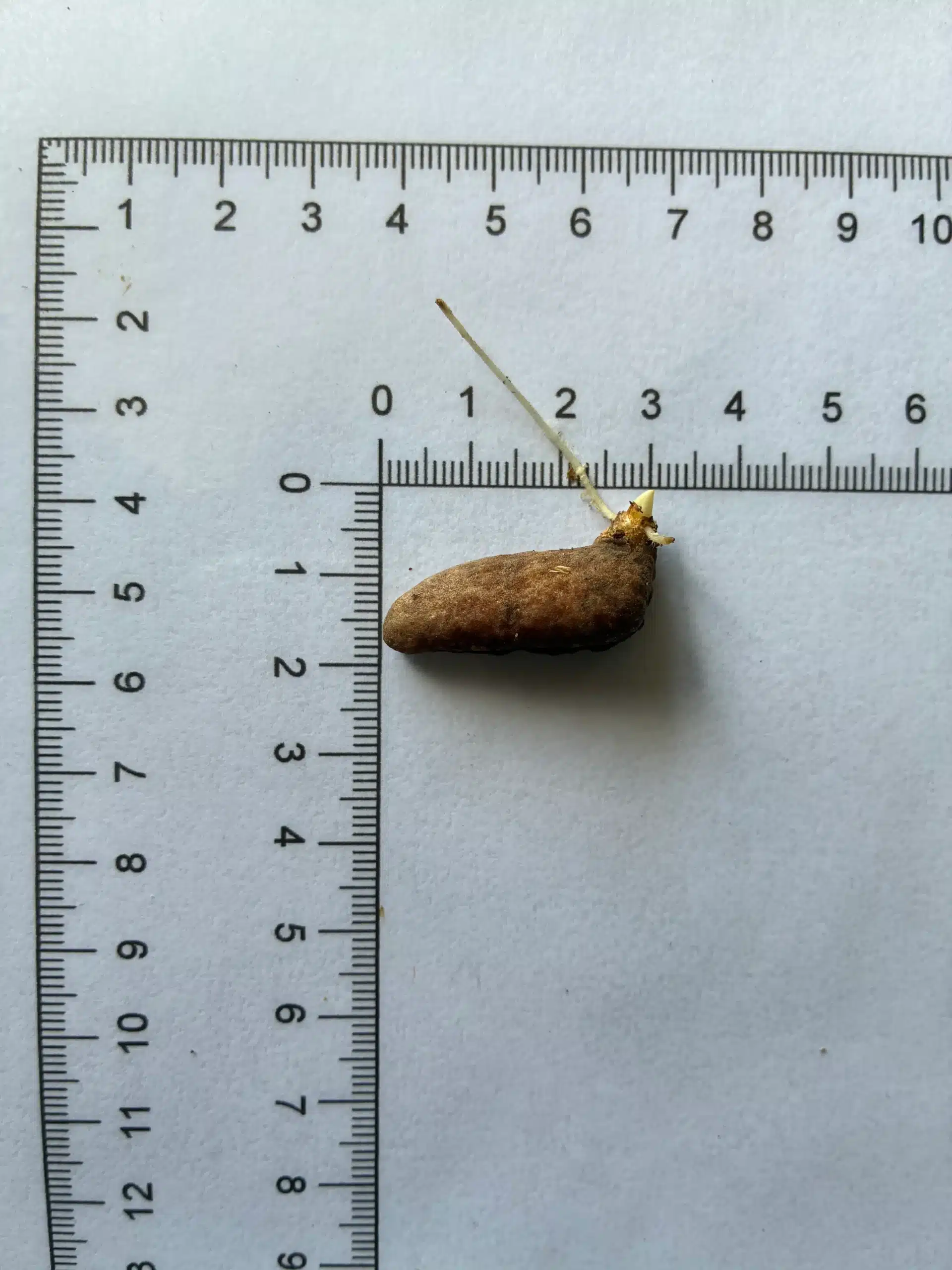
Amorphophallus titanum follows a predictable but slow cycle. After each leaf dies back — typically after 4 to 24 months of growth — the corm enters a dormancy period. It rests underground, drawing no water and showing no above-ground growth. This resting phase can last a few weeks to several months. Furthermore, the corm grows larger with each cycle. A plant must reach a corm weight of approximately 18 to 23 kg (40 to 50 lbs) before it has enough stored energy to attempt flowering. Consequently, flowering typically happens after 7 to 10 years of careful cultivation. This long journey is exactly what makes growing Amorphophallus titanum the ultimate prize for dedicated plant collectors.
Global Seed Delivery & Phytosanitary Certification
Induare Agro is a professional Indonesian plant exporter. We supply rare exotic seeds and rare plants to collectors, botanical institutions, and growers in over 50 countries. We follow all Indonesian and international plant export regulations without exception.
Packaging and Shipping
Every seed leaves our facility in export-grade protective packaging. We seal each seed carefully to maintain moisture levels and prevent physical damage during transit. We ship via Global Express courier services for fast, trackable delivery to your door. Furthermore, all international shipments include a Phytosanitary Certificate issued by the Indonesian Plant Quarantine Authority. This certificate is an official government document. It confirms that the seeds have been inspected, are free from pests and diseases, and comply with international plant health standards. Moreover, it is a legal requirement for importing plant material into most countries. We handle this paperwork entirely on your behalf.
Buyer Peace of Mind
Induare Agro includes the Phytosanitary Certificate at no extra charge with every international order. Additionally, we provide full tracking information once your order ships. Our team packs each seed by hand and inspects every item before dispatch. We specialise in rare plants in Indonesia and rare exotic seeds for export. Primarily, our mission is to make these extraordinary Indonesian plants accessible to serious collectors worldwide — safely, legally, and professionally. If you have questions about import requirements in your country, our team is ready to assist before you order.
How to Grow Amorphophallus titanum
Growing Amorphophallus titanum is a long-term commitment. It rewards patient, dedicated growers with one of the most dramatic botanical spectacles on Earth. Follow these steps carefully.
Step 1 — Prepare Your Growing Medium Use a well-draining mix of equal parts peat, perlite or pumice, and orchid bark. Good drainage prevents the corm from rotting — the most common cause of plant loss.
Step 2 — Soak the Seed Place the fresh seed in warm water for 24 hours before planting. This softens the seed coat and helps break dormancy. Use clean, room-temperature water for best results.
Step 3 — Plant the Seed Bury the seed just below the surface of your prepared growing medium. Do not plant it deep — 1 to 2 cm below the surface is ideal.
Step 4 — Provide the Right Environment Maintain daytime temperatures between 27°C and 32°C (80°F–90°F). Keep nighttime temperatures above 21°C (70°F). Filtered or indirect light is best — avoid harsh direct midday sun.
Step 5 — Feed Regularly Fertilise every two weeks during active growth with a balanced, slow-release fertiliser. Amorphophallus titanum is a heavy feeder. Consistent nutrition directly supports corm development and long-term health.
Step 6 — Manage Dormancy When the leaf collapses and rots at the end of a growing season, the plant is entering dormancy. Reduce watering significantly. When the corm is dormant, lift it carefully, inspect for rot or pests, and repot it into a slightly larger container with fresh mix. Never nick or cut the corm surface.
Step 7 — Be Patient Flowering typically occurs after 7 to 10 years. Each year, track corm weight and pot up as needed. Your patience will produce one of the most extraordinary blooms in the natural world.


