What Is Amorphophallus galbra?
Amorphophallus galbra is one of the rarest tuberous aroids in the world. It belongs to the family Araceae and grows naturally across New Guinea and the far north of Australia. The species was first formally named in 1893 by Australian botanist F.M. Bailey. He recorded the name from an aboriginal word, “Galbra,” used by local people near the Barron River in Queensland. Consequently, this plant carries both scientific and cultural history that few other species can match.
Furthermore, A. galbra grows in seasonally dry tropical forests, monsoon woodlands, and gallery rainforests. It thrives from sea level up to 500 metres in altitude. The plant produces its leaves and flower stalk from an underground storage organ called a corm — a swollen stem base that stores energy between growing seasons. Additionally, this species is rarely seen in private collections outside its native region. Induare Agro offers collectors a rare and fully documented chance to grow this extraordinary plant. Every seed comes with legal export paperwork and expert after-sales support.
Aesthetic Features Amorphophallus galbra
Amorphophallus galbra is a medium-sized herb. The plant grows between 20 cm and 1 metre in height. Consequently, it fits well into both indoor pot culture and outdoor tropical garden settings. Its appearance is bold, structured, and immediately eye-catching.
Leaf Structure Amorphophallus galbra
The leaf stalk — called a petiole — grows between 30 and 100 cm long. It is mottled in color, showing patches of pale green, grey, and darker tones. Furthermore, this speckled pattern is one of the most visually striking traits of the species. The leaf itself is compound, meaning it divides into three main branches. Each branch then divides again into leaflets. Additionally, the individual leaflets are oblong to oval in shape, measuring about 10–20 cm long and 3–5 cm wide. The tips are pointed, and each leaflet sits directly on the leaf axis without a stalk of its own. The result is a wide, open, architectural leaf display that collectors find very attractive.
Flower and Fruit Amorphophallus galbra
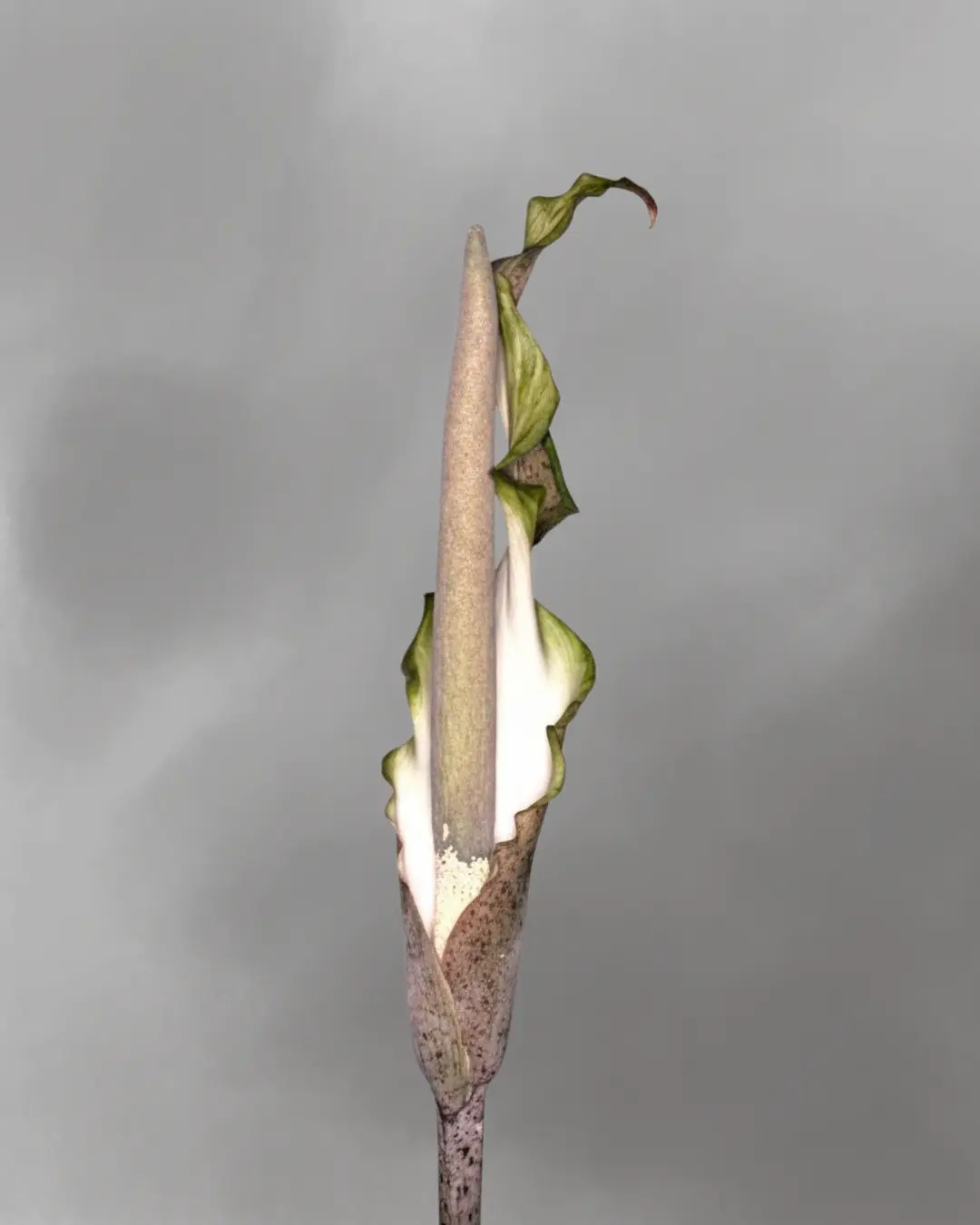
A. galbra typically flowers before its leaf appears. The flower structure — called an inflorescence — grows on its own stalk from the corm. It consists of a green to mottled outer hood called a spathe, which wraps around a central spike called a spadix. Furthermore, the spathe can show green, cream, and mottled tones. The lower part of the spadix holds the female flowers. The male flowers sit in a separate band just above them. Consequently, this layout ensures that cross-pollination between plants is more likely than self-pollination. After pollination, the plant produces berries that attract birds and small animals. These animals help spread the seeds through the forest.
Dormancy Cycle
A. galbra follows a clear yearly cycle. The plant grows actively during the warm, wet season. Then it dies back when conditions become dry. Primarily, during this rest period — called dormancy — the corm stores energy underground. The plant re-sprouts on its own at the start of the next growing season. Additionally, each new season brings a slightly larger plant. Collectors enjoy watching this progression year after year.
Global Seed Delivery & Phytosanitary Certification
Induare Agro is a professional botanical seed exporter based in Indonesia. The company supplies rare tropical plant seeds to collectors, botanical gardens, and research institutions worldwide. Furthermore, every seed order includes an official Phytosanitary Certificate. This is a government document issued by Indonesia’s Plant Health Authority. It confirms that the seeds are free from pests and disease. Consequently, this certificate satisfies the import rules of customs offices in the EU, USA, UK, Australia, Japan, and most other regulated countries.
Packaging and Shipping
Induare Agro packs all seeds carefully for international transit. Each parcel includes moisture control materials and cushioned express packaging. Shipments go out via Global Express courier services such as DHL and EMS. Additionally, most international orders arrive within 5–14 business days. Furthermore, all required export papers accompany every parcel. This includes the Phytosanitary Certificate and the commercial invoice. Primarily, this full-document approach ensures smooth customs clearance every time.
Buyer Peace of Mind
Induare Agro follows a strict compliance process for every order. Collectors never need to worry about rejected shipments or legal issues. Furthermore, the team provides after-sales growing guidance to all buyers. Every order is transparent, traceable, and fully legal from dispatch to delivery.
How to Grow Amorphophallus galbra
Growing Amorphophallus galbra is rewarding and accessible for intermediate-level growers. Furthermore, the plant adapts well to container growing in any climate. The key is to replicate its natural tropical forest conditions. Follow these steps carefully for the best results:
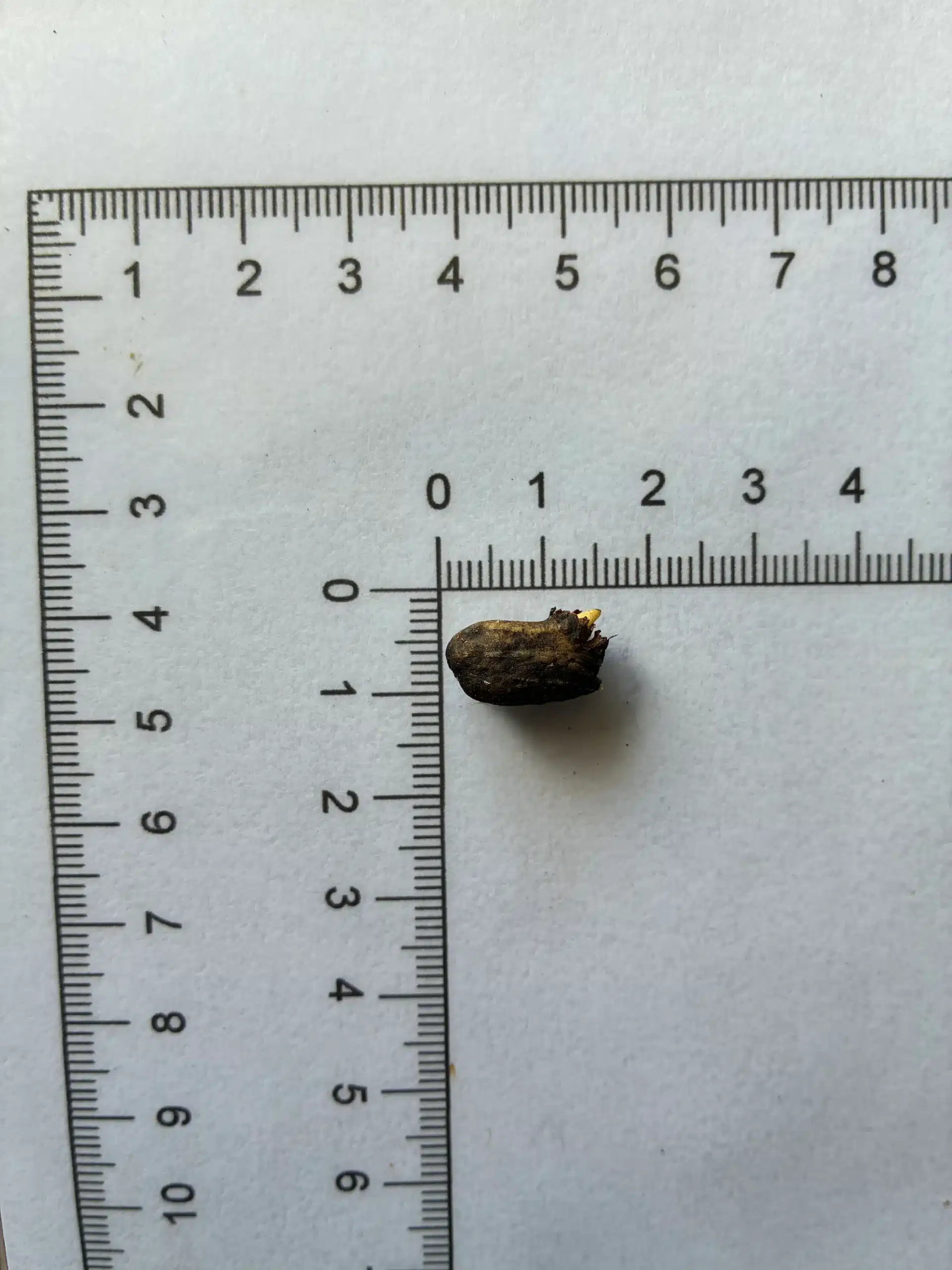
Step 1 — Seed Preparation Soak the seed in warm water (28–30°C) for 24–48 hours before planting. Additionally, lightly scratch the seed coat with fine sandpaper. This helps water enter the seed and speeds up sprouting.
Step 2 — Growing Medium Mix 50% potting soil, 30% perlite or coarse sand, and 20% compost or worm castings. Consequently, this blend drains well and holds just enough moisture. It also gives the young corm the nutrients it needs.
Step 3 — Sowing Plant the seed 2–3 cm deep in a pot with drainage holes. Furthermore, keep the soil evenly moist — but never wet or waterlogged — throughout the sprouting stage.
Step 4 — Temperature and Humidity Keep the temperature between 22°C and 32°C at all times. Primarily, high humidity (60–80%) helps the seed sprout faster and more reliably. A plastic humidity dome works well during this stage.
Step 5 — Light Place the pot in bright, indirect light. Additionally, protect the seedling from direct midday sun. Strong direct sunlight can stress the young plant and slow its growth.
Step 6 — Watering Water moderately during the active growing period. Let the top 2–3 cm of soil dry slightly between waterings. Furthermore, never let the pot sit in standing water. Root rot is the most common cause of failure with this species.
Step 7 — Dormancy Care When the leaf yellows and falls back, reduce watering gradually. Consequently, the corm needs a dry rest period. Keep the soil barely moist — do not let it dry out completely. The corm will re-sprout on its own in the next season.
Step 8 — Repotting and Feeding Repot each year at the start of the new growth cycle. Move to a slightly bigger pot every time. Additionally, apply a slow-release organic fertiliser (NPK 10-10-10) at the start of the growing season. This supports a bigger corm and a more impressive leaf display each year.
© Induare Agro — Indonesia’s professional rare seed exporter.


