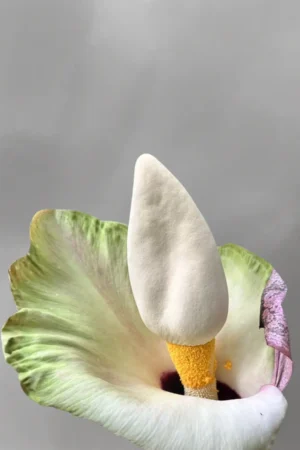
What Is Alocasia jacklyn?
Alocasia jacklyn is one of the rarest and most striking tropical plants available to collectors today. It is native to the humid lower-mountain forests of northern Sulawesi, Indonesia. Furthermore, it grows between 500 and 1,000 metres above sea level in warm, shaded forest understory. The plant thrives in conditions of constant warmth and high moisture. Consequently, it has developed a highly distinctive appearance that sets it apart from almost every other plant in its family.
The name jacklyn honours Enjie Jacklin, the person credited with first discovering and bringing this plant to wider attention. Additionally, the plant is known by its local name — Tandurusa — which comes from the Indonesian words tanduk rusa, meaning “deer antlers.” This name is a direct reference to the plant’s deeply cut, antler-shaped leaves. Furthermore, the species was formally described as Alocasia tandurusa by botanists Prameswara and Hay in 2023. Consequently, it is one of the newest Alocasia species to receive an official scientific name.
Induare Agro sources these seeds directly from Sulawesi, Indonesia — the plant’s native home. Additionally, every order is fully documented and backed by an official export certificate. This makes Induare Agro one of the very few verified global suppliers of this iconic Indonesian plant.
Aesthetic Features Alocasia jacklyn
Alocasia jacklyn is a plant that commands attention the moment it enters a room. Its overall form is compact yet bold. Furthermore, it grows to between 60 and 100 cm tall indoors — a manageable size that makes it ideal for tabletop displays, shelves, and curated plant collections. Its visual impact, however, is far greater than its size suggests.
Leaves Alocasia jacklyn
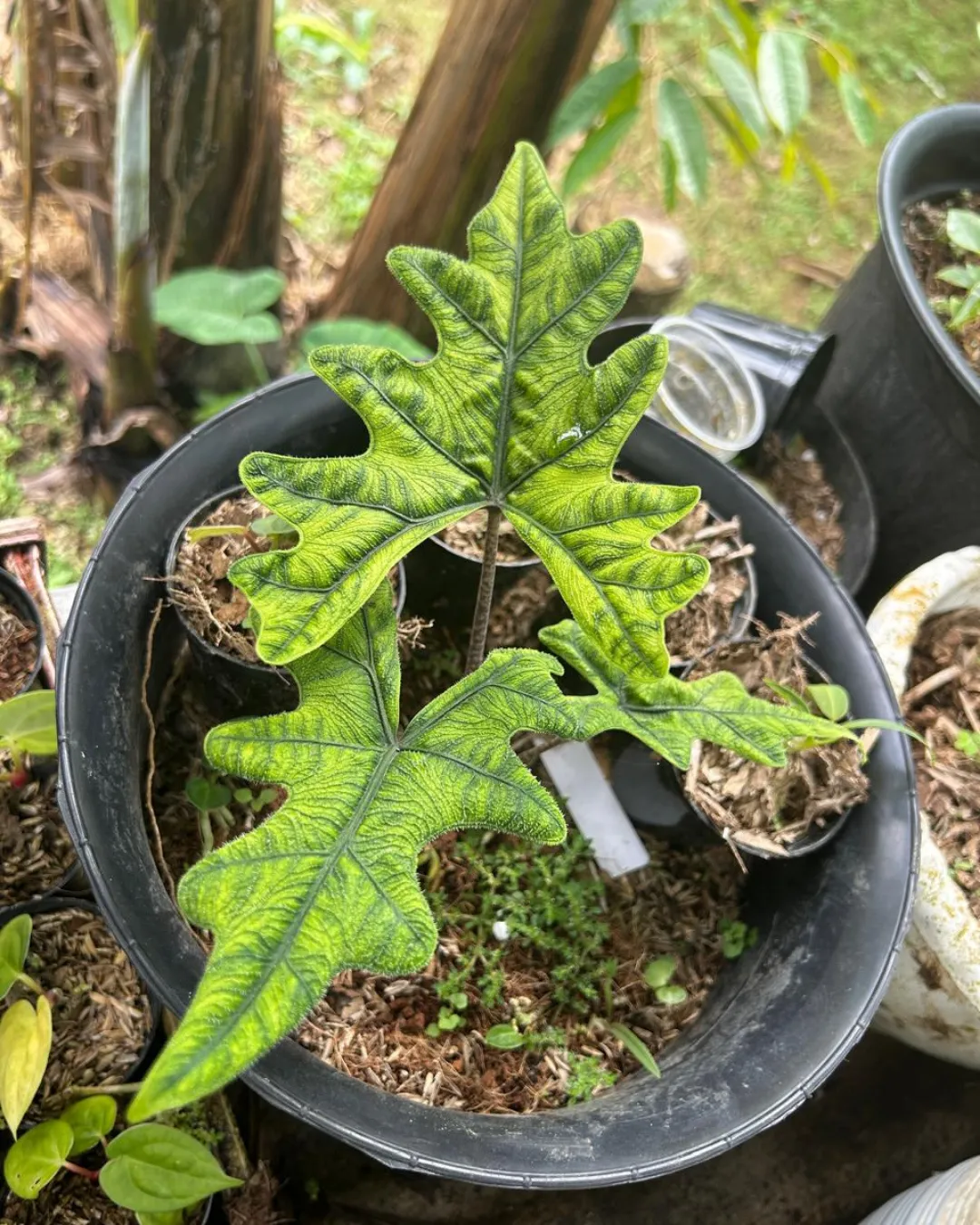
The leaves are the defining feature of this plant. Each leaf is deeply lobed and cut into irregular sections that resemble the shape of deer antlers. Additionally, the leaf surface has a fine, slightly textured feel. The upper side is a rich, bright green. Furthermore, dark green to near-black veins run boldly across each leaf in a pattern that looks almost hand-drawn. The underside of the leaf often carries a soft purple tint — a subtle detail that adds to its exotic character. Mature leaf blades reach about 45 cm in length.
Leaf Stalks and Rhizome Alocasia jacklyn
The leaf stalks — called petioles — are thick and sturdy. They display a mottled pattern of brown and purple. Consequently, even the stalks add visual interest to the plant’s overall look. The plant grows from a creeping underground stem called a rhizome — a horizontal root-like structure that spreads slowly and produces new shoots over time. Furthermore, this growth habit means the plant gradually forms a full, clumping display in its container.
Growth Habit and Size Alocasia jacklyn
Alocasia jacklyn stays compact compared to many other Alocasia species. Primarily, it grows to a maximum of about 1 metre in height. Additionally, it grows at a moderate pace indoors. New leaves emerge one at a time from the centre of the plant. Consequently, each new leaf is an event — and collectors often find the process of watching a new antler-shaped leaf unfurl to be one of the most rewarding parts of growing this plant.
Global Seed Delivery & Phytosanitary Certification
Induare Agro is a professional botanical seed exporter based in Indonesia. The company works directly with growers and verified sources across the Indonesian archipelago. Furthermore, Induare Agro ships rare Indonesian plants and seeds to collectors, botanical gardens, and research institutions in more than 50 countries. Every order follows a strict and fully documented export process.
Packaging and Shipping
Induare Agro packs every seed order with professional care. Each seed is wrapped in moisture-control material before packing. Cushioned express packaging protects the seeds throughout the entire journey from Sulawesi to the collector’s door. Shipments go out via Global Express couriers such as DHL and EMS. Additionally, most international orders arrive within 5–14 business days. Furthermore, every parcel includes an official Phytosanitary Certificate. This document is issued by Indonesia’s Plant Health Authority. It confirms that the seeds are pest-free, disease-free, and safe for import. Consequently, it meets the customs requirements of the EU, USA, UK, Australia, Japan, and most other regulated markets worldwide.
Buyer Peace of Mind
Induare Agro puts full compliance first on every single order. The Phytosanitary Certificate and commercial invoice travel with every parcel. Furthermore, this complete documentation approach ensures smooth, fast customs clearance at every destination. Additionally, the Induare Agro team provides after-sales growing support for every buyer. Primarily, the mission is clear — help every collector grow a healthy, thriving Alocasia jacklyn from seed to full display plant.
How to Grow Alocasia jacklyn
Alocasia jacklyn rewards growers who pay close attention to warmth, light, and humidity. Furthermore, collectors in tropical, subtropical, and indoor temperate environments can all succeed by following these steps carefully.
Step 1 — Seed Preparation Soak the seed in warm water (25–28°C) for 12–24 hours before planting. Additionally, this softens the outer coat and helps the seed sprout faster and more reliably.
Step 2 — Growing Medium Use a light, well-draining mix: 40% potting soil, 30% perlite or pumice, and 30% orchid bark or coarse compost. Consequently, this gives the roots the air flow, drainage, and moisture they need to develop well.
Step 3 — Sowing Plant the seed about 1–2 cm deep in a small pot with drainage holes. Furthermore, keep the soil consistently moist — never waterlogged — throughout the sprouting stage.
Step 4 — Temperature Maintain a stable temperature between 22°C and 28°C at all times. Primarily, this plant is sensitive to temperature swings. Avoid cold draughts, air conditioning, and cold windowsills.
Step 5 — Humidity Keep humidity above 60% at all times. Additionally, a humidity dome, a pebble tray with water, or a small room humidifier all work well. Furthermore, high humidity is the single most important factor for healthy growth in this species.
Step 6 — Light Place the pot in bright, indirect light. Additionally, avoid all direct sun — it will scorch the thin, lobed leaves and fade the dark vein pattern. An east-facing window or a grow light set 30–40 cm above the plant works well.
Step 7 — Watering Let the top 2–3 cm of soil dry out slightly before watering again. Consequently, this prevents root rot — the most common cause of failure with this species. Always use filtered water or rainwater where possible.
Step 8 — Repotting and Feeding Repot every 12–18 months into a slightly larger container with fresh mix. Additionally, apply a balanced liquid fertiliser (NPK 10-10-10) every 4 weeks during the active growing season. Furthermore, reduce feeding in cooler or darker months when the plant slows its growth.
© Induare Agro — Indonesia’s professional rare seed exporter.