What Is Anthurium Dorayaki?
Anthurium dorayaki is a rare, highly sought-after hybrid cultivar in the Anthurium family. It originates from Central and South American tropical rainforests, where its parent species grow as epiphytes — meaning plants that live on other trees. Indonesian growers later developed the Dorayaki selection from Anthurium crystallinum lines. Consequently, it has become one of the most celebrated rare plants in Indonesia and across the global collector market.
The name “Dorayaki” comes from the famous Japanese round pancake. This name perfectly reflects the plant’s almost perfectly circular leaf shape — a feature that sets it completely apart from most other Anthurium varieties. Furthermore, its combination of a compact growth habit, velvety leaf texture, and striking silver veins makes it a plant that commands attention in any space.
Induare Agro sources and supplies this exceptional cultivar directly from Indonesia. We offer export-quality seeds with full phytosanitary documentation, ensuring that collectors around the world can obtain this rare plant legally and safely.
Aesthetic Features Anthurium Dorayaki
The visual appeal of Anthurium dorayaki is extraordinary. No other velvet-leaf Anthurium combines roundness, rich texture, and bold venation in quite this way. Below, we describe its key physical traits in plain terms.
Leaf Structure Anthurium dorayaki
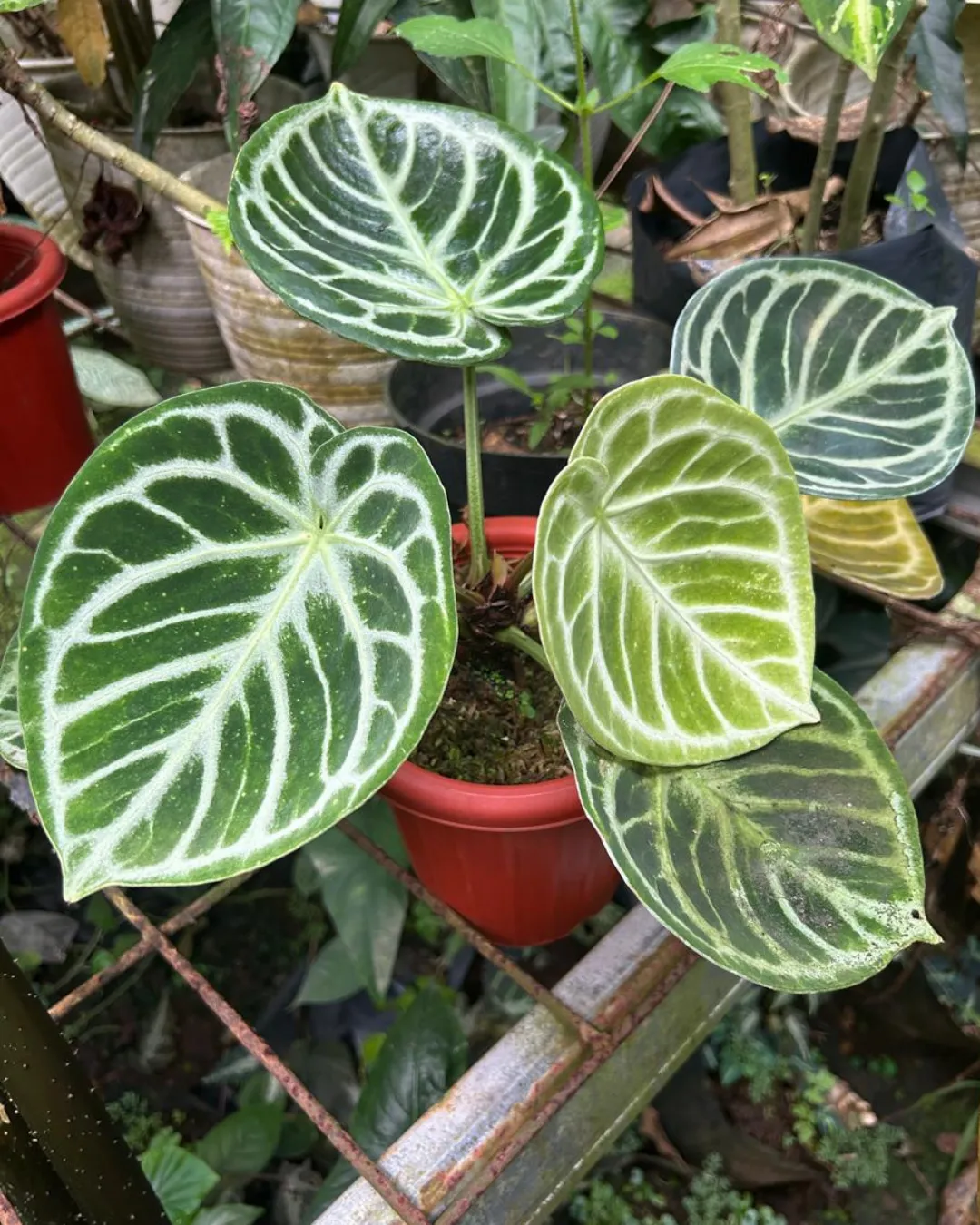
The leaves of Anthurium dorayaki are its most defining feature. They are thick, almost perfectly round, and can reach 20 to 30 centimetres across when grown indoors. Additionally, the surface has a soft, velvety texture — almost like running your hand across fine fabric. The leaf colour is a deep, lush green that intensifies as the plant matures.
The venation — the network of veins across the leaf — is very prominent. Wide, pale silvery-white veins spread across each leaf in a bold pattern. Moreover, these veins create a shimmering, almost metallic effect when light catches the surface at certain angles. This shimmering quality makes each leaf look like a piece of living art.
Compared to its parent, Anthurium crystallinum, the Dorayaki leaf is noticeably rounder and thicker. The crystallinum has an elongated, heart-shaped leaf. The Dorayaki compresses that shape into a compact disc. Furthermore, it grows lower to the ground, spreading sideways rather than reaching upward — which makes it ideal for shelf displays and curated indoor arrangements.
Flower and Inflorescence Anthurium dorayaki
Like all Anthurium plants, Dorayaki produces a typical aroid inflorescence — a flowering structure made up of two parts. The first is the spadix — a slim, upright spike where the tiny true flowers cluster. The second is the spathe — a modified leaf, like a hood or shield, that sits at the base of the spadix and frames it. In Anthurium dorayaki, both are generally green and modest in colour, as the plant’s real show comes from its leaves.
When the plant matures and conditions are right, it can produce blooms multiple times per year. The flowers on the spadix are small and self-fertile, meaning they carry both male and female parts. Additionally, the small fruits that follow are juicy berries, each typically containing two seeds. This means seeds from a thriving plant are obtainable, though supply remains tightly limited.
Growth Habit and Plant Size
Anthurium dorayaki is a compact, low-growing plant. It is classified as a chamaephyte — a plant form where buds stay close to the ground. Primarily, this means it stays manageable in size. It does not sprawl or reach great heights. Consequently, it suits smaller indoor spaces, terrariums, and plant shelves very well.
Its self-heading growth form means it does not require a climbing pole or support structure. New leaves emerge from a central point and fan outward in a tidy, organised fashion. Furthermore, growth is slower than many common houseplants, which adds to its exclusivity and value among serious collectors.
Global Seed Delivery & Phytosanitary Certification
Induare Agro is committed to safe, legal, and professional global seed delivery. We understand that collectors worldwide need full confidence when buying rare exotic seeds from Indonesia. Consequently, every order is handled with the highest standard of care.
Packaging and Shipping
We ship every seed order via Global Express courier services. This ensures fast, trackable delivery to destinations across Asia, Europe, North America, and beyond. Additionally, each seed is carefully prepared for transit. We remove soil to meet international biosecurity regulations and wrap seeds in clean, moisture-retaining material such as sphagnum moss or sterile tissue. This keeps the seed viable and fresh throughout the journey.
Packaging is sturdy and purpose-built for live plant material. We use padded, sealed containers that protect seeds from pressure, moisture loss, and temperature fluctuations. Moreover, we include clear labelling and all required customs documentation with every shipment, so packages move through international borders without unnecessary delays.
Buyer Peace of Mind
Every order from Induare Agro includes a Phytosanitary Certificate issued by the Indonesian Ministry of Agriculture. This is an official government document. It confirms that our plant material has been inspected, is free from pests and disease, and complies with international plant health regulations.
Furthermore, a Phytosanitary Certificate is required by most importing countries for live plant material. Having one included in your order means you are buying with full legal compliance. Additionally, it protects you as a buyer — you know that what you receive is genuine, inspected, and correctly documented. Primarily, our goal is to make every international purchase as smooth and worry-free as possible.
How to Grow Anthurium Dorayaki
Growing Anthurium dorayaki from seed is a rewarding process. Follow these steps for the best results.
Step 1 — Prepare Your Germination Medium Fill a small transparent container or zip-lock bag with damp sphagnum moss. Press the seed gently onto the surface. Do not bury it deeply — Anthurium seeds germinate best near the surface.
Step 2 — Create a Warm, Humid Environment Seal the bag or container to trap humidity. Place it in a warm spot with bright but indirect light — avoid direct sun. Maintain a temperature between 21°C and 28°C (70°F–82°F) for optimal germination.
Step 3 — Wait for Germination Germination typically takes 2 to 6 weeks. Check regularly for moisture. Add a few drops of water if the moss feels dry. Do not allow the medium to become waterlogged.
Step 4 — Transfer to a Potting Mix Once the first small leaf appears, transfer the seedling carefully to an open, airy potting mix. A blend of orchid bark, perlite, and coco coir works very well. Ensure excellent drainage to prevent root rot.
Step 5 — Establish Care Conditions Place your young Dorayaki in bright, filtered light away from direct sun. Maintain high humidity — ideally above 60%. Additionally, keep temperatures stable between 18°C and 25°C (64°F–77°F). Water when the top layer of the mix begins to dry, and never allow the pot to sit in standing water.
Step 6 — Feed During the Growing Season Fertilise lightly every 3 to 4 weeks from spring through autumn using a balanced, diluted liquid fertiliser. Primarily, use a formula designed for aroids or tropical foliage plants. Reduce or stop feeding entirely during winter.
© Induare Agro — Indonesia’s trusted source for rare exotic seeds and export-quality tropical plants.
