What Is Pouteria caimito?
Pouteria caimito is a tropical fruit tree from the Amazon rainforest. It belongs to the family Sapotaceae — a large family of trees famous for sweet, milky fruits. This species is native to the humid forests of the Amazon basin. Its natural range stretches from southwestern Venezuela down through Peru, Ecuador, Colombia, and Brazil.
The tree is commonly called Abiu. Furthermore, it carries many regional names across South America. In Venezuela, locals call it “temare.” In Colombia, it is “caimo” or “caimito amarillo.” In Ecuador, people know it as “luma” or “cauje.” Additionally, it is well known in the Philippines, Malaysia, and parts of Southeast Asia.
Pouteria caimito is a rare and globally sought-after fruit tree. Moreover, its wild germplasm is now under pressure from deforestation. Consequently, it is increasingly difficult to source genuine, viable seeds outside its native range. Induare Agro works directly with trusted growers in tropical regions. Furthermore, every seed we supply is fresh, organic, and export-certified. This makes our stock especially valuable for serious collectors.
The Abiu is prized for its golden-yellow fruit with creamy, jelly-like flesh. The fruit tastes like caramel custard — a flavor unlike almost any other tropical fruit. Additionally, it is rich in vitamins and minerals. Consequently, it attracts both food enthusiasts and health-conscious growers worldwide. It is truly one of the rarest exotic plants you can add to your collection today.
Aesthetic Features Pouteria caimito
Leaf Structure Pouteria caimito
The leaves of Pouteria caimito are oblong to lance-shaped. They taper to fine points at both ends. Furthermore, each leaf grows between 10 and 25 cm in length. The upper surface is smooth and glossy green. Leaves cluster at the tips of branches, forming a lush, dense canopy. Additionally, the tree has a thick, straight trunk with grey or brown bark. Young bark is smooth. Older bark becomes rough and slightly cracked over time. Consequently, the tree has a bold and impressive presence in any tropical garden.
All parts of the tree — except the leaves and flowers — release a sticky white latex when cut. This latex is a key identification feature of the Sapotaceae family. Moreover, it is harmless to the tree and does not affect the edible fruit. The canopy is dense and wide-spreading. Furthermore, it provides generous shade, making this tree both functional and beautiful.
Flower and Fruit Pouteria caimito
The flowers of Pouteria caimito are small and subtle. They appear singly or in small clusters of two to five along the branches. Furthermore, they are pollinated by insects and occasionally by other small animals. After successful pollination, the fruit begins to develop over several weeks. Consequently, patience is a key part of growing this tree.
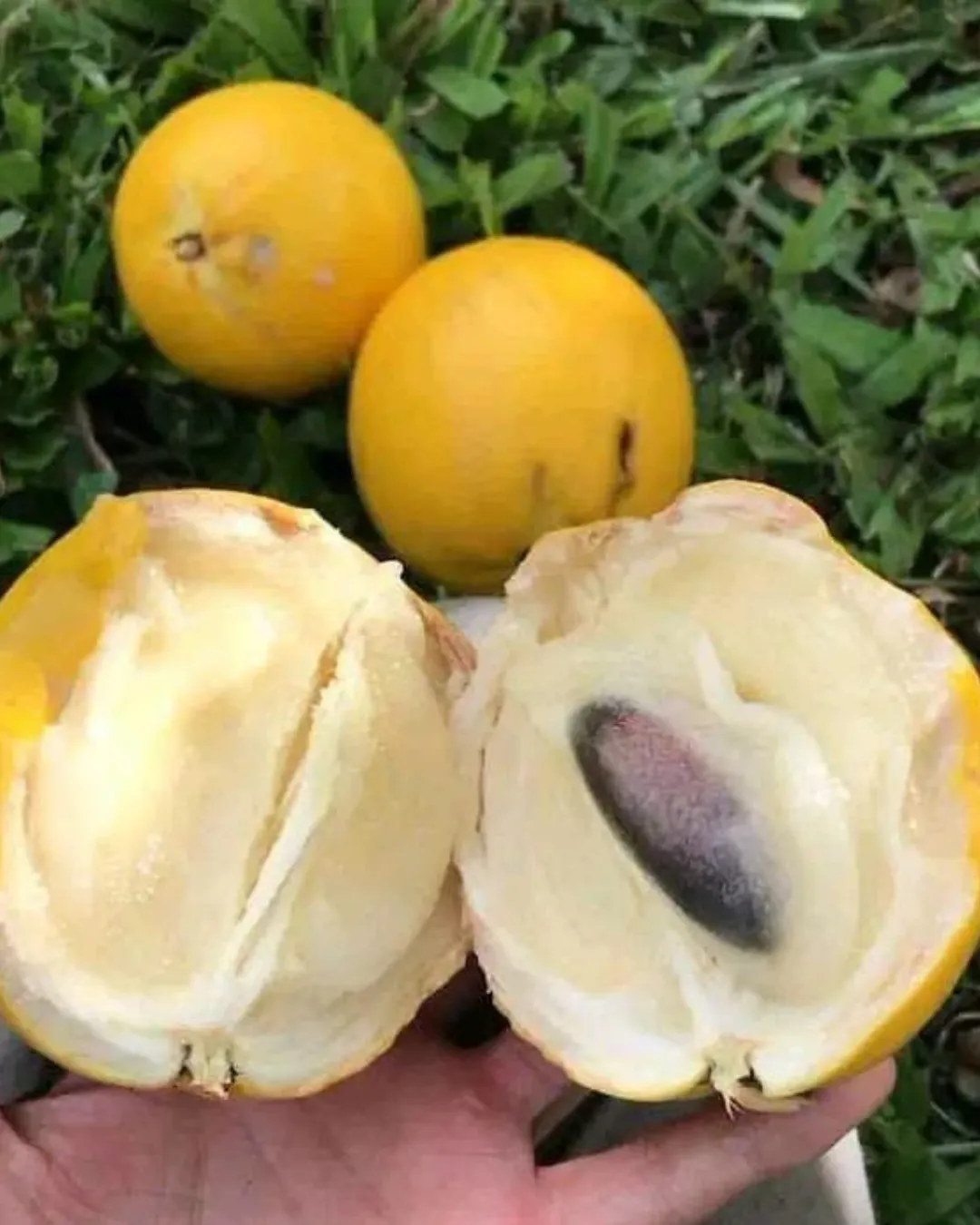
The fruit is the star of the show. When ripe, it turns a bright, smooth yellow color. Its shape ranges from round to oval, and it is often pointed at the tip — what growers call a “nipple” end. Moreover, fruit size varies from 6 to 10 cm in diameter. Each fruit weighs between 100 and 600 grams. Inside, the flesh is translucent and white. Additionally, the texture is soft, jelly-like, and creamy — often compared to caramel custard or vanilla cream. Each fruit contains one to four large, dark brown seeds. Primarily, the fruit is eaten fresh and chilled. Furthermore, it is also used in ice creams, desserts, and fruit salads.
The Abiu fruit is not only delicious — it is also nutritious. It contains thiamine, riboflavin, niacin, Vitamin C, calcium, iron, and phosphorus. Consequently, it offers genuine health value beyond its exceptional flavor. Additionally, the tree produces fruit in as little as two to three years from seed under optimal conditions. Mature trees can yield up to 200 kg of fruit per year.
Tree Size and Growth Habit Pouteria caimito
Pouteria caimito is a fast-growing tropical evergreen tree. Primarily, it reaches 10 to 15 metres in height in cultivation. Under ideal forest conditions, it can grow as tall as 35 metres. Furthermore, it grows best in USDA hardiness zones 10 to 12. It thrives in full sun with rich, well-draining, slightly acidic to neutral soil. The tree prefers consistently moist conditions. Moreover, it tolerates wet soil well, which reflects its Amazonian origins.
The tree does not have a traditional dormancy cycle like temperate plants. Consequently, it grows year-round in warm tropical and subtropical climates. Additionally, it is an evergreen species, meaning it retains its leaves throughout the year. This makes it a reliable and visually attractive specimen plant for any tropical or subtropical garden.
Global Seed Delivery & Phytosanitary Certification
Packaging and Shipping
Induare Agro ships Pouteria caimito seeds to customers worldwide. Furthermore, we use Global Express shipping to ensure your seeds arrive quickly and safely. Speed matters with Abiu seeds. Moreover, seeds of this species are recalcitrant — meaning they lose viability fast in dry conditions. Consequently, we pack and dispatch seeds immediately after harvest to protect their germination potential.
We use professional moisture-retaining packaging for every order. Additionally, seeds are carefully wrapped and sealed to survive international transit. Furthermore, Induare Agro is based in Indonesia, a country with a rich tropical biodiversity. Consequently, our location gives us direct access to some of the world’s finest rare and exotic tropical plant material.
Buyer Peace of Mind
Every seed order from Induare Agro includes a full Phytosanitary Certificate. This is an official plant health document issued by Indonesia’s national plant protection authority. Furthermore, it certifies that your seeds are free from pests and diseases. Consequently, you can import them legally into most countries worldwide.
Additionally, our seeds meet strict export quality standards. We work only with verified organic growers. Moreover, every batch is inspected before dispatch. Consequently, you receive only the freshest, highest-quality seeds available. Induare Agro is committed to safe, legal, and professional global plant trade. Furthermore, our Phytosanitary Certificate removes the guesswork and risk from international seed importing. Primarily, our goal is your success as a grower or collector.
How to Grow Pouteria caimito
Step 1 — Pre-Soak the Seed Place your seed in warm water (around 30°C) for 12 to 24 hours before planting. This softens the seed coat and speeds up germination significantly.
Step 2 — Prepare Your Growing Mix Fill a small pot or seedling bag with a well-draining mix. Use a blend of peat, perlite, and rich organic compost for best results.
Step 3 — Sow the Seed Plant the seed approximately 2.5 cm (1 inch) deep in the center of the pot. Keep the seed upright if possible, with the pointed end facing up.
Step 4 — Provide Heat and Moisture Place the pot in a warm location with temperatures between 25°C and 30°C. Keep the soil consistently moist — never waterlogged.
Step 5 — Wait for Germination Germination typically occurs within 2 to 10 days when seeds are fresh. Furthermore, some seeds may take up to 4 weeks. Be patient and keep conditions stable.
Step 6 — Transfer to Sunlight Once the seedling reaches 5–10 cm, move it to a bright spot with full sun. Additionally, maintain high humidity during the early growth stage.
Step 7 — Transplant to Final Location When the seedling is about 30–40 cm tall (roughly 9 months old), it is ready to transplant. Choose a sunny, moist spot with rich, well-draining soil.
Step 8 — Ongoing Care Water regularly to keep the soil moist. Furthermore, apply a balanced fertilizer every 2–3 months. Additionally, lightly prune the young tree to encourage strong, well-spaced branching.
