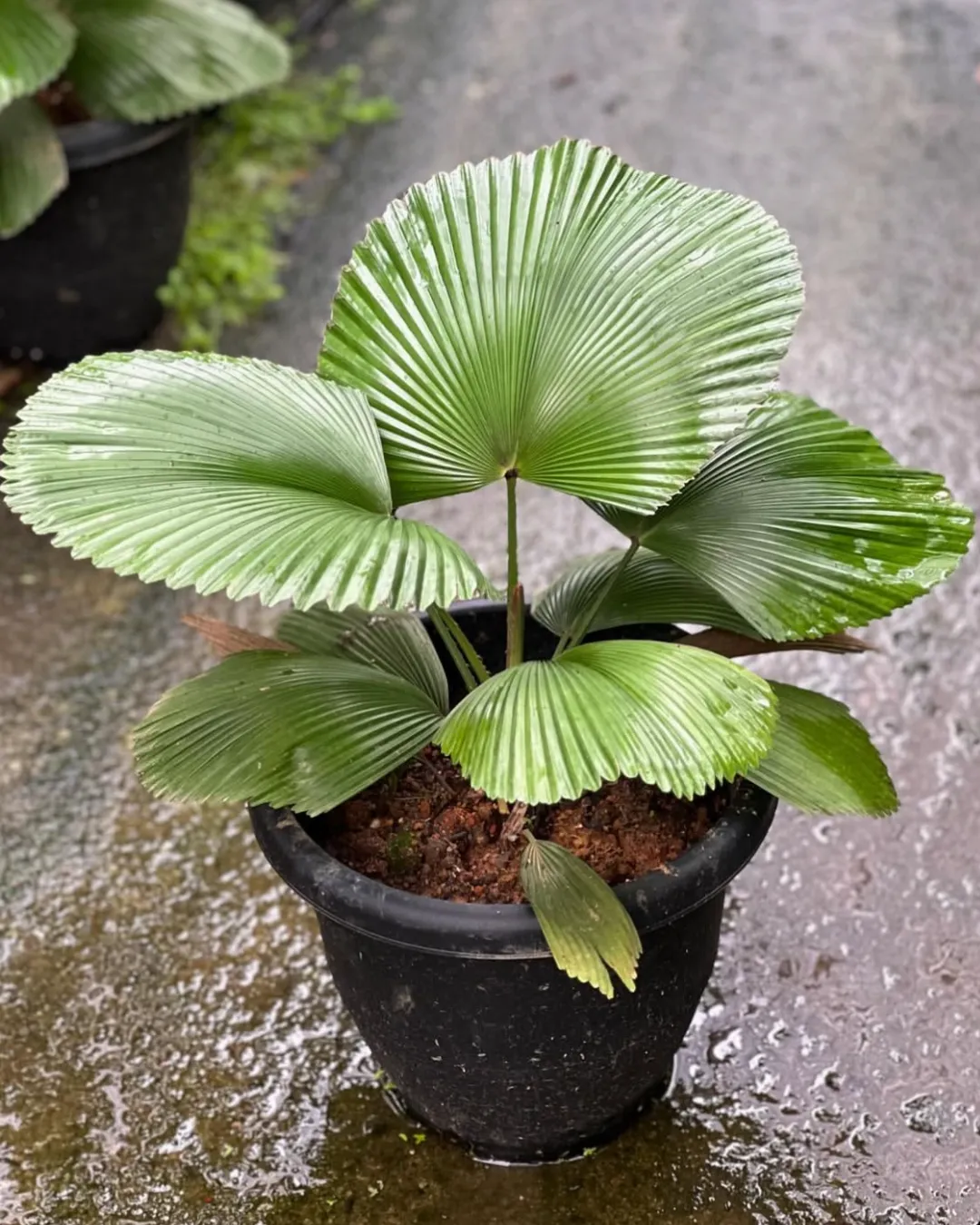
What Is Licuala cordata?
Licuala cordata is one of the rarest and most desirable dwarf palms in the world. It is commonly known as the Heart-shaped Fan Palm. Furthermore, it is native to the rainforests of Sarawak, in the Malaysian state of Borneo. The plant grows naturally in the shaded understory of the forest — the lower layer beneath the tall canopy trees. It thrives in warm, humid, and sheltered conditions close to the forest floor.
In the wild, L. cordata grows up to 1.5 metres tall. Consequently, it is a true dwarf palm — compact, manageable, and perfectly suited to pot cultivation indoors or in a sheltered tropical garden. Additionally, its leaves can reach up to 60 cm in diameter. This makes the leaf display remarkably bold for such a small plant. Furthermore, the species is considered one of the most collector-worthy palms in existence. Expert palm growers worldwide consistently rate it among the top specimens for both beauty and rarity.
Induare Agro offers fresh seeds of this rare Bornean palm with full export documentation included. Primarily, every seed is hand-selected and shipped as quickly as possible after harvest. Consequently, collectors worldwide now have a legal and verified opportunity to grow this extraordinary palm from seed.
Aesthetic Features Licuala cordata
Licuala cordata is a visually spectacular plant. It is one of the few palms in the world with an almost completely circular leaf blade — the flat, broad part of the leaf. Furthermore, this circular shape makes it stand out immediately from every other palm species in a collection. The overall plant is compact and elegant. It grows as a single-stemmed — solitary — palm with a very short, slender trunk that is often barely visible at the base.
Leaf Shape and Texture Licuala cordata
The leaves of Licuala cordata are the reason collectors prize this palm above almost all others. Each leaf is nearly round or heart-shaped — which gives the species its name, cordata, meaning “heart-shaped” in Latin. Furthermore, the leaf blade is almost always undivided. This means the entire leaf surface is one continuous piece of green — a feature that is extremely rare in the palm family. Additionally, the surface of each leaf is deeply and neatly pleated — meaning it is folded into tight, parallel ridges like a fan. Consequently, this pleated texture catches the light in a way that makes each leaf look three-dimensional and almost sculptural. The leaf colour is a rich, glossy dark green with a beautiful natural sheen.
Leaf Size and Stalk Licuala cordata
Each leaf blade can grow up to 60 cm — and sometimes up to 1 metre — in diameter on a mature plant. Furthermore, the leaf stalk — called a petiole — is slender, firm, and grows up to 60 cm in length. Additionally, in some leaves the blade overlaps itself at the base where the stalk connects. This overlap creates a complete circle and is one of the most distinctive visual features of this species. Primarily, the combination of circular shape, pleated surface, and glossy colour is what drives collectors and palm enthusiasts to search for this plant worldwide.
Flowers, Fruit, and Growth Habit
Licuala cordata produces small flowers on a branched flower spike — called an inflorescence — that emerges from between the leaf bases. Furthermore, the flowers are small, cream-coloured, and not fragrant. They are followed by small round fruits that turn red when ripe. Additionally, each fruit contains a single seed. The plant is evergreen, meaning it holds its leaves year-round. Consequently, it provides a consistent and beautiful display in every season. The plant grows very slowly. Primarily, patience is the most important quality any grower of this palm must have.
Global Seed Delivery & Phytosanitary Certification
Induare Agro is a professional botanical seed exporter based in Indonesia. The company works directly with verified growers and sources across Borneo and the broader Indonesian archipelago. Furthermore, Induare Agro ships rare palm seeds to collectors, botanical gardens, and research institutions in more than 50 countries worldwide. Every order follows a strict, fully documented export process from packing to delivery.
Packaging and Shipping
Induare Agro packs every seed with professional moisture-control materials. Cushioned express packaging protects the seeds safely throughout the full transit journey. Shipments go out via Global Express couriers such as DHL and FedEx. Additionally, most international orders arrive within 5–14 business days. Furthermore, every parcel includes an official Phytosanitary Certificate. This document is issued by Indonesia’s Plant Health Authority. It confirms that the seeds are free from pests, disease, and regulated plant pathogens. Consequently, it fully meets the import requirements of customs authorities in the EU, USA, UK, Australia, Japan, and most other regulated markets worldwide.
Buyer Peace of Mind
Induare Agro puts legal compliance at the centre of every order. Every shipment includes the Phytosanitary Certificate and a commercial invoice. Furthermore, this complete paperwork ensures smooth and fast customs clearance at every destination. Additionally, the Induare Agro team provides after-sales growing support for every buyer. Primarily, the goal is to make sure every collector successfully germinates and establishes their rare Licuala cordata from seed to its first magnificent circular leaf.
How to Grow Licuala cordata
Growing Licuala cordata from seed requires patience. Furthermore, it is one of the slower-germinating palms — seeds can take 1 to 6 months to sprout. The key is consistent warmth, high humidity, and never letting the growing medium dry out. Follow these steps carefully for the best results.
Step 1 — Seed Preparation Soak the seed in warm water (25–30°C) for 5–7 days before planting. Additionally, change the water daily during soaking. This softens the outer coat and significantly improves germination speed.
Step 2 — Growing Medium Use a well-draining but moisture-retaining mix: 40% coco coir or peat, 30% perlite, and 30% fine orchid bark or compost. Consequently, this replicates the rich, humid forest floor of Licuala’s native Bornean habitat.
Step 3 — Sowing Place the seed just below the surface — about 1–2 cm deep — in a pot with good drainage holes. Furthermore, keep the growing medium consistently moist at all times. Never let it dry out between waterings.
Step 4 — Temperature and Humidity Maintain a steady temperature of 25–30°C and humidity above 70% at all times. Primarily, high and consistent warmth is the most critical factor for germination success in this species. A covered humidity tray or propagation box works well.
Step 5 — Light Place the pot in a warm spot with bright, indirect light. Additionally, protect it from all direct sun. In nature, this palm grows under dense forest canopy with no direct sunlight reaching the leaf surface.
Step 6 — Watering Keep the growing medium consistently moist throughout the germination and seedling stage. Furthermore, never let the pot sit in standing water. Check regularly that drainage holes remain clear and free-flowing.
Step 7 — Patience and Monitoring Licuala cordata seeds are notoriously slow to germinate — sometimes taking 3–6 months. Consequently, do not discard the pot if nothing appears after the first month. Additionally, maintain the same warm, moist conditions throughout the entire waiting period without interruption.
Step 8 — Fertilising Established Seedlings Once the seedling produces its first true leaf, begin feeding every 4–6 weeks. Furthermore, use a diluted, balanced liquid fertiliser (NPK 10-10-10 or similar) during the active growing season. Primarily, avoid heavy feeding — this slow-growing palm responds best to light, regular nutrition rather than large, infrequent doses.
© Induare Agro — Indonesia’s professional rare seed exporter.
