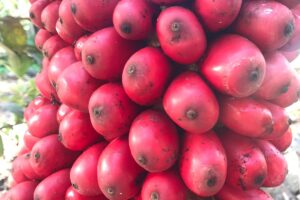
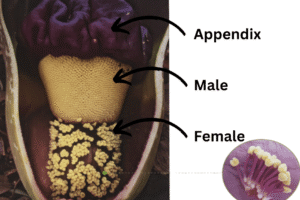
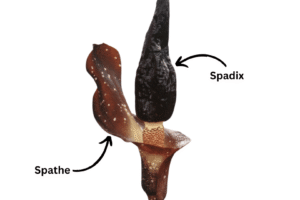
About the Plant Amorphophallus (HABIT)
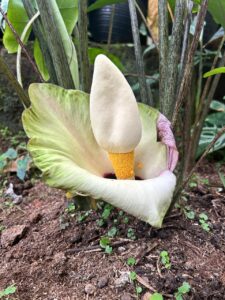
The genus Amorphophallus represents a fascinating group of perennial tuberous herbs that are primarily terrestrial in nature. These plants are renowned for their remarkable Amorphophallus growth habit, with some individual members reaching impressive heights of up to 6 meters. As perennials, they persist through multiple growing seasons, relying on their underground storage organs to survive fluctuating environmental conditions.
Understanding the Dormancy Period and Growth Cycles
One of the most distinct Amorphophallus species characteristics is their specialized survival strategy involving a dormancy period.
-
Seasonal Dormancy: Most members of this genus enter a dormant state during specific times of the year, typically coinciding with the dry season.
-
Extended Dormancy: In instances where environmental circumstances become particularly adverse, the dormant phase can exceptionally last for three to four years before the plant finally produces a new green leaf from its tuber.
-
Leaf Emergence: Under standard conditions, many species break their dormancy seasonally to develop a single leaf annually.
-
Irregular Patterns: However, growth is not always uniform; some species exhibit irregular patterns where leaves may appear two or three times within a single year.
Tuber Morphology: Shaping Survival
The underground anatomy of these plants is as varied as their surface appearance. The tuber morphology of Amorphophallus serves as the primary energy reservoir for the plant’s demanding growth cycles.
Researchers have identified several distinct shapes and structures within the genus:
-
Depressed-Globose: This is a common shape for many Amorphophallus tubers.
-
Elongate-Cylindric: Some species feature irregularly elongated, cylindrical tubers.
-
Carrot-Shaped: While present in the genus, this specific shape is notably absent in species native to Indonesia.
-
Rhizomatous Types: Rhizomatous structures are rare within the genus and are never found in Indonesian species (Jansen et al. 1996, Mayo et al. 1997, Yuzammi 2009).
Furthermore, the development of these tubers varies between species; they may gradually divide or develop offset tubers, though this is not a universal trait across the entire genus.
Amorphophallus growth habit, rare Amorphophallus, rare seeds, rare seeds amorphophallus, aroid, rare aroid, Amorphophallus.
Amorphophallus angulatus, Amorphophallus annulifer, Amorphophallus asper, Amorphophallus beccarii, Amorphophallus borneensis, Amorphophallus costatus, Amorphophallus decus silvae, Amorphophallus discophorus, Amorphophallus eburneus, Amorphophallus forbesii, Amorphophallus galbra, Amorphophallus gigas, Amorphophallus haematospadix, Amorphophallus hewittii, Amorphophallus hirsutus, Amorphophallus infundibuliformis, Amorphophallus linguiformis, Amorphophallus manta, Amorphophallus muelleri, Amorphophallus paeoniifolius, Amorphophallus pendulus, Amorphophallus plicatus, Amorphophallus prainii, Amorphophallus sagittarius, Amorphophallus spectabilis, Amorphophallus tinekeae, Amorphophallus titanum, Amorphophallus variabilis