
About the Plant Amorphophallus: FRUITS AND SEEDS

Amorphophallus Fruits and Seeds: Development and Diversity

The reproductive cycle of the Amorphophallus plant concludes with the development of distinct fruits and seeds. Once fertilization occurs, the male zone and the appendix fall off. Subsequently, the female part of the spadix transforms into a cluster of berries. This transition represents a significant physical change, as the female section swells or elongates markedly.
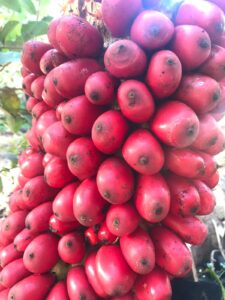
Amorphophallus fruits and seeds

The Anatomy of Amorphophallus Berries

The fruits of the Amorphophallus genus are technically berries. These berries exhibit a wide range in size. They appear as small as 0.5 cm or reach dimensions up to 5 cm in certain species. Additionally, each berry typically houses between 1 to 4 seeds.

One of the most striking features involves their vibrant coloration. The skin of the fruit usually ranges from orange to red. While rarer colors like blue or white exist, Indonesian species mostly show red and orange-red hues. Therefore, these bright colors often attract specific dispersers in their natural habitat.

The Unique Structure of Amorphophallus Seeds

The seeds within these berries have specific adaptations for survival. They possess several unique botanical features:

    • Shape and Texture: The seeds are ellipsoid in shape. Moreover, they have a smooth, thin outer layer known as the testa.

    • The Embryo: The embryo varies in size from small to large. It often displays a green appearance on the surface.

    • Nutritional Storage: Notably, these seeds lack endosperm. This differs from many other flowering plants that use endosperm for food storage.

Amorphophallus rare, Rare seeds, Rare aroid, Amorphophallus angulatus, Amorphophallus annulifer, Amorphophallus asper, Amorphophallus beccarii, Amorphophallus borneensis, Amorphophallus costatus, Amorphophallus decus silvae, Amorphophallus discophorus, Amorphophallus eburneus, Amorphophallus forbesii, Amorphophallus galbra, Amorphophallus gigas, Amorphophallus haematospadix, Amorphophallus hewittii, Amorphophallus hirsutus, Amorphophallus infundibuliformis, Amorphophallus linguiformis, Amorphophallus manta, Amorphophallus muelleri, Amorphophallus paeoniifolius, Amorphophallus pendulus, Amorphophallus plicatus, Amorphophallus prainii, Amorphophallus sagittarius, Amorphophallus spectabilis, Amorphophallus tinekeae, Amorphophallus titanum, Amorphophallus variabilis
About the Plant Amorphophallus: FLOWERS

Amorphophallus Flower Structure: A Complete Botanical Guide

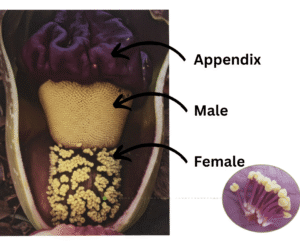
Understanding the Amorphophallus flower structure is essential for grasping how these unique plants reproduce. Biologically, the Amorphophallus genus is monoecious. This means that both female and male flowers grow on a single individual plant. These reproductive organs sit on a central spike called a spadix. Usually, a large bract protects this structure.

Amorphophallus flower structure

Anatomy of the Spadix

The internal arrangement of the bloom consists of distinct zones along the spadix. In some species, a sterile area separates the male and female flower zones. However, other species have contiguous zones where they sit directly next to each other. Furthermore, the proportion of these zones varies greatly. For instance, the female zone can be shorter, equal to, or even longer than the male zone. Therefore, this specific anatomical setup helps the plant manage its reproductive cycle effectively.

The Diversity of the Appendix

Additionally, a prominent feature of this plant is the appendix. This part is the sterile uppermost section of the spadix. It usually sits directly above the male zone. Sometimes, a short stalk known as a stipe separates the two. The appendix shows immense diversity in shape and texture. It can be conical, cylindric, or nearly spherical. Moreover, its surface can be smooth, wrinkled, or even covered in hair-like structures.

Post-Fertilization Changes

Once fertilization occurs, the physical form of the plant changes dramatically. Specifically, the male zone and the appendix wither and fall off. Consequently, the female part of the Amorphophallus flower structure begins to transform. This section swells or elongates significantly as it develops into fruit. Many botanical studies have documented this fascinating process over the years.

Amorphophallus angulatus, Amorphophallus annulifer, Amorphophallus asper, Amorphophallus beccarii, Amorphophallus borneensis, Amorphophallus costatus, Amorphophallus decus silvae, Amorphophallus discophorus, Amorphophallus eburneus, Amorphophallus forbesii, Amorphophallus galbra, Amorphophallus gigas, Amorphophallus haematospadix, Amorphophallus hewittii, Amorphophallus hirsutus, Amorphophallus infundibuliformis, Amorphophallus linguiformis, Amorphophallus manta, Amorphophallus muelleri, Amorphophallus paeoniifolius, Amorphophallus pendulus, Amorphophallus plicatus, Amorphophallus prainii, Amorphophallus sagittarius, Amorphophallus spectabilis, Amorphophallus tinekeae, Amorphophallus titanum, Amorphophallus variabilis
About the Plant Amorphophallus: INFLORESCENCE

Amorphophallus Inflorescence: The Unique Biology of Corpse Flowers

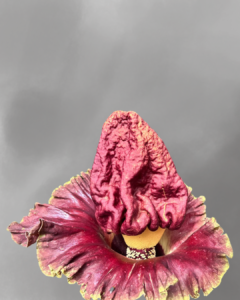
Amorphophallus inflorescence represents one of the most fascinating reproductive structures in the plant kingdom. Typically, a single inflorescence arises directly from the underground tuber. While these blooms usually appear as solitary structures without leaves, some rare cases show two inflorescences emerging simultaneously. This biological phenomenon often occurs before the vegetative leaf stage, making the bloom even more visually striking.

Structural Anatomy: Spathe and Peduncle

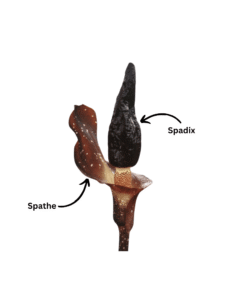
A detailed view of the Amorphophallus inflorescence showing the spathe and spadix.

The peduncle serves as the primary stalk for the bloom. It is generally shorter than the spathe and mimics the intricate patterns of the petiole. In certain species like A. paeoniifolius, this stalk elongates significantly after fertilization. This growth facilitates effective fruit dispersal.

Amorphophallus paeoniifolius

The Amorphophallus inflorescence consists of two main parts: the spathe and the spadix. The spathe acts as a large, protective bract. It usually takes a bell-shaped or boat-like form. Its colors are vibrant, ranging from deep maroon and purple to yellow and green. These colors do not just provide beauty; they mimic a dead body to attract carrion-seeking pollinators.

The Role of the Spadix and Appendix

Inside the spathe sits the spadix. This central column often extends beyond the spathe’s rim. The spadix contains the tiny, true individual flowers at its lower section. The upper part is a sterile structure known as the appendix. This appendix plays a vital role in thermogenesis and scent emission to lure insects.

Pollination Strategy and Sexual Organs

Amorphophallus species are monoecious. This means both male and female flowers reside on the same plant. The female flowers occupy the lowest part of the spadix, while the male flowers sit just above them. This arrangement, combined with the textured inner surface of the spathe, ensures the protection of the ovaries during the complex pollination process.

Growth Habits and Variations

The internal surface of the spathe provides critical diagnostic features for botanists. It can be smooth, ribbed, or covered in warts and scales. Depending on the species, the spadix can be sessile or stipitate. Understanding these variations helps scientists identify different species within the diverse Amorphophallus genus.

Amorphophallus angulatus, Amorphophallus annulifer, Amorphophallus asper, Amorphophallus beccarii, Amorphophallus borneensis, Amorphophallus costatus, Amorphophallus decus silvae, Amorphophallus discophorus, Amorphophallus eburneus, Amorphophallus forbesii, Amorphophallus galbra, Amorphophallus gigas, Amorphophallus haematospadix, Amorphophallus hewittii, Amorphophallus hirsutus, Amorphophallus infundibuliformis, Amorphophallus linguiformis, Amorphophallus manta, Amorphophallus muelleri, Amorphophallus paeoniifolius, Amorphophallus pendulus, Amorphophallus plicatus, Amorphophallus prainii, Amorphophallus sagittarius, Amorphophallus spectabilis, Amorphophallus tinekeae, Amorphophallus titanum, Amorphophallus variabilis
About the Plant Amorphophallus: VEGETATIVE CHARACTERS

Amorphophallus Vegetative Characters: A Complete Guide

Understanding the Amorphophallus vegetative characters is essential for botanists and plant enthusiasts. These plants, belonging to the Araceae family, exhibit a highly specialized morphology that distinguishes them from other tuberous species.

Amorphophallus titanum

The Unique Solitary Leaf Growth

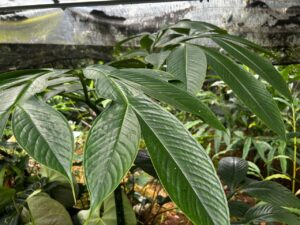
In the study of these botanical traits, the leaf arrangement is the first notable feature. Mature plants typically produce a solitary leaf. While seedlings might occasionally show two or three leaves, adult specimens rarely display more than one at a time. This single-leaf strategy is a hallmark of the genus.

If you are looking to add these exotic specimens to your collection, feel free to browse our selection at Induarea Agro Shop.

Petiole Structure and Texture

The petiole, or leaf stalk, is a central component of Amorphophallus vegetative characters.

  • Appearance: It is a solid, cylindrical stalk that grows erect.

  • Texture: Depending on the species, the surface may be smooth or warty (verrucose).

  • Coloration: It often features distinct mottled patterns and various colors, making it highly ornamental.

Amorphophallus konjac – Tubers & Seeds

Complexity of the Leaf Lamina

The horizontal spreading of the leaf blade, or lamina, showcases the most complex morphology.

  1. Divisions: The lamina is variously dissected, often being pinnatisect or dichotomously branched.

  2. Leaflets: The leaflets vary from oblong-elliptic to linear, with outer leaflets generally being larger than the inner ones.

  3. Margins: The edges of these leaflets can be entire or undulate (wavy).

Growth of Bulbils

Another fascinating aspect of Amorphophallus vegetative characters is the presence of bulbils. These vegetative bodies arise at the junction of the rachises (leaf ribs). This unique method of growth is just one reason why we are passionate about the species we provide at Induarea Agro.

Rare Amorphophallus, rare seeds, rare aroid, Amorphophallus angulatus, Amorphophallus annulifer, Amorphophallus asper, Amorphophallus beccarii, Amorphophallus borneensis, Amorphophallus costatus, Amorphophallus decus silvae, Amorphophallus discophorus, Amorphophallus eburneus, Amorphophallus forbesii, Amorphophallus galbra, Amorphophallus gigas, Amorphophallus haematospadix, Amorphophallus hewittii, Amorphophallus hirsutus, Amorphophallus infundibuliformis, Amorphophallus linguiformis, Amorphophallus manta, Amorphophallus muelleri, Amorphophallus paeoniifolius, Amorphophallus pendulus, Amorphophallus plicatus, Amorphophallus prainii, Amorphophallus sagittarius, Amorphophallus spectabilis, Amorphophallus tinekeae, Amorphophallus titanum, Amorphophallus variabilis
About the Plant Amorphophallus: HABIT

About the Plant Amorphophallus (HABIT)

Amorphophallus growth habit

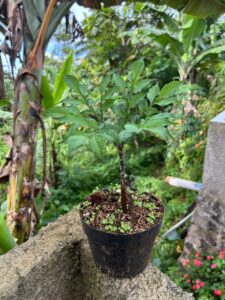
The genus Amorphophallus represents a fascinating group of perennial tuberous herbs that are primarily terrestrial in nature. These plants are renowned for their remarkable Amorphophallus growth habit, with some individual members reaching impressive heights of up to 6 meters. As perennials, they persist through multiple growing seasons, relying on their underground storage organs to survive fluctuating environmental conditions.


Understanding the Dormancy Period and Growth Cycles

One of the most distinct Amorphophallus species characteristics is their specialized survival strategy involving a dormancy period.

  • Seasonal Dormancy: Most members of this genus enter a dormant state during specific times of the year, typically coinciding with the dry season.

  • Extended Dormancy: In instances where environmental circumstances become particularly adverse, the dormant phase can exceptionally last for three to four years before the plant finally produces a new green leaf from its tuber.

  • Leaf Emergence: Under standard conditions, many species break their dormancy seasonally to develop a single leaf annually.

  • Irregular Patterns: However, growth is not always uniform; some species exhibit irregular patterns where leaves may appear two or three times within a single year.


Tuber Morphology: Shaping Survival

The underground anatomy of these plants is as varied as their surface appearance. The tuber morphology of Amorphophallus serves as the primary energy reservoir for the plant’s demanding growth cycles.

Researchers have identified several distinct shapes and structures within the genus:

  • Depressed-Globose: This is a common shape for many Amorphophallus tubers.

  • Elongate-Cylindric: Some species feature irregularly elongated, cylindrical tubers.

  • Carrot-Shaped: While present in the genus, this specific shape is notably absent in species native to Indonesia.

  • Rhizomatous Types: Rhizomatous structures are rare within the genus and are never found in Indonesian species (Jansen et al. 1996, Mayo et al. 1997, Yuzammi 2009).

Furthermore, the development of these tubers varies between species; they may gradually divide or develop offset tubers, though this is not a universal trait across the entire genus.

Amorphophallus growth habit, rare Amorphophallus, rare seeds, rare seeds amorphophallus, aroid, rare aroid, Amorphophallus.
Amorphophallus angulatus, Amorphophallus annulifer, Amorphophallus asper, Amorphophallus beccarii, Amorphophallus borneensis, Amorphophallus costatus, Amorphophallus decus silvae, Amorphophallus discophorus, Amorphophallus eburneus, Amorphophallus forbesii, Amorphophallus galbra, Amorphophallus gigas, Amorphophallus haematospadix, Amorphophallus hewittii, Amorphophallus hirsutus, Amorphophallus infundibuliformis, Amorphophallus linguiformis, Amorphophallus manta, Amorphophallus muelleri, Amorphophallus paeoniifolius, Amorphophallus pendulus, Amorphophallus plicatus, Amorphophallus prainii, Amorphophallus sagittarius, Amorphophallus spectabilis, Amorphophallus tinekeae, Amorphophallus titanum, Amorphophallus variabilis
Araceae Rare Exotic Plants

Araceae Rare Exotic Plants: A Complete Guide to Nature’s Wonders

When discussing Araceae rare exotic plants, we refer to one of the most diverse and captivating groups in the botanical world. These plants, commonly known as aroids, are primarily found in the tropics, where nearly 95% of all species reside. Tropical Asia is a major hub for this family, offering a high variety of genera that collectors dream of. For those looking to expand their collection, you can find many rare and exotic species in our shop.

Araceae Rare Exotic Plants

Identifying Unique Aroid Features

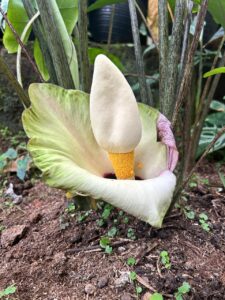
To correctly identify these botanical treasures, one must look at the unique inflorescence. Unlike a single flower, the inflorescence of these plants consists of two main parts:

  1. The Spadix: A fleshy axis that holds numerous tiny flowers.

  2. The Spathe: A modified, often colorful leaf that protects the spadix.

The spadix is typically an elongated, upright structure. Depending on the genus, the flowers can be bisexual or unisexual, arranged densely over the fleshy axis (Boyce & Wong 2012).

Unique Features of Rare Amorphophallus

Within the world of Araceae rare exotic plants, the Amorphophallus genus stands out due to its unisexual flower arrangement. On the spadix of an Amorphophallus, the female flowers (pistillate) are at the base, while male flowers (staminate) are located above them. This is often crowned by a sterile appendix at the top (Boyce & Wong 2012). The spathe in this genus is not only magnificent in color but serves the vital function of protecting the maturing fruits after fertilization occurs.

Diversity of Exotic Anthurium and Alocasia

The diversity among these exotic specimens is truly immense, ranging from climbing vines to aquatic species. Many are famous worldwide as ornamental foliage, such as the Anthurium and Alocasia genera.

Beyond their beauty, some species in this family serve as essential food sources. For instance, Colocasia esculenta (Taro) and Amorphophallus paeoniifolius are vital crops in various cultures. Additionally, plants like Epipremnum pinnatum are valued for their traditional medicinal properties. Whether you are looking for a stunning Anthurium or a specialized specimen for your collection, understanding these botanical traits is key to successful cultivation (Boyce & Wong 2012).

Amorphophallus growth habit, rare Amorphophallus, rare seeds, rare seeds amorphophallus, aroid, rare aroid, Amorphophallus.
Amorphophallus angulatus, Amorphophallus annulifer, Amorphophallus asper, Amorphophallus beccarii, Amorphophallus borneensis, Amorphophallus costatus, Amorphophallus decus silvae, Amorphophallus discophorus, Amorphophallus eburneus, Amorphophallus forbesii, Amorphophallus galbra, Amorphophallus gigas, Amorphophallus haematospadix, Amorphophallus hewittii, Amorphophallus hirsutus, Amorphophallus infundibuliformis, Amorphophallus linguiformis, Amorphophallus manta, Amorphophallus muelleri, Amorphophallus paeoniifolius, Amorphophallus pendulus, Amorphophallus plicatus, Amorphophallus prainii, Amorphophallus sagittarius, Amorphophallus spectabilis, Amorphophallus tinekeae, Amorphophallus titanum, Amorphophallus variabilis

error: Content is protected !!