
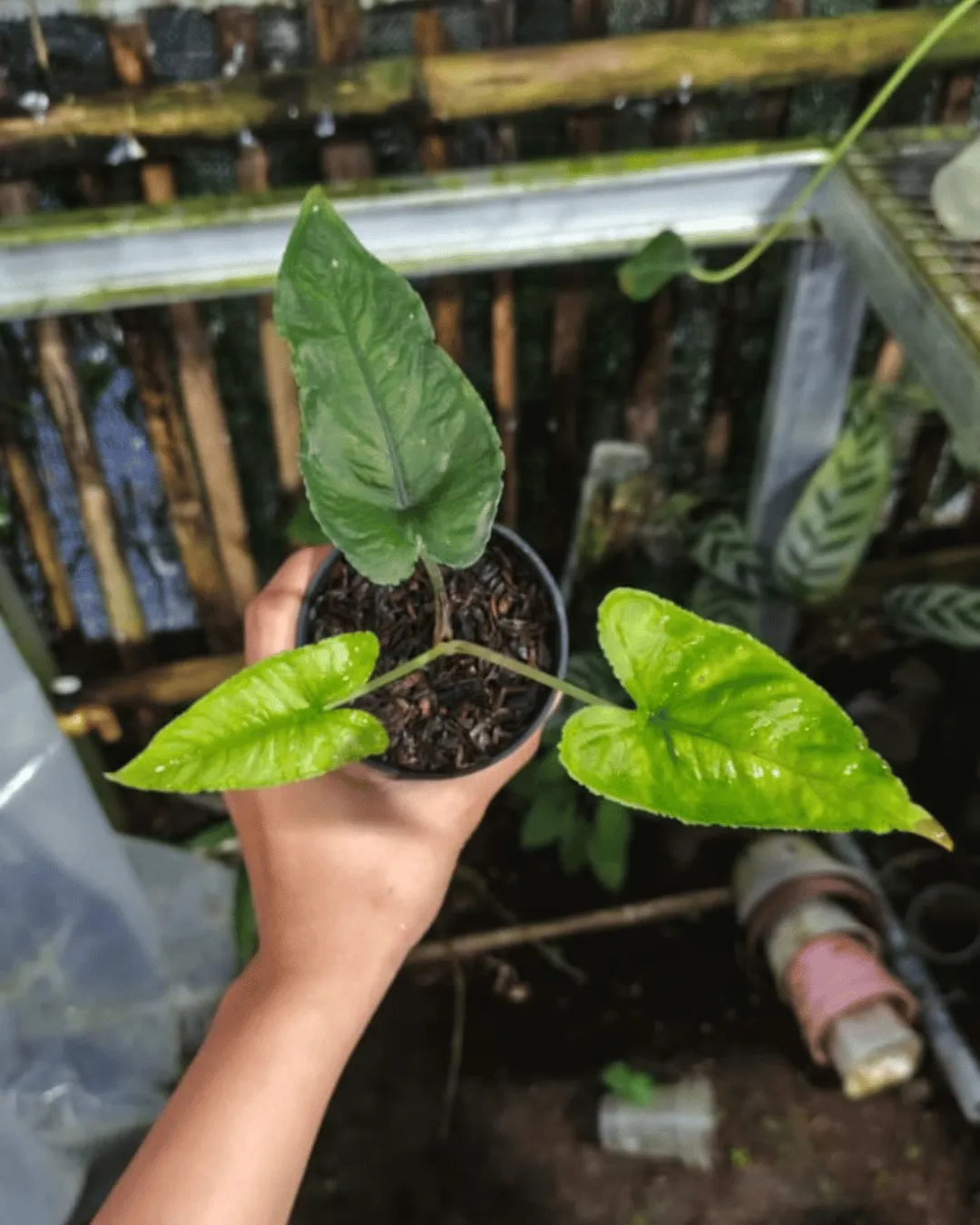
What Is Alocasia olanii?
Alocasia olanii is a rare tropical plant native to the lush rainforests of West Kalimantan, Borneo, Indonesia. It grows naturally as an understory plant. This means it thrives beneath the forest canopy in warm, humid, and shaded conditions. Consequently, it has adapted to a very specific environment — one that makes it both unique and difficult to find outside its native habitat.
This species belongs to the family Araceae, the large aroid plant family. Additionally, it is currently considered an undescribed or informally named species in the scientific community. Its trade name, Alocasia olanii, honors the person who first discovered it. Because it has not yet received a full formal scientific publication, it remains exclusive and highly sought-after by botanists and collectors globally.
Furthermore, the plant’s endemic status in Indonesian Borneo makes it a symbol of the island’s extraordinary botanical biodiversity. Borneo is one of the most biodiverse regions on Earth. Moreover, ongoing deforestation and habitat loss make wild specimens increasingly rare. Collectors who grow this plant from seed play a small but meaningful role in preserving it. Induare Agro is proud to make this extraordinary species available to global plant lovers — responsibly, legally, and with full export documentation.
Aesthetic Features Alocasia olanii
Alocasia is a genus of broad-leaved, tropical, perennial plants celebrated worldwide for dramatic foliage. The species Alocasia olanii stands out even within this already remarkable genus. Its physical features are bold, unusual, and deeply appealing to high-end collectors.
Leaf Structure
The leaves of Alocasia olanii are its most defining feature. The upper surface is dark green with a distinctive bluish or metallic sheen. This iridescent quality is extremely rare in the plant world. Consequently, it gives the plant an almost jewel-like appearance under natural or ambient light.
Additionally, the underside of each leaf displays soft purplish tones. This contrasting coloration makes every leaf visually interesting from all angles. The petioles — the long stalks that hold each leaf — carry a deep reddish-brown color. Furthermore, the leaf blades are large and bold. In its natural habitat, a single leaf can reach close to 1 metre (approximately 3 feet) in length.
Overall, the plant can grow up to 1.5 metres (around 5 feet) tall at full maturity. Moreover, it grows from a corm — a compact, underground storage structure similar to a bulb. This corm stores energy and nutrients. Primarily, it is this feature that allows the plant to survive dry or cooler seasonal periods.
Flower and Fruit
Like all members of the Araceae family, Alocasia olanii produces flowers in a specific structure called an inflorescence. The flower spike, known as a spadix — a central fleshy stalk covered in tiny flowers — sits inside a hood-like outer leaf called a spathe. The spathe acts as a protective wrap around the spadix.
Primarily, the spathe of Alocasia species is greenish to pale in color. The spadix may produce a mild scent to attract pollinators. Furthermore, female flowers on the spadix mature before male flowers. This prevents the plant from pollinating itself, which encourages genetic diversity in the wild.
Flowering is rare when the plant is grown indoors. Consequently, most collectors prize Alocasia olanii almost entirely for its extraordinary leaves rather than its blooms. Additionally, when pollinated successfully, the plant produces small berry-like fruits. These fruits carry the seeds that allow the species to be propagated and shared with growers around the world.
Dormancy Cycle
Alocasia olanii follows a natural dormancy cycle, especially when grown in non-tropical climates. During cooler or drier periods, the plant may drop its leaves and appear to die back. This is completely normal behavior. Moreover, the corm below the soil surface remains alive and full of stored energy.
Primarily, dormancy is triggered by low temperatures or reduced humidity. Once warm, humid conditions return, the plant sprouts fresh new growth. Consequently, growers should never discard a corm that appears inactive. Simply keep the soil lightly moist and warm. Additionally, patience is key — the wait is always rewarded with dramatic new foliage.
Global Seed Delivery & Phytosanitary Certification
Induare Agro is a professional Indonesian exporter of rare and exotic plant seeds. We ship to buyers in Europe, North America, Asia, Australia, and beyond. Furthermore, we meet all international standards for botanical export. Consequently, every order leaves our facility in perfect condition and with full legal documentation.
Packaging and Shipping
We use Global Express courier services for all international orders. Each seed is carefully cleaned, inspected, and prepared for long-distance transit. Additionally, we pack seeds in moisture-controlled, sterile packaging to preserve viability during shipping. Consequently, seeds arrive fresh and ready for planting — regardless of the distance they have traveled.
Moreover, Induare Agro uses export-grade materials designed specifically for botanical goods. We track every shipment from our warehouse to your door. Furthermore, we provide buyers with full tracking information as soon as their order is dispatched.
Buyer Peace of Mind
Every order from Induare Agro includes a Phytosanitary Certificate. This is an official government-issued document. It certifies that the seeds are free from pests, diseases, and contaminants. Consequently, this certificate is required by customs authorities in most countries for the legal import of plant material.
Additionally, our Phytosanitary Certificate ensures that your seeds have been inspected and approved for international travel. Furthermore, this protects both the buyer and the local ecosystems of the destination country. We handle all paperwork on your behalf. Moreover, we stay up to date with international phytosanitary regulations so that your purchase clears customs smoothly.
Primarily, our goal is to make rare Indonesian plants accessible to collectors everywhere — legally, safely, and professionally. Induare Agro does not cut corners on compliance. Consequently, you can buy with full confidence.
How to Grow Alocasia olanii
Step 1: Prepare Your Growing Medium Use a well-draining, organic-rich soil mix. A blend of perlite, coco coir, and fine bark works very well for this species.
Step 2: Sow the Seed or Place the Germinated Corm Place the seed or pre-germinated corm just below the soil surface. Make sure the top of the corm is level with or just slightly beneath the soil line.
Step 3: Provide Warmth and Humidity Keep the growing environment warm — between 22°C and 30°C (72°F to 86°F). Additionally, maintain high humidity above 60% for best germination results.
Step 4: Choose the Right Light Place the plant in bright, indirect light. Furthermore, avoid direct sunlight, as it will scorch the delicate leaves of this understory species.
Step 5: Water Carefully Keep the soil consistently moist but never waterlogged. Moreover, allow the top layer of soil to dry slightly between waterings to prevent root rot.
Step 6: Feed During the Growing Season Apply a balanced liquid fertilizer every two weeks from spring through autumn. Consequently, this supports strong, healthy leaf development throughout the active growing period.
Step 7: Manage Dormancy If the plant loses its leaves in cooler months, reduce watering. Additionally, keep the corm warm and slightly moist until new shoots emerge in spring.
