What Is Alocasia watsonia langkat?
Alocasia watsonia langkat is a rare and highly sought-after aroid from the tropical rainforests of Langkat Regency, North Sumatra, Indonesia. Langkat is a biodiverse region at the edge of the Leuser Ecosystem — one of the most species-rich forest systems on Earth. Consequently, plants emerging from this region carry exceptional genetic rarity. This particular form of Alocasia watsoniana is distinguished from other populations by its origin locality, which collectors and botanists now specifically name after the Langkat district.
Furthermore, the broader Alocasia watsoniana species belongs to the family Araceae. It is closely related to the “Jewel Alocasias” — a group celebrated for their bold, ornamental foliage. Primarily, this plant has lived in botanical gardens and elite private collections. Only in recent years has it become available to a wider circle of dedicated plant enthusiasts worldwide.
Additionally, Indonesia holds exceptional diversity in the Alocasia genus. Research confirms that at least 27 known Alocasia species occur across the Indonesian archipelago, with Sumatra alone presenting several under-documented forms. Alocasia watsonia langkat is among those rare locality variants that remain difficult to propagate and even harder to source legally. Induare Agro is proud to offer authenticated, export-compliant seeds from this extraordinary origin.
Aesthetic Features Alocasia watsonia langkat
The visual appeal of Alocasia watsonia langkat is what drives global demand. Moreover, no photograph fully captures the presence of a mature plant growing in ideal conditions. Below, we describe its most striking physical traits.
Leaf Structure
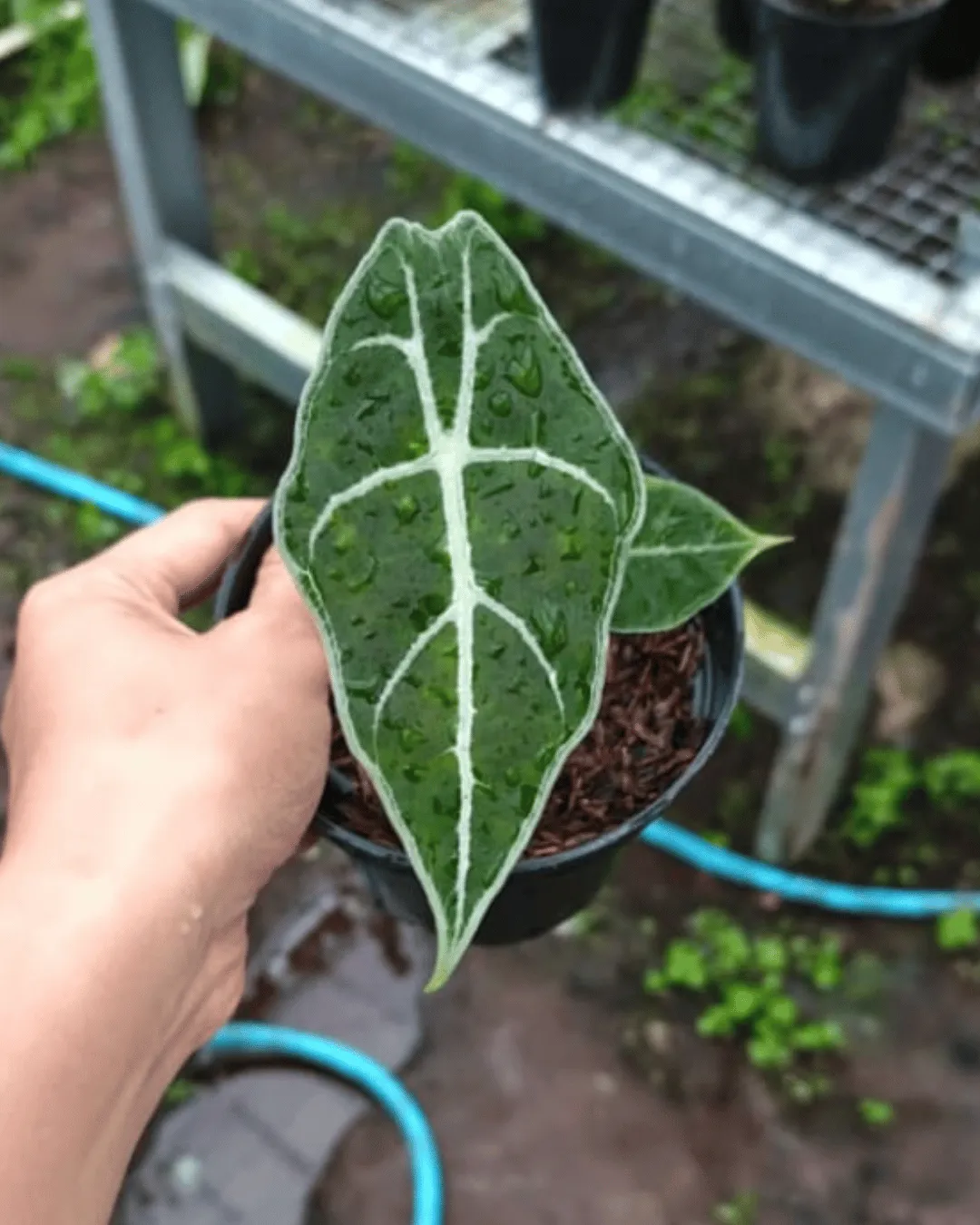
Alocasia watsonia langkat produces large, shield-shaped leaves. The upper surface is a deep, glossy forest green. Across this dark background, bold silvery-white veins run in a dramatic pattern — creating a strong visual contrast. Furthermore, the leaf edges feature a distinctive scalloped or slightly puckered texture. This puckering is unique to A. watsoniana and separates it clearly from other Alocasia species. The leaf undersides display a deep red-purple tone, adding a second layer of color that surprises observers who lift the blade. Consequently, every leaf functions almost like a living sculpture. Leaves can grow to impressive sizes, often exceeding 60 cm in length on mature plants.
Flower and Fruit
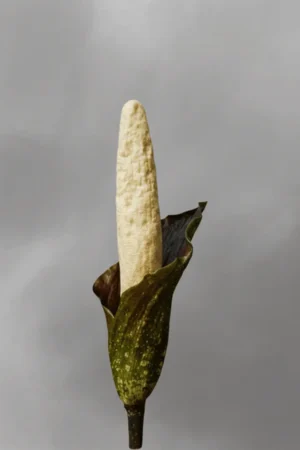
Alocasia watsonia langkat produces a classic aroid inflorescence — a spathe (a hood-like outer leaf that wraps around the flower) and a spadix (a finger-like central spike where the small flowers are located). The spathe is typically pale green to cream in color. The flowers are not the main attraction here. However, when pollinated, the spadix develops small, red-orange berries. Additionally, these fruit clusters add seasonal color and signal successful reproduction. The plant’s flowering cycle typically aligns with warm, humid growing seasons.
Dormancy Cycle
Like all Alocasia species, Alocasia watsonia langkat undergoes a natural dormancy period. Primarily, this occurs during cooler months or when environmental conditions become less humid. During dormancy, the plant may drop its leaves. Consequently, new growers sometimes assume the plant has died. It has not. The corm — the underground storage structure that holds the plant’s energy — remains alive and viable. Moreover, after a suitable rest period, the plant re-emerges vigorously. Understanding this cycle is essential for successful long-term cultivation.
Global Seed Delivery & Phytosanitary Certification
Induare Agro is committed to legal, professional, and safe global delivery of rare Indonesian seeds. Furthermore, we follow all international phytosanitary — that is, plant health and biosecurity — regulations required by importing countries.
Packaging and Shipping
Every seed order is carefully cleaned, dried, and inspected before dispatch. Additionally, seeds are packaged in moisture-resistant, padded envelopes designed for international air freight. We ship via Global Express courier services. Consequently, most orders reach their destination within 7 to 14 business days, depending on the destination country. Furthermore, every shipment includes full tracking so you always know where your order is.
Buyer Peace of Mind
Every order from Induare Agro includes a Phytosanitary Certificate issued by the Indonesian Plant Quarantine Authority. Primarily, this certificate confirms that the seeds have been inspected, are free from pests and diseases, and comply with the export regulations of Indonesia. Moreover, it satisfies the import requirements of most countries worldwide, including those in the European Union, the United States, Australia, and across Asia. Consequently, buyers can clear customs with confidence. Additionally, our team provides all required documentation in a format accepted by international customs authorities.
How to Grow Alocasia watsonia langkat
Growing Alocasia watsonia langkat from seed requires patience and consistent tropical conditions. Furthermore, following these steps will give your seeds the best possible start.
Step 1 — Prepare Your Growing Medium Use a well-draining mix of coconut coir, perlite, and fine orchid bark. Primarily, this mix retains moisture without becoming waterlogged.
Step 2 — Sow the Seeds Press seeds gently onto the surface of the moist medium. Do not bury them deeply. Lightly cover with a thin layer of coir.
Step 3 — Maintain Warmth and Humidity Keep the container in a warm spot between 25–30°C (77–86°F). Additionally, cover with a clear humidity dome to retain moisture.
Step 4 — Provide Indirect Light Place the container near a bright window. Avoid direct sunlight, as it can overheat and damage germinating seeds.
Step 5 — Be Patient Germination can take 2 to 6 weeks. Furthermore, do not allow the medium to dry out completely between waterings.
Step 6 — Transplant Seedlings Once seedlings have 2 to 3 true leaves, transplant them into individual small pots. Consequently, each seedling can develop a strong root system.
Step 7 — Long-Term Care Maintain high humidity above 60% and temperatures above 18°C (64°F). Moreover, fertilize every 4 to 6 weeks with a balanced liquid fertilizer during the growing season.