
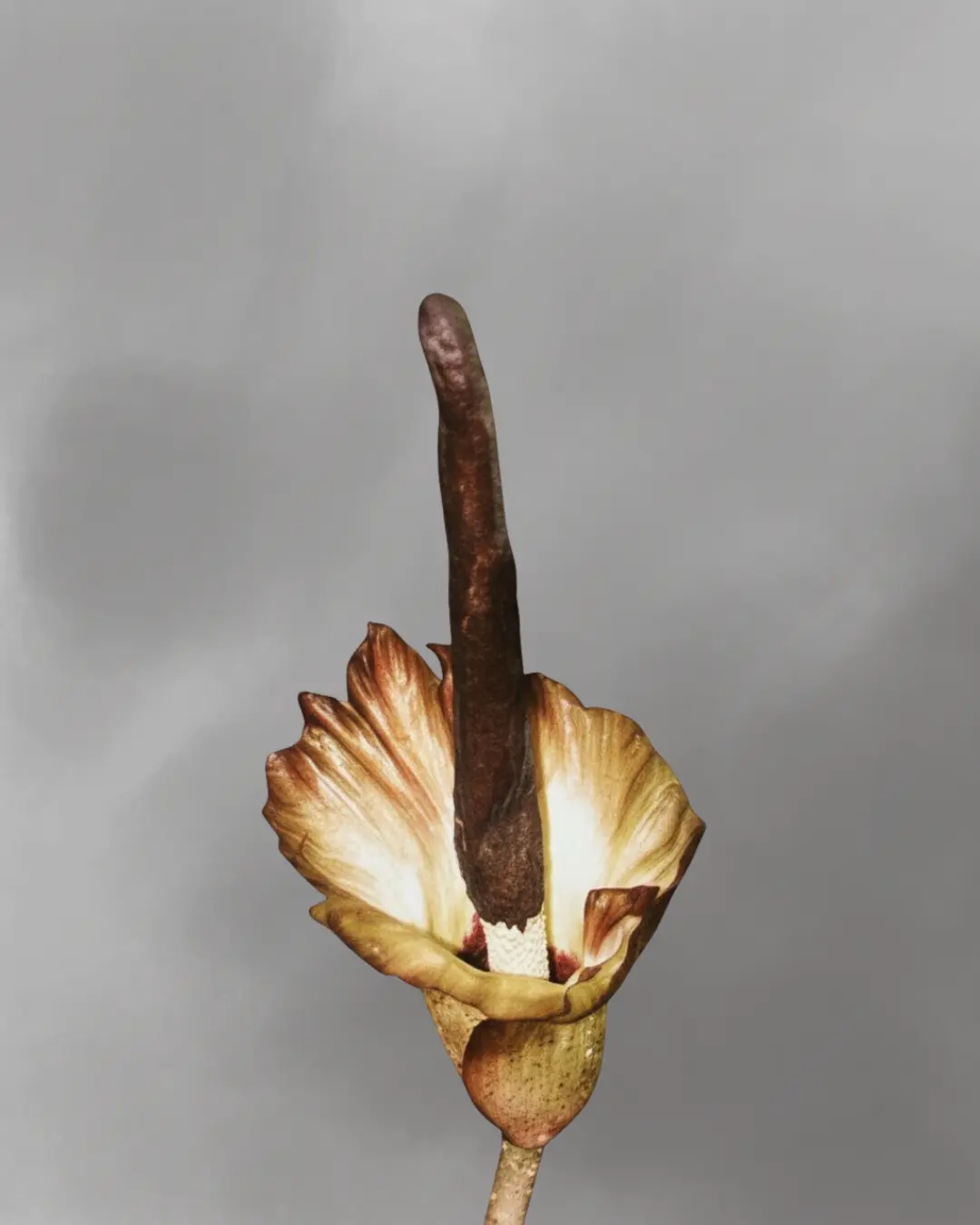
What Is Amorphophallus plicatus?
Amorphophallus plicatus is a rare, tuberous plant native to the island of Sulawesi, Indonesia. It belongs to the Araceae family — the same family as the world-famous Titan Arum. This species grows only within a limited range on Sulawesi. Furthermore, its wild population is declining, which makes it a highly sought-after plant globally.
Botanists and conservationists recognize Amorphophallus plicatus as an endemic species. “Endemic” means it grows naturally in one place and nowhere else on Earth. Additionally, it lives in Sulawesi’s wet tropical forests, thriving in humid, shaded environments. Collectors value this plant for its rarity, its unusual beauty, and its botanical significance.
The Wallacea region of Indonesia — where Sulawesi sits — is one of the world’s top biodiversity hotspots. Consequently, plants from this region attract serious attention from botanical gardens, private collectors, and aroid enthusiasts worldwide. Moreover, Amorphophallus plicatus is a relatively small-sized Amorphophallus. This makes it practical for both indoor and outdoor growing compared to giant relatives like A. titanum.
Induare Agro sources these seeds directly from Sulawesi. Furthermore, every seed ships with full documentation to meet international plant import standards.
Aesthetic Features Amorphophallus plicatus
Amorphophallus is a genus of roughly 200 tropical plants known for spectacular and unusual appearances. Amorphophallus plicatus shares this dramatic quality. Primarily, its appeal lies in three distinct features: its leaf structure, its flower and fruit, and its fascinating dormancy cycle.
Leaf Structure
Each growing season, Amorphophallus plicatus produces a single umbrella-shaped leaf from its underground tuber — a thick, starchy root bulb. Additionally, the leaf grows larger with each cycle as the tuber gains strength. The leaf surface has a deep green, textured appearance. Furthermore, the leaf stem has subtle patterning that adds visual interest even before the plant flowers.
The leaf usually grows alone, standing upright on a single stalk. Consequently, even in a simple pot, the plant makes a bold visual statement. Moreover, no two leaves look exactly the same. Each one has a slightly different shape depending on the age and size of the tuber below.
Flower and Fruit
When the tuber matures — typically after a few years of growth — the plant produces a stunning inflorescence (flower structure) about 40 cm tall. The inflorescence has two main parts. First, the spathe — a large, hood-like outer leaf — opens in shades of pink-purple. Second, the spadix — the central spike inside — is dark-colored and dramatic.
Additionally, like many Amorphophallus species, A. plicatus emits a strong odor during flowering. This smell attracts flies, which act as pollinators. Consequently, after successful pollination, the plant produces clusters of bright red fruits. Each fruit contains one seed. Furthermore, these red fruits create a striking display that many collectors find just as beautiful as the flower itself.
Dormancy Cycle
Amorphophallus plicatus enters dormancy — a natural rest period — roughly once every one to two years. During this time, the leaf dies back and the plant appears inactive. Primarily, this is a normal and healthy part of its growth cycle. The tuber stores energy underground and prepares for the next growing season.
Furthermore, the dormancy period is important for growers to understand. During rest, the plant needs much less water. Overwatering a dormant tuber can cause it to rot. Additionally, there is no need to worry — the tuber will sprout again on its own after the rest period ends. Moreover, each new growth cycle usually produces a larger, stronger leaf than the one before.
Global Seed Delivery & Phytosanitary Certification
Induare Agro takes international shipping seriously. We follow every legal requirement to ensure your seeds arrive safely and legally. Furthermore, we understand that buyers in Europe, North America, Asia, and beyond have strict import regulations. Consequently, we prepare every order with professional documentation and secure packaging.
Packaging and Shipping
Every seed leaves our facility in export-quality packaging. We use moisture-resistant materials to protect seeds during long international transit. Furthermore, we ship via Global Express courier services to ensure fast, trackable delivery. Additionally, each package includes clear labeling with scientific names, origin details, and all required plant health information.
Primarily, our goal is to ensure every seed arrives in the best possible condition. We have shipped to customers across Europe, the United States, Australia, Japan, and many other countries. Consequently, our packaging methods are tested and trusted by collectors worldwide. Moreover, Induare Agro updates its shipping protocols regularly to stay compliant with the latest international regulations.
Buyer Peace of Mind
Every order from Induare Agro includes a Phytosanitary Certificate. This is an official document issued by Indonesia’s plant health authority. Furthermore, it confirms that your seeds have been inspected and are free from pests and diseases. Consequently, this certificate is required by most countries for legal plant import.
Additionally, a Phytosanitary Certificate protects you as a buyer. It proves that your purchase is legal, traceable, and meets international biosecurity standards. Moreover, it saves you time and stress at customs. We handle all the paperwork so you can focus on growing your new plant. Primarily, our commitment is to make the buying process smooth, transparent, and worry-free for every customer worldwide.
How to Grow Amorphophallus plicatus
Step 1 — Choose Your Container Use a pot with good drainage holes. A medium-sized pot (15–20 cm diameter) works well for a single tuber or seed.
Step 2 — Prepare the Soil Use a well-draining mix of loam, coarse sand, and organic compost. Furthermore, avoid heavy clay soils that hold too much moisture.
Step 3 — Plant the Seed or Tuber Place the seed just below the soil surface. Additionally, keep the soil lightly moist — not wet — during the germination period.
Step 4 — Find the Right Spot Place your pot in a bright location without direct sunlight. Furthermore, Amorphophallus plicatus prefers warm, humid conditions that mimic its native Sulawesi habitat.
Step 5 — Water Carefully Water only when the top layer of soil feels dry. Consequently, overwatering is the most common mistake — always err on the side of less water.
Step 6 — Manage Dormancy When the leaf dies back, reduce watering significantly. Moreover, do not discard the pot — the tuber is alive underground and will regrow on its own.
Step 7 — Fertilize During the Growing Season Apply a balanced, diluted liquid fertilizer once a month during the active growing season. Additionally, stop feeding entirely during the dormancy period.
Step 8 — Be Patient Flowering may take a few years. Primarily, enjoy each leaf cycle as the plant grows stronger. Furthermore, the reward — a spectacular pink-purple flower spike — is worth the wait.
