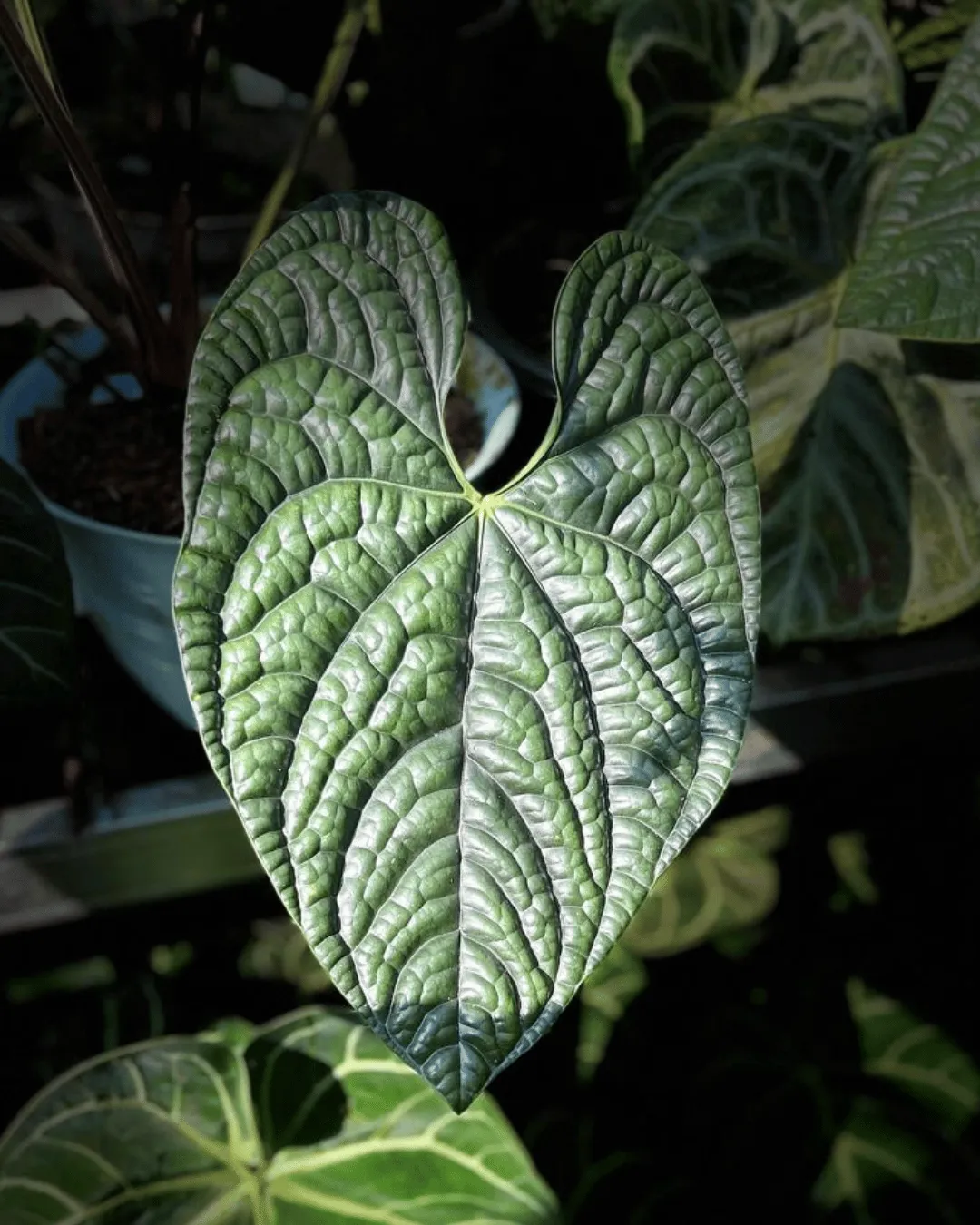
What Is Anthurium luxurians?
Anthurium luxurians is one of the most sought-after rare plants in the world. It belongs to the Araceae family. Collectors and botanists first formally described it in 2005. The plant is native to the lowland rainforests of Colombia and Ecuador. It grows on shaded, rocky forest floors at elevations below 800 metres. Furthermore, it thrives in areas with consistently high humidity and filtered light. The name luxurians comes from Latin and means “luxurious” or “abundant.” This name suits the plant perfectly. Its bold, dramatic leaves are unlike almost anything else in the plant kingdom. Consequently, demand for this species has grown sharply among collectors in Europe, Asia, and North America. Yet verified seeds remain extremely difficult to find outside South America. Induare Agro bridges this gap. Additionally, every seed we supply comes with full export documentation and a Phytosanitary Certificate. This makes Induare Agro one of the few trusted global sources for this exotic plant.
Aesthetic Features Anthurium luxurians
Anthurium luxurians is grown almost entirely for its leaves. The plant has a compact, bushy shape. It reaches about 60 cm in height and 30 cm in width. The stems are short and thick. They are green with slight red highlights. Furthermore, brown leaf casings — called cataphylls — sometimes appear at the base of the stems. The overall look is bold, structured, and deeply architectural. Consequently, this plant makes a strong visual statement in any indoor or greenhouse collection.
Leaf Structure
The leaves of Anthurium luxurians are its most defining feature. They are large, leathery, and deeply textured. The surface has a raised, quilted pattern — a trait called bullate — that gives the leaf a bumpy, puckered look. Furthermore, the veins stand out clearly and add to the embossed effect. New leaves emerge in a dark bronze or reddish tone. Additionally, they shift to a deep, almost black-green as they mature. The underside of the leaf is a lighter lime green. This contrast between top and bottom makes the plant visually striking from every angle. Blades can grow between 15 and 50 cm wide. Over time, the leaf shape shifts from oval to a more lobed, heart-shaped form. Primarily, this slow colour and shape change is one of the key reasons collectors find this plant endlessly rewarding to grow.
Colour Development
One of the most exciting traits of Anthurium luxurians is how its colour changes over time. Young leaves open in pink, red, or bronze tones. Consequently, the plant looks dramatically different at each stage of growth. As the leaf matures, it darkens steadily through bronze-green and into a deep, iridescent dark green. Furthermore, some mature leaves carry a subtle blue-green metallic sheen. This quality is rare among aroids. Additionally, the high-gloss surface of each leaf reflects light in a way that makes the plant appear to glow under good lighting conditions.
Flower and Fruit
Anthurium luxurians does not flower often in home conditions. When it does bloom, the flower follows the classic Anthurium structure. It produces a spathe — a flat, hood-like leaf — that is creamy white to pale green. Inside sits a spadix — a narrow, finger-like spike — that is also pale green. Furthermore, the flower is not the main attraction of this plant. Most collectors grow it purely for its extraordinary foliage. Consequently, flowering is considered a bonus rather than the primary goal.
Global Seed Delivery & Phytosanitary Certification
Induare Agro is a professional botanical seed exporter based in Indonesia. The company specialises in rare exotic plants from tropical regions. Furthermore, Induare Agro is fully committed to legal, safe, and well-documented international shipping. Every order we send includes an official Phytosanitary Certificate. This is a government-issued document from Indonesia’s Plant Health Authority. It confirms that the seeds are free from pests, diseases, and harmful organisms. Consequently, this certificate meets the import requirements of customs authorities in the EU, USA, UK, Australia, Japan, and most other countries worldwide.
Packaging and Shipping
Induare Agro prepares every seed order with care. We use moisture control materials to keep seeds fresh during transit. Additionally, each parcel is packed with cushioned express packaging to protect the seeds from damage. Shipments go out via Global Express couriers such as DHL and EMS. Furthermore, most international orders arrive within 5–14 business days. All required export documents travel with every parcel. This includes the Phytosanitary Certificate and a commercial invoice. Primarily, this complete documentation approach ensures smooth customs clearance at every destination.
Buyer Peace of Mind
Induare Agro follows a strict compliance process for every order. Collectors never need to worry about rejected parcels or legal problems. Furthermore, our team provides after-sales support to help growers at every stage. Additionally, all shipments are fully traceable from dispatch to delivery. Every order is transparent, legal, and professionally handled from start to finish.
How to Grow Anthurium luxurians
Growing Anthurium luxurians from seed is a slow and rewarding process. Furthermore, growers in tropical and temperate climates can both succeed with the right setup. The key is to replicate the warm, humid, shaded conditions of its native Colombian forest floor. Follow these steps carefully for the best results:
Step 1 — Seed Preparation Soak the seed in warm water (25–28°C) for 24 hours before planting. Additionally, change the water once during soaking to keep it clean and fresh.
Step 2 — Growing Medium Mix 40% orchid bark, 30% perlite, and 30% peat moss or coco coir. Consequently, this blend drains well and holds just enough moisture for healthy root development.
Step 3 — Sowing Place the seed on the surface of the moist mix. Press it lightly into the soil — do not bury it deep. Furthermore, cover the pot with a clear lid or plastic wrap to hold in humidity.
Step 4 — Temperature and Humidity Keep the temperature between 22°C and 30°C at all times. Primarily, humidity above 70% is essential during the germination stage. A heated propagation tray gives the best results.
Step 5 — Light Place the pot in bright, indirect light. Additionally, never expose the seedling to direct sunlight. Strong UV light causes leaf scorch and slows early growth.
Step 6 — Watering Keep the growing mix consistently moist but never wet. Let the top layer dry slightly before watering again. Furthermore, always use room-temperature rainwater or filtered water. Tap water with high mineral content can damage the roots.
Step 7 — Transplanting Once the seedling develops two or three leaves, move it to a slightly larger pot. Consequently, this gives the roots more space to spread and the plant more energy to grow. Use the same well-draining mix as before.
Step 8 — Ongoing Care Feed the plant monthly with a balanced liquid fertiliser during the growing season. Additionally, repot every year as the plant grows. Furthermore, remove any yellow or damaged leaves promptly to keep the plant healthy and looking its best.
