
Araceae Rare Exotic Plants: A Complete Guide to Nature’s Wonders
When discussing Araceae rare exotic plants, we refer to one of the most diverse and captivating groups in the botanical world. These plants, commonly known as aroids, are primarily found in the tropics, where nearly 95% of all species reside. Tropical Asia is a major hub for this family, offering a high variety of genera that collectors dream of. For those looking to expand their collection, you can find many rare and exotic species in our shop.
Identifying Unique Aroid Features
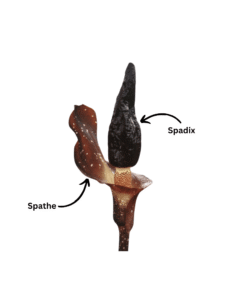
To correctly identify these botanical treasures, one must look at the unique inflorescence. Unlike a single flower, the inflorescence of these plants consists of two main parts:
-
The Spadix: A fleshy axis that holds numerous tiny flowers.
-
The Spathe: A modified, often colorful leaf that protects the spadix.
The spadix is typically an elongated, upright structure. Depending on the genus, the flowers can be bisexual or unisexual, arranged densely over the fleshy axis (Boyce & Wong 2012).
Unique Features of Rare Amorphophallus
Within the world of Araceae rare exotic plants, the Amorphophallus genus stands out due to its unisexual flower arrangement. On the spadix of an Amorphophallus, the female flowers (pistillate) are at the base, while male flowers (staminate) are located above them. This is often crowned by a sterile appendix at the top (Boyce & Wong 2012). The spathe in this genus is not only magnificent in color but serves the vital function of protecting the maturing fruits after fertilization occurs.
Diversity of Exotic Anthurium and Alocasia
The diversity among these exotic specimens is truly immense, ranging from climbing vines to aquatic species. Many are famous worldwide as ornamental foliage, such as the Anthurium and Alocasia genera.
Beyond their beauty, some species in this family serve as essential food sources. For instance, Colocasia esculenta (Taro) and Amorphophallus paeoniifolius are vital crops in various cultures. Additionally, plants like Epipremnum pinnatum are valued for their traditional medicinal properties. Whether you are looking for a stunning Anthurium or a specialized specimen for your collection, understanding these botanical traits is key to successful cultivation (Boyce & Wong 2012).
Amorphophallus growth habit, rare Amorphophallus, rare seeds, rare seeds amorphophallus, aroid, rare aroid, Amorphophallus.
Amorphophallus angulatus, Amorphophallus annulifer, Amorphophallus asper, Amorphophallus beccarii, Amorphophallus borneensis, Amorphophallus costatus, Amorphophallus decus silvae, Amorphophallus discophorus, Amorphophallus eburneus, Amorphophallus forbesii, Amorphophallus galbra, Amorphophallus gigas, Amorphophallus haematospadix, Amorphophallus hewittii, Amorphophallus hirsutus, Amorphophallus infundibuliformis, Amorphophallus linguiformis, Amorphophallus manta, Amorphophallus muelleri, Amorphophallus paeoniifolius, Amorphophallus pendulus, Amorphophallus plicatus, Amorphophallus prainii, Amorphophallus sagittarius, Amorphophallus spectabilis, Amorphophallus tinekeae, Amorphophallus titanum, Amorphophallus variabilis