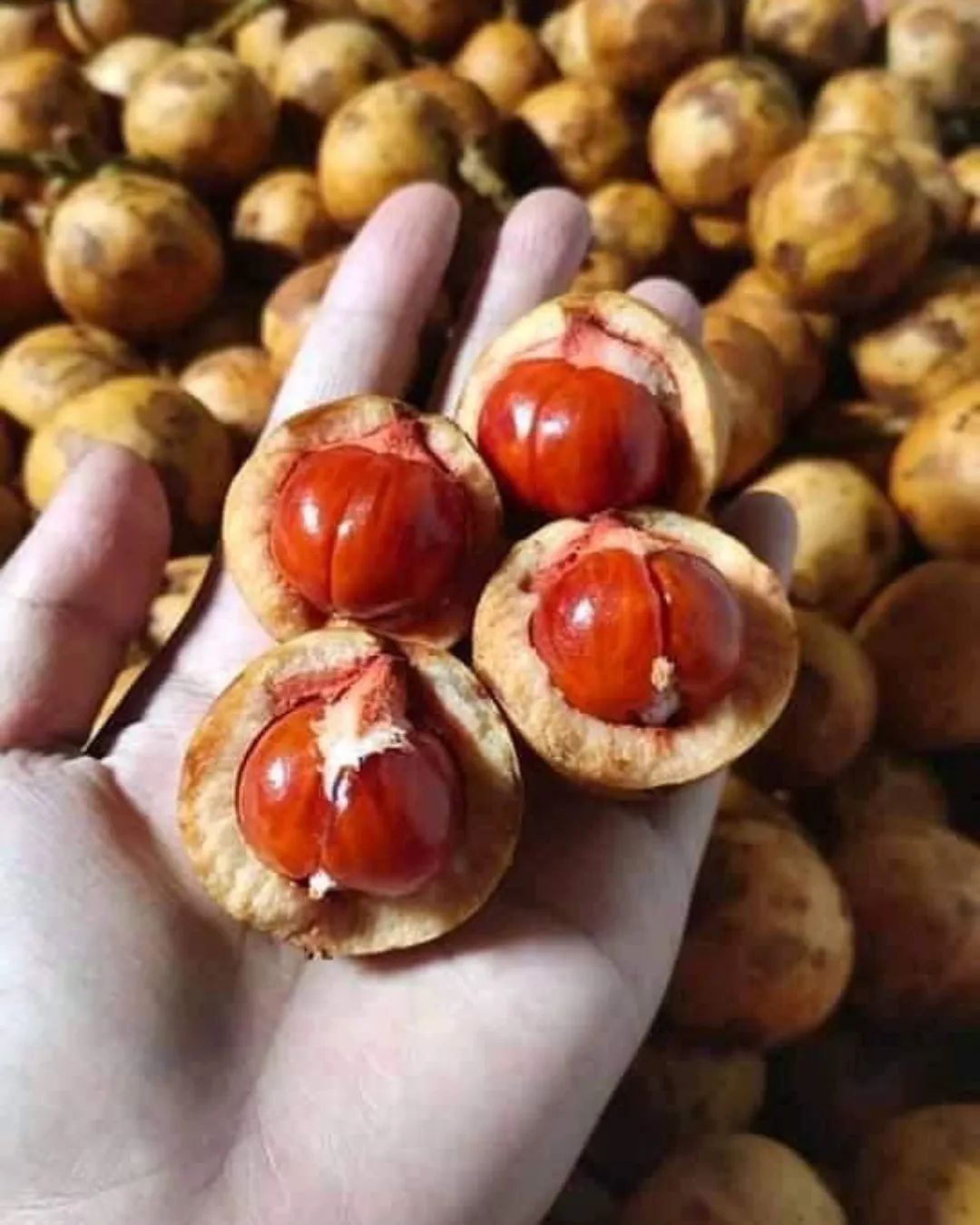
What Is Baccaurea Macrocarpa?
Baccaurea macrocarpa is a rare tropical fruit tree native to the rainforests of Borneo, Indonesia. It also grows across Sumatra, Peninsular Malaysia, and parts of Java. Locally, people know it by many names: Tampui, Tampoi, Kapul, Pasin, Pegak, and Terai. Furthermore, it belongs to the family Phyllanthaceae — the same botanical family as the well-known rambai fruit. The tree thrives in lowland tropical rainforests and can grow at elevations up to 1,600 meters above sea level. Additionally, it grows on clay and sandy loam soils in both primary and secondary forests. Primarily, collectors around the world prize this tree for its extraordinary fruit — large, thick-skinned, and bursting with sweet, tangy, citrus-like flesh. Moreover, the Tampui is one of the largest-fruited species within the entire Baccaurea genus. Consequently, it commands serious attention from tropical fruit enthusiasts and rare plant collectors globally. The tree is dioecious — meaning male and female flowers grow on separate trees. This biological trait makes the Tampui even rarer and more challenging to cultivate successfully. Furthermore, finding true female seed-producing trees outside of Borneo’s forests is extremely difficult. Induare Agro sources these fresh, organic seeds directly from native Indonesian forest environments. Additionally, every seed is handled with care to preserve maximum germination viability. Primarily, our mission is to connect dedicated collectors worldwide with Indonesia’s most exceptional and rare botanical treasures.
Aesthetic Features Baccaurea Macrocarpa
The visual character of baccaurea macrocarpa is stunning at every stage of its life. From its broad canopy to its dramatic trunk-laden fruit clusters, this tree commands attention. Furthermore, no two specimens look exactly the same, which adds to its appeal for serious collectors.
Leaf Structure Baccaurea Macrocarpa
The leaves of baccaurea macrocarpa are large, elegant, and deeply veined. Each leaf blade is elliptic to obovate in shape — meaning oval, with the widest part toward the tip. Leaf blades can reach up to 37 cm in length and 17.5 cm in width. Furthermore, the upper surface is a rich, glossy green. The underside is a softer, paler green. Additionally, the leaf margins — the edges of each leaf — are smooth and entire, with no serrations or lobes. The leaf tip narrows to a fine point, giving each leaf a clean, elegant finish. Primarily, the leaf’s feather-like vein pattern — with around six pairs of secondary veins — creates strong visual structure. Moreover, the petioles — the short stalks connecting each leaf to the branch — can extend up to 14.5 cm long. Consequently, the leaves hang slightly and sway gracefully in tropical breezes. The overall canopy of a mature tree is dense, lush, and deeply satisfying to observe.
Flower and Fruit Baccaurea Macrocarpa
The flowers and fruit of Baccaurea macrocarpa are its most theatrical feature. The tree is cauliflorous — a term meaning it produces its flowers and fruit directly on the trunk and main branches, rather than at the tips of small twigs. This creates a dramatic visual display. Furthermore, clusters of fruit hang densely along the entire length of the trunk. The effect is visually spectacular, especially in a fully laden female tree. Male flowers are tiny — up to 2 mm across — and appear green, yellow, or white. Female flowers are slightly larger, up to 4.5 mm wide. Additionally, fruit clusters hang in bunches up to 15 cm long. Each fruit is round to nearly spherical, measuring 3 to 6.5 cm across. Primarily, the outer skin is brown to grey, thick, and slightly rough. Inside, the flesh is translucent white to pale yellow, juicy, and segmented. Moreover, the taste is a remarkable blend of sweet and sour, often compared to mandarin or lychee. Consequently, the Tampui is one of the most delicious wild fruits in all of Southeast Asia. Each fruit contains 2 to 6 seeds, each coated in a white to orange aril — a fleshy seed covering.
Tree Form and Growth Habit
Baccaurea macrocarpa is a medium to large tropical tree. It can grow as a small understory shrub of around 5 meters. Additionally, in ideal forest conditions, it can reach heights well above 20 meters with a broad, dense crown. Primarily, the tree grows in the shaded understory layers of the forest. It tolerates partial shade well, especially in its early years. Furthermore, the trunk is smooth and moderately stout, capable of supporting heavy fruit clusters directly on its bark. The tree is evergreen — it keeps its leaves year-round in tropical climates. Consequently, it provides constant, lush greenery alongside its seasonal fruiting spectacle. Moreover, this combination of ornamental foliage and extraordinary fruit production makes it a uniquely high-value plant for any tropical garden or collection.
Global Seed Delivery & Phytosanitary Certification
Induare Agro is dedicated to safe, legal, and professional international seed export. Furthermore, we understand that buying rare seeds from overseas requires trust, precision, and proper documentation. Consequently, we have built our entire shipping process around meeting international standards.
Packaging and Shipping
Induare Agro prepares every order with professional-grade protective packaging. Additionally, fresh seeds are carefully sealed to maintain moisture and viability during long-haul international transit. Furthermore, each parcel ships via Global Express courier services, ensuring fast delivery with full tracking from Indonesia to your door. Primarily, seeds are packed and dispatched fresh to give you the best possible germination rates. Moreover, our team carefully checks each seed for quality before it leaves our facility. Consequently, you receive seeds in the best possible condition, ready to plant.
Buyer Peace of Mind
Every order from Induare Agro includes an official Phytosanitary Certificate. This certificate — a government-issued document confirming the seeds are free from pests and diseases — is recognized by customs authorities worldwide. Furthermore, it allows legal importation into most countries with minimal border delays. Primarily, this protects buyers from the frustration and financial loss of shipments being held or destroyed at customs. Additionally, Induare Agro works directly with Indonesian phytosanitary authorities to issue all documents correctly and on time. Moreover, our export documentation meets the standards of the International Plant Protection Convention (IPPC). Consequently, collectors in Europe, North America, Asia, and beyond can order with full legal confidence.
How to Grow Baccaurea Macrocarpa
Growing baccaurea macrocarpa from seed is a rewarding project for any tropical fruit enthusiast. Furthermore, fresh seeds germinate quickly when given the right conditions. Follow these steps carefully for the best results.
Step 1 — Prepare Fresh Seeds Immediately Plant seeds as soon as possible after receiving them. Fresh baccaurea macrocarpa seeds can germinate within a few days of sowing.
Step 2 — Soak the Seeds Soak the seeds in clean, lukewarm water for 12 to 24 hours before planting. Furthermore, this softens the seed coat and speeds up germination.
Step 3 — Choose the Right Growing Medium Use a light, well-draining mix of tropical potting soil, perlite, and organic compost. Additionally, ensure your container has drainage holes to prevent waterlogging.
Step 4 — Sow at the Correct Depth Place each seed just below the soil surface, at a depth of approximately 1 to 2 cm. Moreover, press the soil gently around the seed to remove air pockets.
Step 5 — Provide Warmth and Humidity Maintain temperatures between 25°C and 30°C (77°F–86°F) for best germination results. Primarily, covering the container with a clear plastic dome or bag helps retain the humidity the seedling needs.
Step 6 — Water Consistently Keep the growing medium consistently moist but never waterlogged. Furthermore, water gently to avoid disturbing the seeds or washing away the soil.
Step 7 — Provide Bright Indirect Light Once sprouted, move seedlings to a warm spot with bright, filtered light. Additionally, avoid direct midday sun, which can stress young tropical seedlings.
Step 8 — Transplant When Ready Repot into a larger container or a garden bed once the seedling develops its second set of true leaves. Moreover, tropical fruit trees like baccaurea macrocarpa benefit from rich, organic-amended soil in the final planting site.
