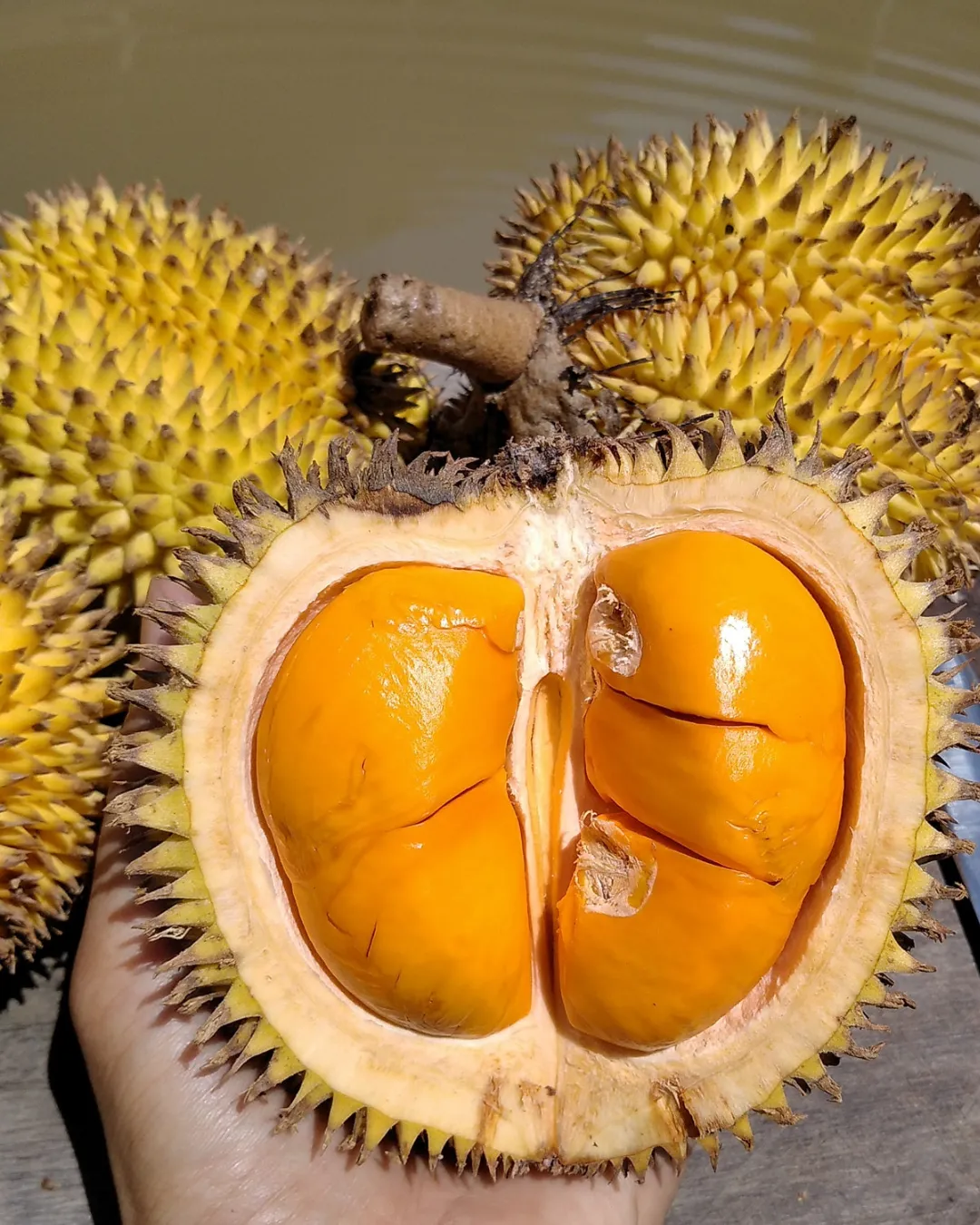
What Is Durio kutejensis?
Durio kutejensis is one of the most celebrated wild durian species in the world. It is widely known as Durian Merah or Durian Pulu, with regional names including nyekak, lai, kuluk, and pakan. Furthermore, the species name kutejensis comes from “Kutai,” a historic region in East Kalimantan, Borneo, where the tree was first documented. This rare durian is native exclusively to the island of Borneo.
Consequently, D. kutejensis grows as a substorey tree within Borneo’s primary rainforest. It thrives beneath the tall upper canopy in mixed lowland forest, often on clay-rich hillside soils. Additionally, it tolerates higher elevations than most durian species, growing comfortably up to 800 metres above sea level. The tree has also been introduced to Java and parts of Queensland, Australia, though it fruits far less reliably outside its native Borneo.
Primarily, this species stands apart because of its fruit. Unlike the common Durio zibethinus, the flesh of D. kutejensis ranges from bright orange to deep red. Furthermore, it carries a milder aroma and a smoother, sweeter flavour. In Brunei, local consumers often prefer this fruit over the more widely traded D. zibethinus. Induare Agro sources fresh seeds of this rare Bornean durian, fully documented for safe and legal global export. This gives serious collectors worldwide access to one of the most distinctive durian species on Earth.
Aesthetic Features Durio kutejensis
Durio kutejensis is a striking, medium to large tropical tree. It typically reaches 30 metres in height in its native forest. Furthermore, some upper canopy specimens have been recorded at up to 41 metres tall, with a trunk diameter of 68 cm. The trunk often grows branchless for the first 12 metres, with low, rounded supports called buttresses at the base that help anchor the tree in the soil.
Leaves Durio kutejensis
The leaves of D. kutejensis are large, glossy, and visually impressive. They grow in an alternating pattern along the branches. Furthermore, the underside of each leaf has a distinctive silvery-golden sheen. This shimmering quality sets it apart from many other tropical fruit trees. Additionally, the leaves are simple in shape, with a clear central vein and fine side veins branching evenly outward.
Flowers Durio kutejensis
The flowers of Durio kutejensis are large, bold, and red in colour. They grow in dense clusters on the branches. Furthermore, the flowers release a strong, carrion-like smell when fully open — a scent that is unpleasant to humans but highly attractive to its pollinators. Consequently, this tree is primarily pollinated by giant honey bees, birds, and bats. This combination of pollinators is unusual among tropical fruit trees and reflects the rich biodiversity of the Bornean rainforest.
Fruit
The fruit of D. kutejensis is large and oval, similar in size to common durian. Furthermore, the flesh inside is thick and creamy, much like Durio zibethinus, but with a milder, sweeter taste. The colour ranges from pale orange-yellow to a deep, vivid red — depending on the individual tree. Primarily, the texture is dry and slightly waxy rather than wet and custard-like. Additionally, the flavour has been described as fruity, with notes resembling strawberry and mango. The fruit also ripens later in the season than most durian species. Consequently, this gives growers a unique, extended harvest window.
Global Seed Delivery & Phytosanitary Certification
Induare Agro is a trusted botanical seed exporter based in Indonesia. The company sources directly from verified Bornean growers and forest communities. Furthermore, Induare Agro ships rare Indonesian durian species to collectors, growers, and research institutions in more than 50 countries worldwide. Every order follows a strict, fully documented export process.
Packaging and Shipping
Induare Agro packs every seed with professional moisture-control materials. Durio seeds lose viability quickly after harvest. Consequently, Induare Agro prioritises fast dispatch to maximise germination success on arrival. Cushioned express packaging protects the seeds throughout the entire transit journey. Shipments go out via Global Express couriers such as DHL and FedEx. Additionally, most international orders arrive within 5–14 business days. Furthermore, every parcel includes an official Phytosanitary Certificate. This document is issued by Indonesia’s Plant Health Authority. It confirms that the seeds are free from pests, disease, and regulated pathogens. Consequently, it meets the import requirements of customs authorities in the EU, USA, UK, Australia, Japan, and most other regulated markets worldwide.
Buyer Peace of Mind
Induare Agro puts legal compliance first in every order. Every shipment includes the Phytosanitary Certificate and a commercial invoice. Furthermore, this complete documentation ensures smooth and fast customs clearance at every international destination. Additionally, the Induare Agro team provides after-sales growing support to every buyer. Primarily, the goal is to ensure every collector successfully sprouts and grows their rare Durio kutejensis into a healthy, fruit-bearing tree.
How to Grow Durio kutejensis
Growing Durio kutejensis is a rewarding long-term project. Furthermore, it suits tropical and warm subtropical climates with consistent humidity and rainfall. The key is to plant fresh seed quickly and recreate the warm, humid conditions of its native Bornean rainforest. Follow these steps for the best results.
Step 1 — Plant Immediately Durio kutejensis seeds lose germination ability quickly after harvest. Additionally, plant your seed within 5–7 days of receiving it for the strongest germination rate.
Step 2 — Growing Medium Use a rich, well-draining mix: 50% clay-loam potting soil, 30% compost, and 20% coarse sand or perlite. Consequently, this mirrors the clay-rich hillside soils the species prefers in its native habitat.
Step 3 — Sowing Plant the seed flat, about 2–3 cm deep, in a pot with strong drainage holes. Furthermore, keep the soil evenly moist throughout the entire germination period.
Step 4 — Temperature Maintain a warm, stable temperature between 25°C and 32°C at all times. Primarily, consistent warmth is essential for reliable germination of this tropical durian species.
Step 5 — Light Place the pot in a warm spot with bright, filtered light. Additionally, young seedlings benefit from partial shade, just as they would beneath the forest canopy in Borneo.
Step 6 — Watering Keep the soil moist but never waterlogged. Furthermore, ensure the pot drains fully after every watering. Standing water is the most common cause of root rot in young durian seedlings.
Step 7 — Transplanting Move the seedling to a larger pot or garden bed once it reaches 25–30 cm tall. Consequently, more root space supports faster trunk growth and earlier fruiting. The tree grows best in deep, fertile, slightly acidic soil (pH 5.5–6.5).
Step 8 — Long-Term Feeding Apply a balanced organic fertiliser (NPK 15-15-15) every 4–6 weeks during the growing season. Additionally, switch to a phosphorus-rich feed once flowering begins to support strong fruit development. Furthermore, a well-cared-for tree typically begins to bear fruit within 5–7 years from seed.
© Content produced for Induare Agro — Indonesia’s professional rare seed exporter.
