What Is Pangium edule?
Pangium edule is a giant rainforest tree known across Indonesia as Keluak (also spelled Kluwek). It is the only species in its entire genus, Pangium — making it a true botanical one-of-a-kind. Furthermore, this tree is native to the wet tropical regions of Southeast Asia and the western Pacific. Its natural range includes Indonesia, Malaysia, Papua New Guinea, and the Philippines. Primarily, it grows in rainforests, along riverbanks, and near mangrove swamps, from sea level up to 1,000 metres in elevation.
The genus name Pangium comes from “pangi,” a local name used in Malay and Buginese languages. Additionally, the species name edule is Latin for “edible” — a reference to the seeds, which are a prized culinary ingredient once properly prepared. Consequently, Keluak holds deep cultural importance across Indonesia, Malaysia, and Singapore. The black, earthy-flavoured seed is a key ingredient in classic dishes such as Indonesian rawon beef stew and Peranakan ayam buah keluak.
Furthermore, Pangium edule is a genuinely rare collector’s tree. It grows slowly and takes 10 to 15 years to produce its first fruit. Consequently, very few specimens are cultivated outside the wild, and most seeds are still hand-harvested from forest trees. Induare Agro sources fresh Keluak seeds directly from Indonesian growers. Primarily, this gives serious collectors and botanical enthusiasts a rare, legal opportunity to grow this iconic tree from seed.
⚠️ Important Safety Note: The raw seeds and fruit pulp of Pangium edule contain hydrogen cyanide compounds and are toxic if eaten without proper processing. These seeds are sold strictly for propagation and cultivation purposes only — not for human consumption. Always keep raw seeds away from children and pets.
Aesthetic Features Pangium edule
Pangium edule is one of the largest fruiting trees in the Southeast Asian rainforest. It grows to an impressive 40–60 metres in height in the wild. Furthermore, the straight trunk can reach up to 1.2 metres in diameter. Mature trees often develop large, wing-like supports at the base — called buttress roots — which help anchor the towering trunk in soft, wet forest soil.
Leaves Pangium edule
The leaves of Pangium edule are large and heart-shaped. Furthermore, some leaves are simple, while others have three distinct lobes. The leaf surface is smooth and a deep, glossy green. Additionally, the broad leaf shape gives the tree a bold, tropical silhouette that stands out clearly above the surrounding forest canopy.
Flowers Pangium edule
Pangium edule is dioecious. This means each individual tree produces either male or female flowers, but never both. Furthermore, the flowers are small and grow in clusters near the base of the leaves. They are not especially showy compared to the tree’s dramatic fruit. Consequently, most of the visual interest in this species comes later, once fruiting begins.
Fruit and Seeds Pangium edule
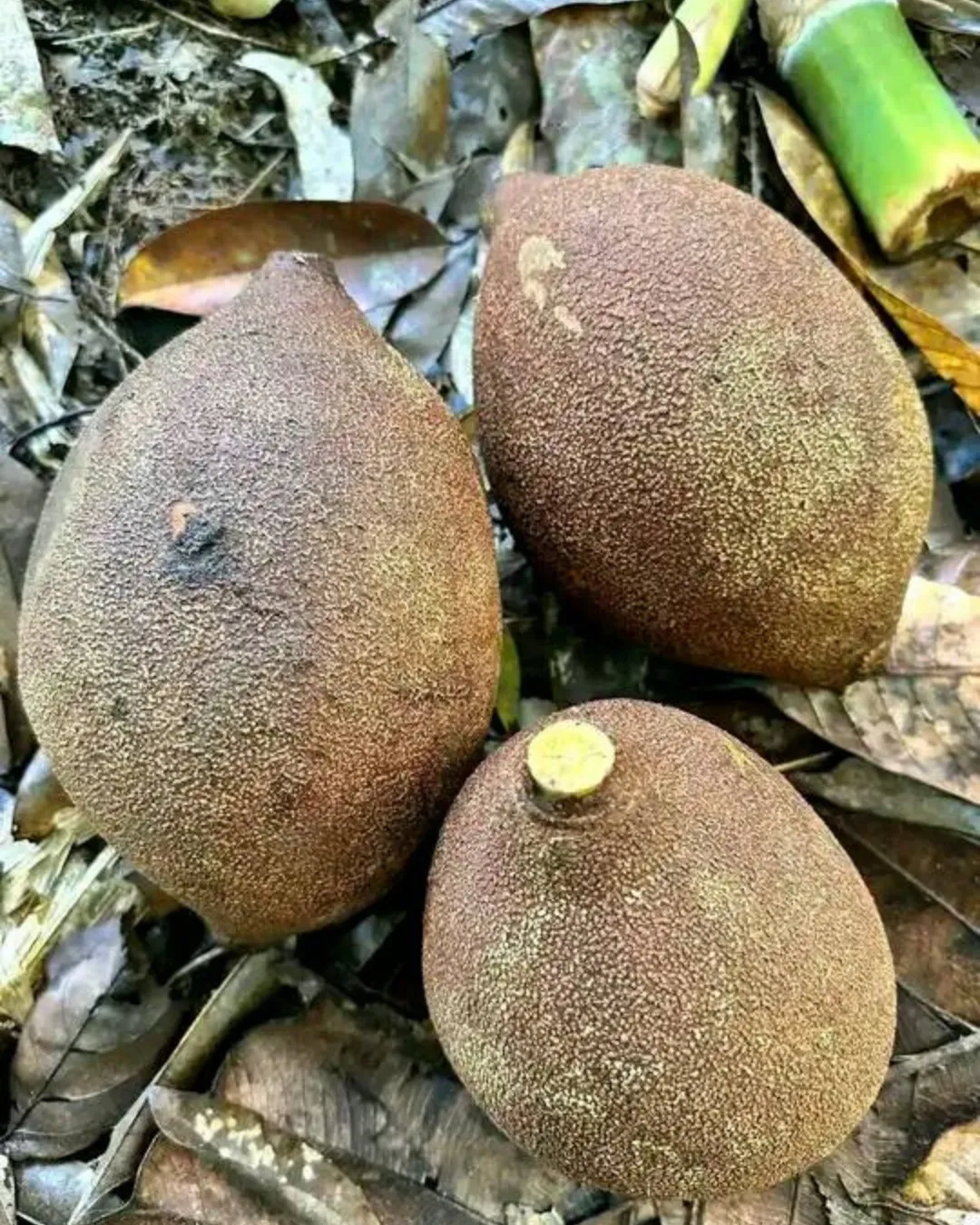
The fruit of Pangium edule is unmistakable. It is large, oval, and shaped like a football — which has earned the tree its popular English nickname, the “football fruit.” Furthermore, the fruit can grow up to 30 cm long and weigh several kilograms. The outer skin ranges from reddish-orange to reddish-brown. Inside, the fruit holds 10 to 30 large seeds. Each seed is encased in a hard, ridged shell and surrounded by fleshy, aromatic pulp. Primarily, the seeds are triangular to oval in shape and measure 5 to 7 cm across. Additionally, after a lengthy fermentation process, the seeds turn from pale white to a deep, earthy brown — ready for use as the prized black spice found in traditional Indonesian cooking.
Global Seed Delivery & Phytosanitary Certification
Induare Agro is a professional botanical seed exporter based in Indonesia. The company works directly with verified local growers and forest harvesters across the archipelago. Furthermore, Induare Agro ships rare and culturally significant Indonesian plant species to collectors, botanical gardens, and research institutions in more than 50 countries worldwide. Every order follows a strict, fully documented export process from harvest to final delivery.
Packaging and Shipping
Induare Agro packs every Keluak seed with professional moisture-control materials. The hard outer shell of Pangium edule naturally protects the seed well during transit. Furthermore, cushioned express packaging adds an extra layer of protection throughout the journey. Shipments go out via Global Express couriers such as DHL and FedEx. Additionally, most international orders arrive within 5–14 business days. Every parcel includes an official Phytosanitary Certificate, issued by Indonesia’s Plant Health Authority. Consequently, this document confirms the seeds are free from pests, disease, and regulated plant pathogens, satisfying customs requirements in the EU, USA, UK, Australia, Japan, and most other regulated markets.
Buyer Peace of Mind
Induare Agro places full legal compliance at the centre of every order. Every shipment includes the Phytosanitary Certificate and a commercial invoice. Furthermore, this complete paperwork ensures smooth and fast customs clearance at every destination. Additionally, the Induare Agro team provides after-sales growing guidance for every buyer. Primarily, the goal is to help every collector successfully grow this rare, slow-maturing Indonesian giant from a single seed.
How to Grow Pangium edule
Pangium edule rewards patient growers with a truly impressive rainforest specimen. Furthermore, this is a long-term project rather than a fast-growing houseplant. Follow these steps for the best chance of germination and healthy early growth.
Step 1 — Seed Preparation Soak the seed in warm water (25–30°C) for 48 hours before planting. Additionally, this helps soften the hard outer shell and improves the chance of successful sprouting.
Step 2 — Growing Medium Use a rich, well-draining tropical mix: 50% loamy potting soil, 30% compost, and 20% coarse sand or perlite. Consequently, this mimics the moist, fertile soil found near riverbanks in its native rainforest habitat.
Step 3 — Sowing Plant the seed about 3–4 cm deep in a large pot with good drainage holes. Furthermore, keep the soil consistently moist throughout the entire germination period, which can take several weeks.
Step 4 — Temperature and Humidity Maintain a warm temperature of 25–32°C and high humidity above 70%. Primarily, consistent warmth and moisture are essential, as this tropical species will not tolerate cold or dry conditions.
Step 5 — Light Place the pot in a warm, partially shaded spot during the seedling stage. Additionally, young Keluak seedlings prefer filtered light, similar to growing beneath a forest canopy.
Step 6 — Watering Water generously and keep the soil moist at all times. Furthermore, this species naturally grows near rivers and mangroves, so it tolerates consistently damp conditions well. Always ensure the pot drains freely.
Step 7 — Transplanting Move the seedling to a larger container or, ideally, a permanent garden location once it reaches 40–50 cm tall. Consequently, this giant tree needs significant long-term space to reach its full towering height.
Step 8 — Long-Term Care Apply a balanced organic fertiliser (NPK 15-15-15) every 2–3 months during active growth. Additionally, be prepared for a long wait — this slow-growing species can take 10 to 15 years to produce its first fruit. Furthermore, patient collectors are rewarded with one of the most unique and storied trees in Southeast Asian botany.
© Content produced for Induare Agro — Indonesia’s professional rare seed exporter.
