What Is Artocarpus Dadah?
Artocarpus dadah is a rare and magnificent rainforest tree native to Sumatra, Borneo, and Peninsular Malaysia. It belongs to the Moraceae family — the same family as jackfruit and breadfruit. Consequently, it shares many of the traits that make its famous relatives so beloved, but it adds a layer of rarity that most collectors never encounter. The species name “dadah” comes from its vernacular name in Lampong, Sumatra, Indonesia. Furthermore, it grows naturally in evergreen lowland rainforests, often at altitudes up to 1,000 metres above sea level. In Singapore, authorities have classified it as Endangered. Additionally, its numbers in the wild have declined sharply due to forest clearing and timber harvesting. Primarily, this rarity is what drives demand from rare plant collectors globally. Moreover, it appears in both Indonesian and Malaysian traditional forest culture, where local communities have long used its timber and fruit. Induare Agro is proud to offer fresh organic seeds of this extraordinary Indonesian tree to dedicated collectors worldwide.
Aesthetic Features Artocarpus Dadah
Artocarpus dadah is a visually stunning tree at every stage of growth. Its sheer size, rich foliage, and distinctive fruit make it an instant focal point in any tropical landscape. Furthermore, collectors admire it not just as a plant but as a living piece of Indonesia’s botanical heritage.
Leaf Structure Artocarpus dadah
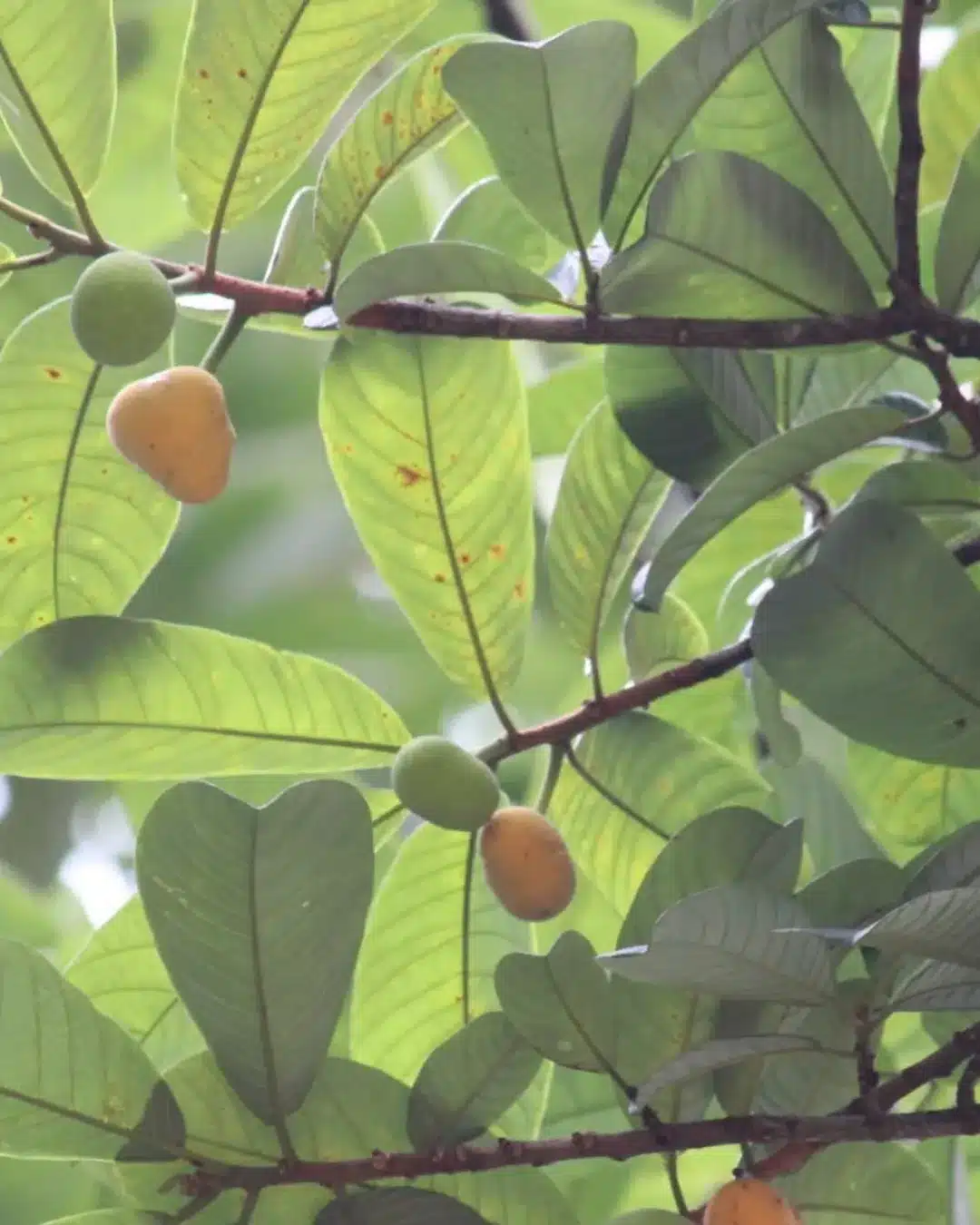
The leaves of Artocarpus dadah are large, leathery, and deeply impressive. Each leaf blade is obovate-oblong to ovate-elliptical in shape — meaning it is roughly oval, wider near the tip than at the base. Primarily, the upper surface of each leaf is smooth and a rich, deep green. Additionally, the underside is covered with soft, dense hairs that feel velvety to the touch. These hairs range from yellowish to reddish-brown in colour. Consequently, the contrast between the smooth top and the fuzzy underside gives each leaf a two-toned character. The leaves carry 10 to 20 pairs of secondary veins — side veins branching off the main central vein — which create a bold, architectural pattern. Furthermore, young trees often produce leaves that are deeply lobed, meaning the leaf edges cut inward dramatically, giving them an ornamental, almost decorative look. As the tree matures, the leaves become entire — meaning the edges are smooth and uncut. Moreover, young twigs and leaf stalks are also covered with soft hair. This gives the whole growing tip of the tree a lush, tactile quality. The leaves can measure 15 to 30 cm in length.
Flower and Fruit Artocarpus dadah
Artocarpus trees bear unisexual flowers — meaning male and female flowers are separate, but both appear on the same tree. The male flower heads are small, round to slightly flattened, and measure 8 to 15 mm across. They appear in clusters in the leaf axils — the angle between the leaf stalk and the branch. Additionally, the female flower heads develop into the tree’s remarkable fruit after fertilisation. The fruit of Artocarpus dadah is a syncarp — a compound fruit formed when many small fruits fuse together into one structure, similar to a jackfruit or breadfruit. Furthermore, each fruit is subglobose — roughly spherical — and pale green to golden in colour when ripe. The fruits measure 2.5 to 8.9 cm wide. Moreover, the flesh inside is deep pink to bright red in colour. This vivid interior makes it one of the most visually striking fruits in the entire Artocarpus genus. The flesh is edible, with a sour flavour. Primarily, in its native regions, local communities harvest it fresh or use it in traditional preserves and chutneys. Additionally, the fruit is dispersed in the wild by mammals such as monkeys, which further highlights its ecological importance.
Timber and Traditional Uses
Artocarpus dadah is not purely an ornamental tree. Primarily, it is a valued source of quality timber in its native regions. Additionally, the wood has historically been used for poles, bridges, and flooring. Consequently, this timber value has unfortunately contributed to its decline in wild forests. Furthermore, traditional healers across its native range have used the tree’s latex — the milky sap it produces when cut — to help cleanse wounds. Moreover, the bark and other plant parts have a long history of folk medicinal use in parts of Sumatra and Borneo. This combination of ornamental beauty, edible fruit, valuable timber, and cultural significance makes Artocarpus dadah exceptional. Additionally, it grows into a towering canopy tree up to 35 metres tall. Primarily, large-space collectors and tropical arboretum owners prize it for this dramatic vertical presence.
Global Seed Delivery & Phytosanitary Certification
Induare Agro is committed to delivering rare Indonesian plant seeds to collectors in every country with full legal compliance. Furthermore, every order is prepared with care, professionalism, and a deep respect for international plant trade regulations. Collectors receive their seeds in perfect condition, backed by official export documentation.
Packaging and Shipping
Induare Agro takes packaging seriously. Additionally, every seed is carefully prepared and protected to maintain its viability throughout long international transit. Consequently, buyers receive fresh, healthy seeds that are ready for immediate planting. Moreover, all orders ship via Global Express courier services, so delivery is fast and fully trackable. Each package includes all required export documents at the point of dispatch. Furthermore, Induare Agro sources and dispatches seeds fresh, so germination potential remains as high as possible.
Buyer Peace of Mind
Every order from Induare Agro includes an official Phytosanitary Certificate. This certificate — a government-issued plant health document — confirms that the seeds are free from pests and diseases. Furthermore, it satisfies the import requirements of most countries worldwide. Primarily, this protects buyers from customs delays, confiscation, and legal complications. Additionally, Induare Agro works directly with Indonesian plant health authorities to issue each certificate correctly. Consequently, you can import with full confidence, knowing your order complies with international plant trade law. Moreover, our team is ready to assist with any documentation questions specific to your country.
How to Grow Artocarpus Dadah
Growing Artocarpus dadah from seed is straightforward with the right conditions. Follow these steps carefully for the best results.
Step 1 — Prepare Fresh Seeds Immediately Artocarpus dadah seeds lose viability quickly once removed from the fruit. Sow them as soon as possible after receiving your order.
Step 2 — Choose the Right Growing Medium Use a rich, well-draining mix of loamy soil and organic compost. Furthermore, ensure your container or planting site has excellent drainage to prevent waterlogging.
Step 3 — Sow at the Correct Depth Place each seed just below the soil surface, at a depth of around 1 to 2 cm. Additionally, press the soil gently around the seed to ensure good contact.
Step 4 — Provide Warmth and Moisture Keep the soil consistently moist and maintain temperatures between 24°C and 32°C (75°F–90°F). Consequently, a warm greenhouse or heated propagation tray works very well.
Step 5 — Position in Bright Indirect Light Place seedlings where they receive bright but filtered light. Primarily, avoid harsh direct sunlight during the early growth stage, as it can damage tender seedlings.
Step 6 — Maintain High Humidity Artocarpus dadah thrives in humid conditions, reflecting its rainforest origins. Furthermore, misting the seedlings daily or covering with a humidity dome speeds early growth significantly.
Step 7 — Fertilize During Active Growth Apply a balanced, slow-release fertilizer once the seedling establishes its first true leaves. Additionally, feed every four to six weeks during the active growing season.
Step 8 — Transplant to a Larger Space This tree grows large. Consequently, plan to transplant it into the ground or a very large container as it grows. Moreover, in tropical and subtropical climates, it thrives beautifully when planted outdoors.


