What Is Artocarpus odoratissimus?
Artocarpus odoratissimus is a rare and exceptional tropical fruit tree native to the island of Borneo in Indonesia. It also grows naturally in parts of the Philippines, including Palawan and Mindanao. The plant belongs to the Moraceae family — the same family as jackfruit, breadfruit, and cempedak. Locally, people call it Terap or Marang, depending on the region.
Furthermore, the International Union for Conservation of Nature (IUCN) lists it as Near Threatened in the wild. Consequently, this tree carries both cultural importance and urgent conservation value. Additionally, it thrives only within roughly 15 degrees of the equator. This means it grows in a very narrow tropical band.
Primarily, collectors and growers value it for its extraordinarily fragrant fruit. Moreover, the fruit’s creamy, soft flesh is widely described as superior in taste to jackfruit. Induare Agro offers certified, export-quality seeds of this exceptional Indonesian plant to buyers around the world.
Aesthetic Features Artocarpus odoratissimus
Artocarpus odoratissimus is a bold and impressive tree in every sense. Furthermore, its large leaves, dramatic fruit, and towering height make it a standout specimen in any tropical garden. Additionally, it belongs to the genus Artocarpus — a genus of around 70 species renowned for their impressive tropical fruit.
Leaf Structure Artocarpus odoratissimus
The leaves of Artocarpus odoratissimus are large and lush. Each leaf measures roughly 16 to 50 cm long and 11 to 28 cm wide. Primarily, young trees display leaves with notable lobing — irregular, finger-like indentations along the leaf edge. These lobes resemble the leaves of breadfruit. Consequently, the tree looks striking and sculptural in a garden setting.
Moreover, as the tree matures, the lobing often reduces. The leaves then become broader and more oval in shape. Additionally, the deep green, glossy surface reflects light beautifully. The large leaf size creates an impressive, lush canopy. Furthermore, this canopy makes the tree a visually dramatic centerpiece in tropical landscapes.
Flower and Fruit Artocarpus odoratissimus
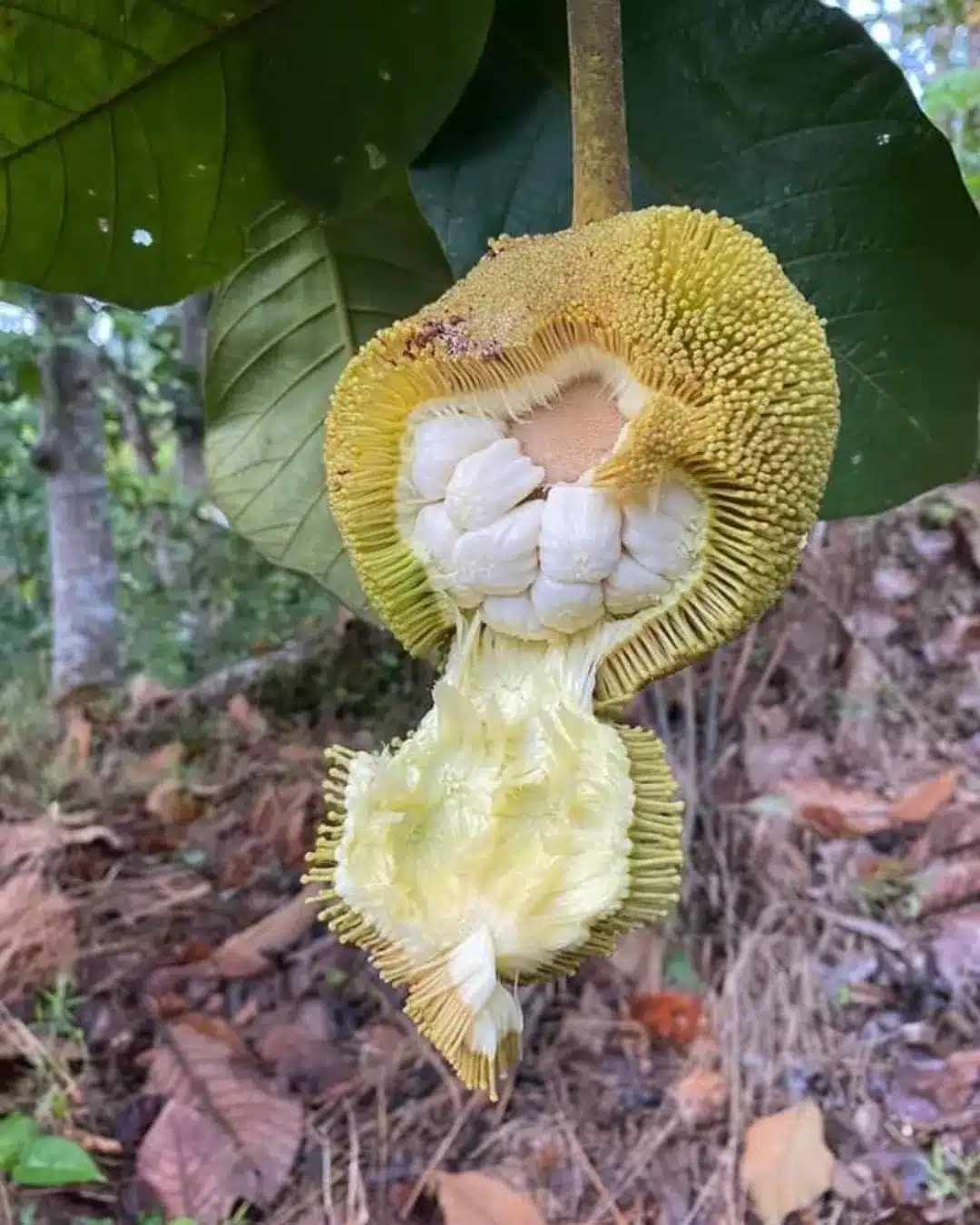
The fruit of Artocarpus odoratissimus is the tree’s most celebrated feature. It is round to oblong in shape, measuring about 15 to 20 cm long and 13 cm wide. Primarily, a ripe fruit weighs close to 1 kg. The rind — the outer skin — is covered in soft, broad spines. These spines gradually harden and become brittle as the fruit ripens.
Furthermore, the rind turns a greenish yellow color at full ripeness. The interior flesh is white and remarkably soft. Additionally, it contains far fewer fibrous strands than jackfruit, making it easier to eat. The arils — the soft, edible segments wrapped around each seed — are roughly grape-sized. Moreover, the flavor is creamy, juicy, and intensely tropical. The fruit releases a strong scent concentrated mainly in the rind. Consequently, some compare this aroma to a mild version of durian. Primarily, the best fruits are harvested firm and ripened off the tree.
Tree Height and Form
Artocarpus odoratissimus is a genuinely large tree. It can reach up to 25 metres — roughly 82 feet — in height at full maturity. Furthermore, it is an evergreen species, meaning it retains its leaves throughout the year. Primarily, this makes it valuable as a permanent shade and fruit-bearing tree.
Additionally, the tree develops a broad, spreading canopy over time. Consequently, growers need adequate space for long-term cultivation. Moreover, the strong trunk and dense canopy give the tree an architecturally impressive form.
Global Seed Delivery & Phytosanitary Certification
Induare Agro is committed to delivering rare Indonesian plant seeds to buyers everywhere in the world. Furthermore, every shipment fully complies with international plant export laws. Additionally, all seeds are carefully prepared to ensure maximum freshness on arrival.
Packaging and Shipping
Induare Agro packs every seed order with professional care and precision. Each seed is wrapped and protected to maintain viability during international transit. Furthermore, all orders ship via Global Express courier services with full tracking. Consequently, buyers receive fast, reliable delivery to their door.
Moreover, seeds are prepared fresh at the time of dispatch. This ensures the highest possible germination rates upon arrival. Additionally, every package includes all required export documentation for smooth customs clearance
Buyer Peace of Mind
Every order from Induare Agro includes an official Phytosanitary Certificate. This certificate is a government-issued document that confirms the seeds are free from pests and diseases. Primarily, it allows legal import into most countries around the world. Furthermore, it protects buyers from customs delays, holds, or rejections.
Additionally, Induare Agro works directly with Indonesian agricultural authorities to issue each certificate correctly. Consequently, buyers can import with complete confidence. Moreover, our team is available to answer any questions about documentation requirements specific to your country.
How to Grow Artocarpus lanceifolius
Growing Artocarpus odoratissimus from seed is a rewarding experience. Follow these steps carefully for the best results.
Step 1 — Fresh Seed Preparation. Use fresh seeds immediately after receipt for the best germination rates. Additionally, soak seeds in clean, warm water for 24 hours before planting.
Step 2 — Prepare the Growing Mix. Use a well-draining mix of loamy soil, coconut coir, and perlite. Furthermore, ensure the container has adequate drainage holes to prevent waterlogging.
Step 3 — Sow the Seeds. Place each seed about 2 to 3 cm deep in the moist growing medium. Primarily, plant in individual containers to avoid disturbing roots during later transplanting.
Step 4 — Provide Warmth and Humidity. Maintain temperatures between 24 °C and 32 °C (75 °F–90 °F) at all times. Additionally, cover the container with a clear plastic dome to hold in warmth and moisture.
Step 5 — Position in Bright Indirect Light. Place seedlings in a bright spot away from direct, harsh sunlight. Furthermore, a position near a south- or east-facing window works well indoors.
Step 6 — Water Consistently. Keep the growing medium evenly moist but never waterlogged. Primarily, water when the top 2 cm of soil begins to feel slightly dry.
Step 7 — Fertilize During Growth. Apply a balanced, diluted liquid fertilizer every two weeks during active growth. Moreover, reduce feeding during slow or dormant periods.
Step 8 — Transplant Outdoors. Move the young tree to a large outdoor container or directly into the ground once established. Consequently, choose a sheltered, sunny location with rich, well-draining tropical soil.


