What Is Amorphophallus haematospadix?
Amorphophallus haematospadix is a rare tropical aroid in the family Araceae. It originates from the limestone cliffs and coastal habitats of Peninsular Thailand and Peninsular Malaysia, including the island of Pulau Langkawi. This species thrives in the wet tropical biome. It grows from a subterranean corm — a bulb-like underground stem — which stores energy between growing seasons.
This plant is extraordinarily rare in cultivation. Its native habitat spans dramatic seaside limestone formations, famously including Phang-Nga Bay in Thailand — the setting of the James Bond film The Man with the Golden Gun. Consequently, collectors around the world treat this species as a true botanical treasure. Furthermore, its limited natural range makes wild specimens increasingly difficult to find. Demand from botanical gardens and private collectors continues to grow every year.
Amorphophallus haematospadix was first formally described by botanist J.D. Hooker in 1893. It belongs to a large genus of roughly 200 tropical species. Additionally, it is one of only a few species known to grow in alkaline, limestone-rich soils rather than typical tropical forest floors. This makes it especially unique among aroids. Induare Agro is proud to offer export-quality seeds from this remarkable species to collectors and growers worldwide.
Aesthetic Features Amorphophallus haematospadix
Amorphophallus is a genus known for its bold and dramatic appearance. A. haematospadix delivers exactly that. It is a compact yet striking species that stands out in any rare plant collection. Its visual features are memorable at every stage of its growth cycle.
Leaf Structure Amorphophallus haematospadix
The plant produces a single leaf per growing season. The leaf sits atop a reddish-green stalk that grows to approximately 60 cm (2 feet) tall. Furthermore, the leaf itself is large, deeply veined, and rich green. The stalk has a smooth, mottled appearance with reddish and green tones. Additionally, the entire structure emerges from a corm — the underground storage organ — each year. The leaf is elegant and decorative even when the plant is not in flower.
Flower and Inflorescence Amorphophallus haematospadix
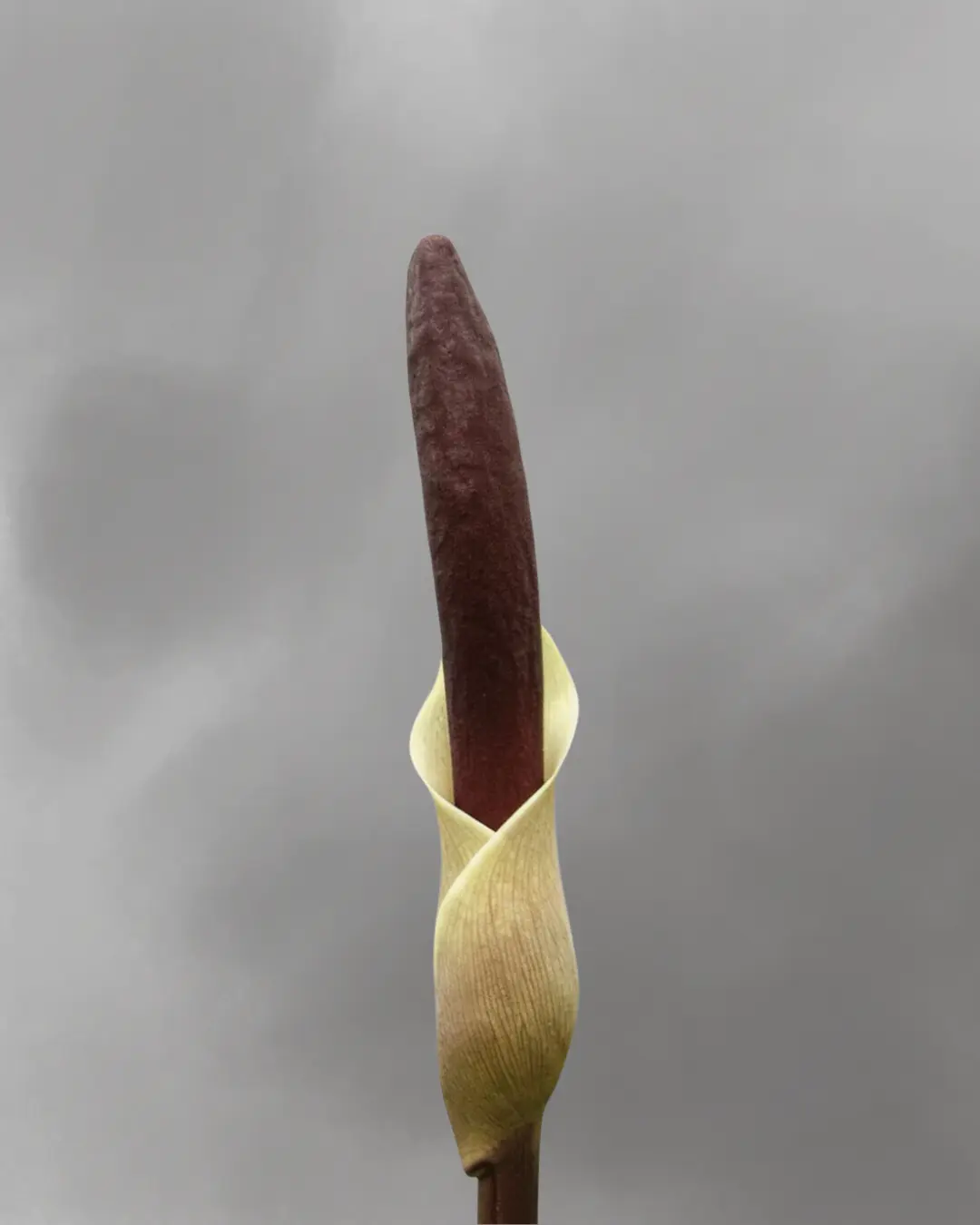
When the corm is mature enough to bloom, the plant produces a flowering spike called an inflorescence. The inflorescence consists of two main parts: the spathe — a hood-like outer bract — and the spadix — a central column bearing the true flowers. In A. haematospadix, the spathe is white and the spadix is a dramatic, deep purple-red. This striking color contrast is how the species earned its name: haematospadix means “blood-red spadix” in Latin. Moreover, the flowering spike reaches about 30 cm (1 foot) in height. The inflorescence is visually stunning and unusual. Consequently, it attracts significant attention from plant collectors and photographers alike.
Dormancy Cycle
Like all Amorphophallus species, A. haematospadix follows a clear dormancy cycle. Primarily, the plant is active during the warm, wet season. During this period, the leaf and inflorescence emerge from the corm. After the growing season ends, the above-ground parts die back completely. The corm then rests underground through the dry season. Additionally, this dormancy is a natural and healthy part of the plant’s life cycle. Growers should not discard the corm during this rest period. Moreover, the dormancy period is an ideal time to repot or divide the corm for propagation.
Global Seed Delivery & Phytosanitary Certification
Induare Agro is a professional plant and seed exporter based in Indonesia. We are committed to legal, responsible, and safe global shipping. Every order is prepared to the highest export standards. Consequently, buyers in Europe, North America, Asia, and beyond receive their seeds in perfect condition.
Packaging and Shipping
Each seed is carefully cleaned, inspected, and prepared for international transport. Furthermore, seeds are packed using moisture-controlled materials to maintain viability during long-distance shipping. Induare Agro ships via Global Express courier services for fast and reliable delivery. Additionally, tracking information is provided for every order. We use secure, padded packaging to prevent damage during transit. Primarily, our goal is to ensure every seed arrives alive and ready to grow.
Buyer Peace of Mind
Every shipment from Induare Agro includes an official Phytosanitary Certificate. This is a government-issued plant health document required for legal international import of plant material. Consequently, buyers can import seeds through customs with full legal compliance. Furthermore, the certificate confirms that seeds have been inspected and are free from pests and diseases. Moreover, Induare Agro maintains full compliance with CITES regulations and international plant trade laws. You can buy with complete confidence.
How to Grow Amorphophallus haematospadix
Growing Amorphophallus haematospadix is rewarding and manageable with the right approach. Follow these steps for the best results.
Step 1 – Prepare Your Soil Use well-draining soil rich in organic matter. Aim for a soil pH between 6.0 and 7.0. You can add compost or peat moss to improve fertility and drainage.
Step 2 – Plant the Seed or Corm Plant seeds approximately 2–3 cm (1 inch) deep. Space plants 30–45 cm (12–18 inches) apart if planting outdoors. For pots, choose a container at least 30 cm (12 inches) in diameter.
Step 3 – Provide the Right Light Place the plant in bright, indirect sunlight. Avoid harsh direct midday sun, as this can scorch the leaves. A greenhouse, conservatory, or bright sheltered outdoor spot works well.
Step 4 – Water and Humidity Water regularly during the growing season. Maintain humidity levels of 60% or higher for best growth. Additionally, reduce watering significantly once the plant enters dormancy.
Step 5 – Temperature and Fertiliser Keep temperatures between 20°C and 30°C (68°F–86°F). Fertilise with a balanced organic fertiliser during the active growing period. Furthermore, avoid fertilising during dormancy.
Step 6 – Manage Dormancy When the leaves die back, reduce watering and allow the corm to rest. Store the pot in a warm, dry place. Moreover, resume normal care when new growth emerges in the next season.
