What Is Amorphophallus gigas?
Amorphophallus gigas is a giant, rare aroid native to the tropical rainforests of Sumatra, Indonesia. It grows naturally in the Batang Natal watershed and the forests of North Padang Lawas, North Sumatra. Furthermore, it lives beneath the forest canopy in warm, high-humidity environments. Scientists describe it as endemic to Sumatra — meaning it grows nowhere else on Earth in the wild.
This species is considered rare even in its native region. Additionally, it faces serious threats from land conversion and habitat loss. Researchers have noted its populations are poorly documented and unprotected on the IUCN Red List. Consequently, wild seeds are extremely difficult to obtain legally and safely. Collectors and botanical gardens across Asia, Europe, and the Americas actively seek this plant.
Amorphophallus gigas belongs to the Araceae family — the same family as peace lilies and taro. Moreover, it is closely related to the world-famous Corpse Flower (Amorphophallus titanum). However, A. gigas is a distinct species with its own unique characteristics. It is one of the largest aroids in the entire genus.
Induare Agro sources seeds responsibly from cultivated plants in North Sumatra. Primarily, our goal is to connect serious collectors with rare Indonesian botanical treasures. We make this extraordinary plant accessible to the global market for the first time with full legal documentation.
Aesthetic Features Amorphophallus gigas
Amorphophallus is one of the most visually striking plant genera in the world. A. gigas is among its most spectacular members. Furthermore, every part of this plant is extraordinary in scale. The aesthetic experience of growing this species is unlike any other in private horticulture.
Leaf Structure Amorphophallus gigas
The single leaf of Amorphophallus gigas is enormous and deeply impressive. Its stalk — the petiole — grows 3 to 4 meters tall. Additionally, the stalk is 11 to 20 centimeters thick. It is dark green with distinctive pale spots, giving it a striking, patterned look. The leaf itself spreads up to 4 meters wide at the canopy. Primarily, this creates the look of a small tropical tree rather than a single leaf. Young seedlings develop this same mottled stalk pattern early. Moreover, the texture of the stalk has been compared to snakeskin or giraffe markings.
Each plant produces only one leaf per growing season. Consequently, every leaf is a complete visual event. The leaf is compound — meaning it is made up of many smaller leaflets radiating from a central point. Furthermore, it acts as the plant’s sole energy collector for the entire year.
Flower and Fruit Amorphophallus gigas
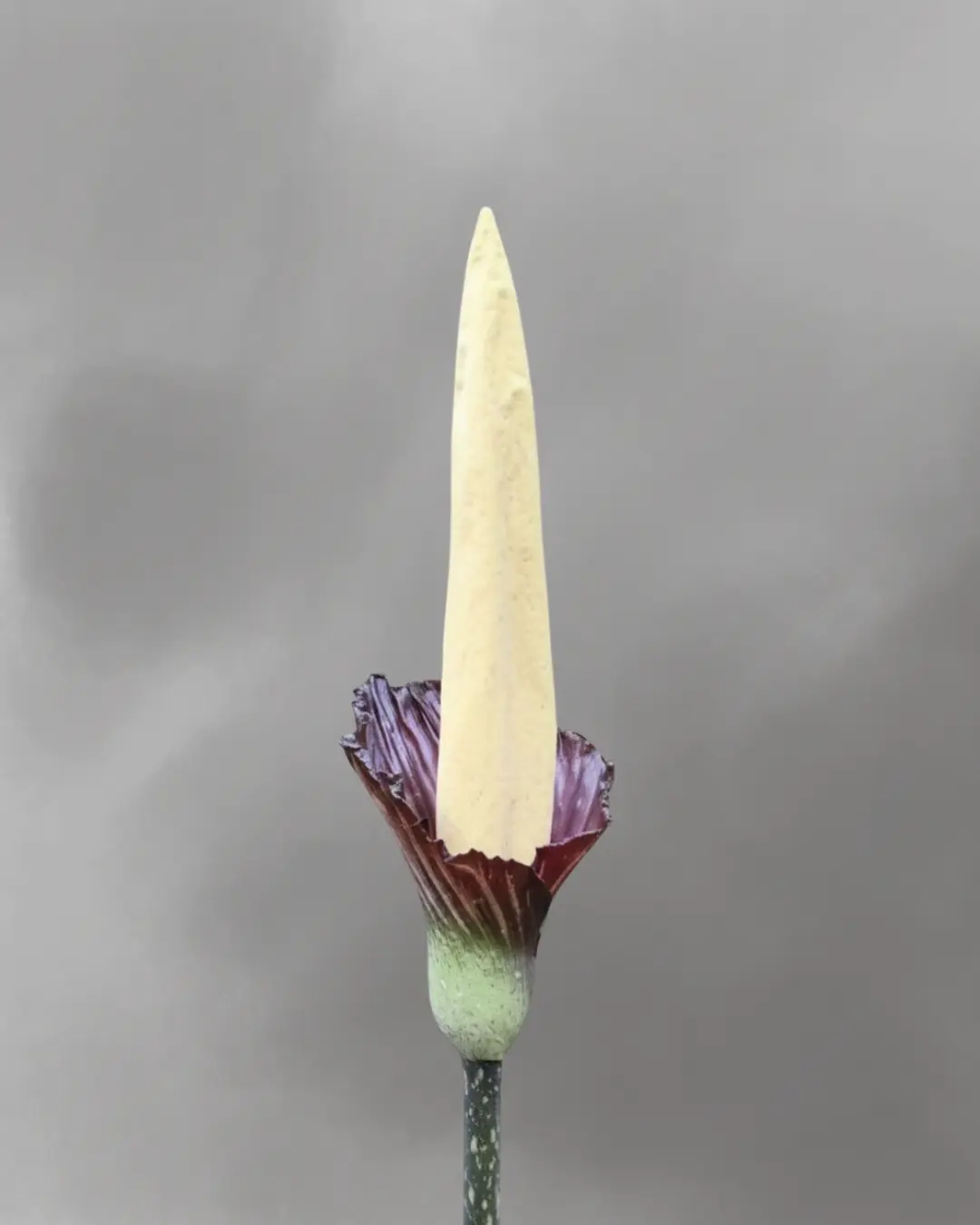
The inflorescence — the complete flowering structure — of Amorphophallus gigas is one of the largest in the plant world. It can reach 3.5 to 4 meters tall in natural habitat conditions. Moreover, a bloom recorded in China reached 2.5 meters — still taller than most adult humans.
The spathe — a hood-like outer leaf that wraps around the flower — unfurls to reveal a deep purple interior. Additionally, the spadix — the central spike that holds the actual flowers — rises from within the spathe. The bloom emits a powerful odor that resembles rotting meat. This scent attracts flies and beetles, which are its natural pollinators. Furthermore, the smell typically lasts only 24 to 48 hours. After successful pollination, the plant produces round, colorful berries.
Flowering is a rare and spectacular event. Primarily, it occurs only in mature plants that have built up enough energy reserves. Consequently, a blooming specimen is considered a major botanical milestone.
Dormancy Cycle
Amorphophallus gigas follows a clear seasonal cycle. The plant grows actively during the wet season. Additionally, it enters full dormancy during the dry season — a period when all above-ground growth dies back completely. During dormancy, the entire plant retreats into the corm — an underground storage organ similar to a bulb. The corm stores all the energy the plant needs for its next growth cycle.
Furthermore, this dormancy makes the plant easier to ship globally. The corm can be stored and transported safely during this phase. Moreover, new collectors should not worry when growth stops — this is completely natural. Consequently, the dormancy period can last several months.
Global Seed Delivery & Phytosanitary Certification
Induare Agro is a professional exporter of rare Indonesian plant seeds. We are based in Indonesia and operate with full compliance with international plant export regulations. Primarily, our mission is to supply the world’s most dedicated collectors with seeds that are legal, safe, and truly authentic.
Packaging and Shipping
Every seed order is packed with professional care. We use moisture-resistant, padded packaging designed for international air freight. Furthermore, we ship via Global Express courier services. Primarily, this ensures your seeds arrive quickly and in optimal condition. Each package includes tracking so you always know where your order is.
Additionally, we ship to most countries worldwide. Our team prepares all necessary customs documentation for each shipment. Consequently, buyers experience fewer delays at customs checkpoints. We have a strong track record of successful international deliveries to Europe, North America, Asia, and beyond.
Buyer Peace of Mind
Every order from Induare Agro includes a Phytosanitary Certificate. This is an official government-issued plant health document. Furthermore, it confirms that the seeds have been inspected and are free of pests and diseases. Moreover, it is required by most importing countries for legal entry of plant material.
Additionally, our seeds are certified organic and freshly harvested. We source directly from cultivated plants — not from wild collection. Consequently, buyers receive seeds of the highest viability and germination potential. Furthermore, we provide after-sales support for all customers. Induare Agro stands behind every order we ship.
How to Grow Amorphophallus gigas
Growing Amorphophallus gigas is a rewarding long-term project. Additionally, following the right steps from the start gives your seed the best chance. Each step below is based on the plant’s natural habitat conditions in Sumatra.
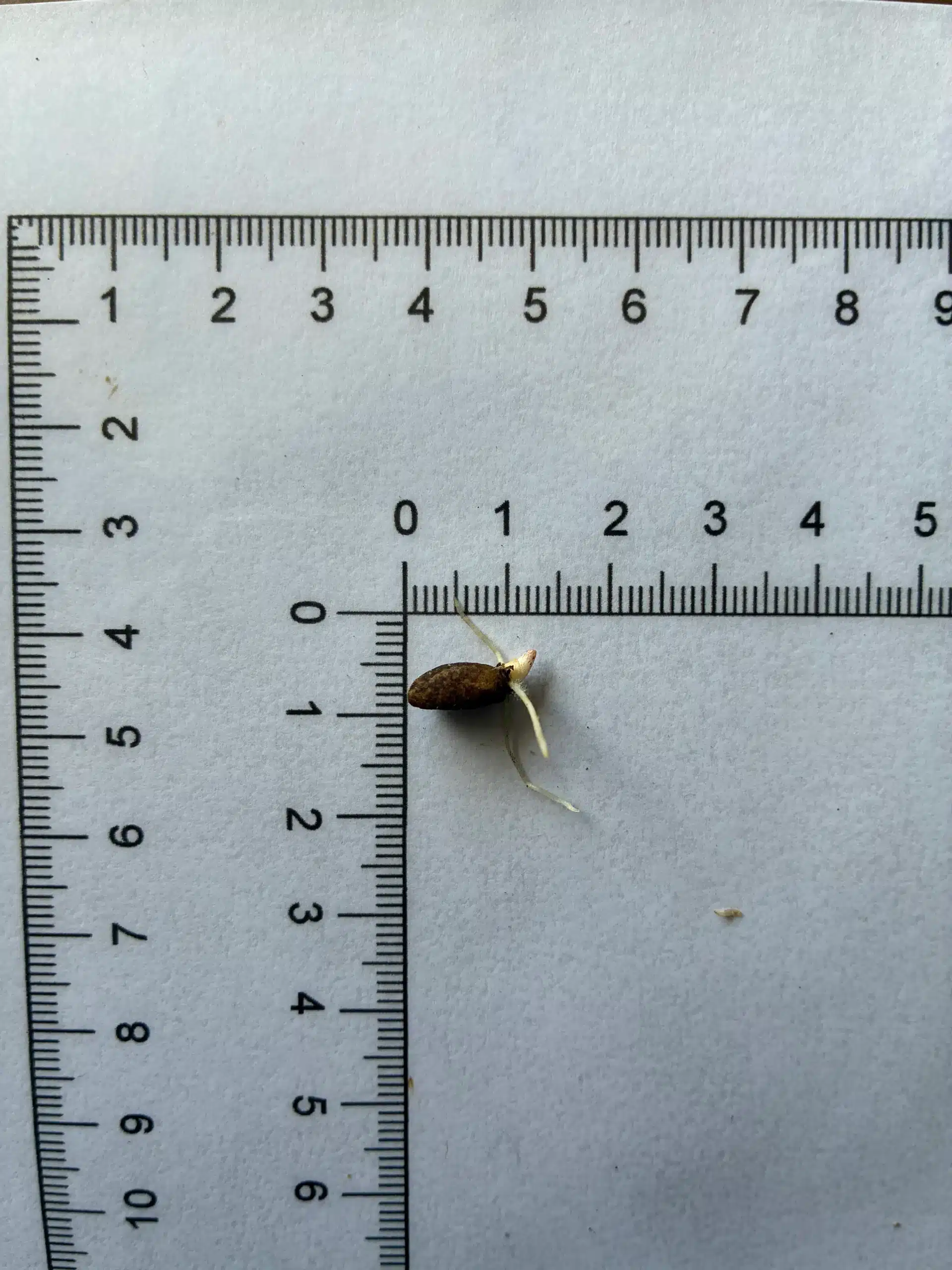
Step 1 — Germination Setup Place the seed on a damp paper towel or in a small container with moist, well-draining mix. Keep the temperature between 25–30°C (77–86°F) at all times. Additionally, maintain high humidity around the germination container.
Step 2 — First Potting Once the seed sprouts a small shoot, move it into a pot with a loose, airy mix. Use equal parts peat, coarse sand, and organic compost for best results. Furthermore, make sure the pot has good drainage holes to prevent waterlogging.
Step 3 — Light and Warmth Place the young plant in bright, indirect light. Avoid direct afternoon sun, as this can scorch the developing leaf. Primarily, aim to mimic the dappled light of a rainforest understory.
Step 4 — Watering Water regularly during the active growing season. Keep the soil evenly moist — but never waterlogged. Additionally, allow the soil to dry slightly between waterings during the dry season phase.
Step 5 — Managing Dormancy When the leaf yellows and dies back naturally, reduce watering significantly. Store the corm in a dry, warm, dark place during dormancy. Furthermore, keep the temperature above 10°C (50°F) at all times to prevent corm damage.
Step 6 — Repotting and Feeding Repot only when the corm is dormant and has clearly outgrown its container. Feed with a balanced, slow-release fertiliser once a month during active growth. Moreover, avoid high-nitrogen feeds — focus instead on phosphorus and potassium to support corm development.
All seeds are sourced and exported legally by Induare Agro with full phytosanitary documentation. Stock is seasonal and strictly limited.


