What Is Amorphophallus hirsutus?
Amorphophallus hirsutus is a rare and exotic tropical plant. It belongs to the Araceae family — a large group of plants also known as aroids. This species is native to the rainforests of West Sumatra and West Java, Indonesia. Additionally, small populations exist on the Nicobar Islands in the Indian Ocean. Its natural habitat is limited and fragile. Consequently, wild specimens are difficult to find. This rarity makes Amorphophallus hirsutus one of the most sought-after aroids in the world.
Furthermore, Indonesia holds 17 endemic Amorphophallus species. A. hirsutus is one of them. It is listed among the endemics of Sumatra alongside the famous A. titanum — the giant corpse flower. This close botanical kinship adds to its prestige. Serious plant collectors and botanical enthusiasts value it highly. Moreover, its unusual flower structure sets it apart from all other species in the genus. It is not just a plant — it is a living piece of Indonesian natural heritage.
Induare Agro sources these seeds directly from ethical growers in Indonesia. Every seed comes with full export documentation. We are committed to conservation and legal trade. Primarily, our goal is to connect global collectors with Indonesia’s finest rare botanicals.
Aesthetic Features Amorphophallus hirsutus
Amorphophallus hirsutus has a unique and dramatic appearance. Every part of this plant is visually striking. Furthermore, its features differ from most other species in the genus. Below, we describe its key physical traits in detail.
Leaf Structure Amorphophallus hirsutus
The leaves of Amorphophallus hirsutus grow up to 80 cm tall. The petiole — the stalk that holds the leaf — is covered in irregular speckles and spots. These markings create a mottled, reptilian pattern. Additionally, the leaf blade is deeply divided into smaller leaflets. This gives the plant a lush, tropical look even during its vegetative phase. The petiole pattern also helps identify this species in the field.
Flower and Fruit Amorphophallus hirsutus
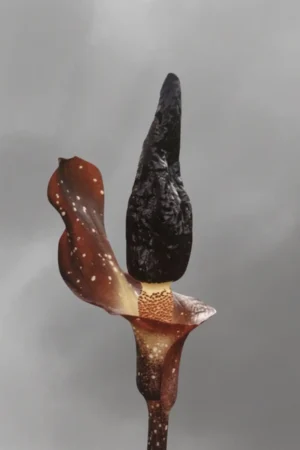
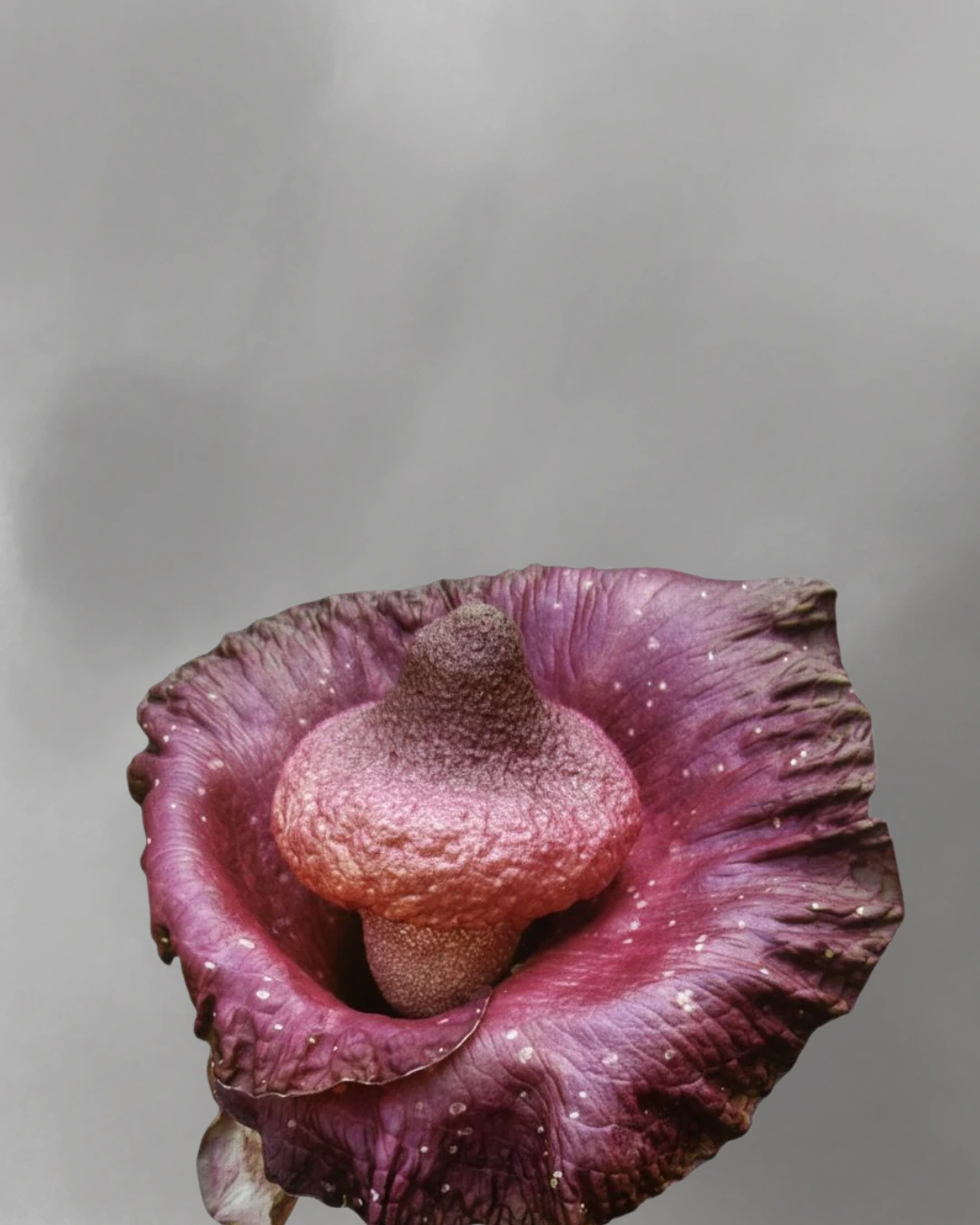
The flower of Amorphophallus hirsutus is highly unusual. The inflorescence — the entire flowering structure — grows close to the ground. It reaches about 25 cm in size. The spathe — a hood-like outer leaf that wraps around the flower — is deep purple in colour. Inside sits the spadix — the central spike that carries the true flowers. In most Amorphophallus species, the spadix rises above the spathe. In A. hirsutus, it remains inside the spathal chamber, like a lid closing over it.
Moreover, the spadix is covered with fine hairs — the trait behind the name hirsutus, which means “hairy” in Latin. This hairiness, combined with the spathe’s dark colour, makes the flower look like animal flesh. Consequently, it attracts flies for pollination. This is a clever and effective natural strategy. After pollination, the plant can produce fruit with viable seeds.
Dormancy Cycle
Amorphophallus hirsutus grows from an underground corm — a rounded, bulb-like storage organ. The plant follows a clear seasonal cycle. It grows actively above ground, then dies back and rests underground. This rest period is called dormancy. During dormancy, the corm stores energy for the next growing season. Primarily, this cycle is what allows the plant to survive dry or cool periods. Once the corm reaches about 10 cm in diameter, the plant is mature enough to flower. Growers must respect this cycle for the best results.
Global Seed Delivery & Phytosanitary Certification
Induare Agro is a professional Indonesian plant exporter. We supply rare seeds and plants to collectors and botanical gardens across the world. Furthermore, we follow all international plant trade regulations. Every shipment is fully legal, safe, and professionally handled.
Packaging and Shipping
We pack every seed carefully to protect it during transit. Seeds are wrapped in moisture-resistant materials. Additionally, we add cushioning to prevent physical damage. We ship via Global Express courier services. Consequently, most orders arrive within 7–14 business days, depending on the destination. We ship to all major countries across Europe, North America, Asia, Australia, and beyond.
Moreover, each package includes a Phytosanitary Certificate. This is an official government-issued document. It certifies that the seeds are free from pests and diseases. It also confirms that the export meets the plant health requirements of the destination country. Primarily, this certificate protects buyers and ensures smooth customs clearance.
Buyer Peace of Mind
Induare Agro provides full transparency on every order. We include all required documentation inside the package. Additionally, we provide tracking information so you can follow your shipment in real time. Our team is available to answer questions before and after purchase. Consequently, buyers can shop with full confidence.
Furthermore, all our seeds are fresh and organic. We do not use chemical treatments on our seeds. We harvest and pack them close to the shipping date. This ensures maximum viability on arrival. We stand behind the quality of every seed we send.
How to Grow Amorphophallus hirsutus
Growing Amorphophallus hirsutus is a rewarding experience. Follow these steps for the best results.
Step 1 — Prepare Your Growing Medium Use a well-draining soil mix rich in organic matter. A mix of potting soil, perlite, and compost works well. Good drainage is essential to prevent corm rot.
Step 2 — Sow the Seed Plant the seed about 2–3 cm deep in the prepared soil. Keep the soil lightly moist but not waterlogged. Germination typically begins within 3–6 weeks under warm conditions.
Step 3 — Provide Warmth and Humidity Maintain a temperature of at least 15°C (59°F) at all times. A. hirsutus is a tropical plant and does not tolerate frost. Additionally, high humidity encourages strong early growth.
Step 4 — Choose the Right Light Place the plant in bright, indirect light. Avoid direct midday sun, which can scorch the leaves. Furthermore, a shaded outdoor spot in a warm climate works very well.
Step 5 — Respect the Dormancy Period When the leaf dies back naturally, reduce watering. Allow the soil to dry out partially. Do not discard the pot — the corm is alive underground and will reshoot in the next season.
Step 6 — Repot as the Plant Grows As the corm enlarges, move the plant to a larger pot. Primarily, this gives the roots and corm enough space to develop. A mature corm will eventually produce the spectacular flower.