What Is Amorphophallus paeoniifolius?
Amorphophallus paeoniifolius is a rare and remarkable tropical plant. It belongs to the family Araceae and originates from Island Southeast Asia. Scientists and botanists regard it as one of the most botanically significant aroids in the world.
This plant is native to tropical regions stretching from Indonesia and India to New Guinea and the Pacific Islands. In Indonesia, it holds a special place as a culturally important food and ornamental crop. Furthermore, it ranks as the third most important source of carbohydrates in Indonesia after rice and maize.
Globally, rare plant collectors prize Amorphophallus paeoniifolius for its dramatic appearance. Additionally, its unusual flowering behaviour and large underground storage organ make it a standout specimen. Consequently, demand from collectors across Europe, North America, and East Asia continues to grow.
The plant’s scientific name reflects two defining features. “Paeoniifolius” means “peony-leaved” in Latin, describing its large, deeply lobed leaves. Moreover, it belongs to the genus Amorphophallus — a group of plants known for producing some of the world’s most striking tropical flowers.
Induare Agro sources these seeds directly from verified Indonesian growers. We supply only fresh, organically grown seeds with full export documentation. Primarily, our mission is to connect rare plant enthusiasts worldwide with the finest Indonesian botanical specimens.
Aesthetic Features Amorphophallus paeoniifolius
Few plants match the visual drama of Amorphophallus paeoniifolius. Its physical features are bold, unusual, and instantly recognisable. Additionally, each part of the plant serves a clear biological purpose, making it as fascinating to study as it is beautiful to grow.
Leaf Structure Amorphophallus paeoniifolius
The plant produces a single, enormous compound leaf each growing season. This leaf rises from the corm — a large, rounded underground storage organ — on a thick, mottled stalk. Furthermore, the stalk, called a petiole, can reach over 150 cm (nearly 5 feet) in height.
The leaf itself fans out like a small tree canopy. It features deeply divided, glossy green leaflets that resemble those of a peony plant. Primarily, this canopy shape is what gives the species its species name, paeoniifolius — meaning “peony-leaved.” Collectors often describe the full leaf as one of the most architecturally striking sights in tropical horticulture.
The petiole is easy to identify. It is typically pale green with darker mottled markings, giving it an almost snakeskin-like pattern. Moreover, this visual detail adds to the plant’s appeal as a collector’s specimen and exotic garden feature.
Flower and Fruit Amorphophallus paeoniifolius
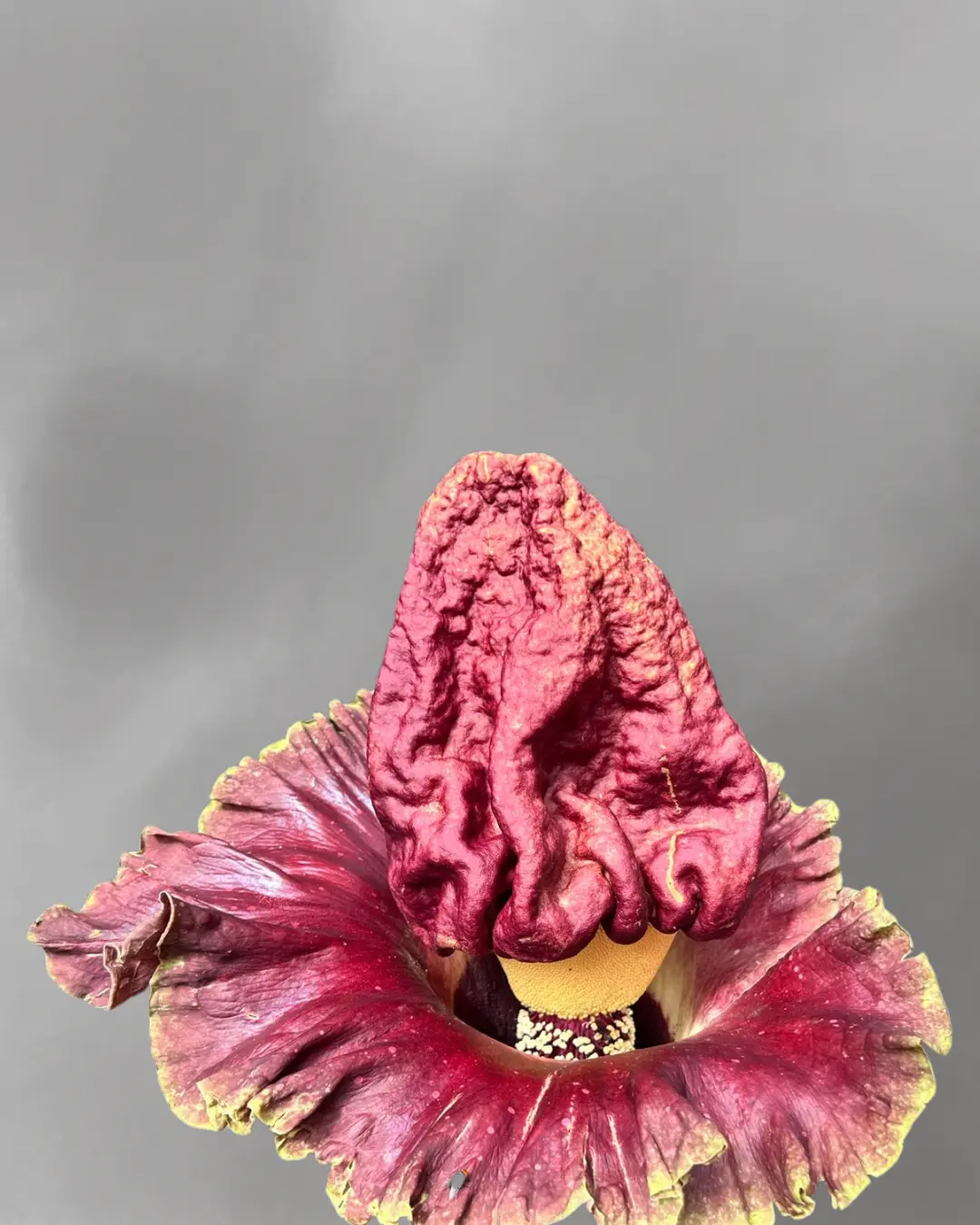
Amorphophallus plants are famous for their unusual inflorescences — their flower structures. A. paeoniifolius produces a spathe — a large, hood-like outer leaf — that is fleshy and purple-brown in colour. Inside the spathe stands the spadix — a tall, central spike covered in small flowers.
The spadix is topped with a bulbous, deep-purple knob. Additionally, the spathe can reach up to 50 cm (about 20 inches) in width. Consequently, the inflorescence is one of the most visually dramatic flowering events in the aroid world.
The flower emits a brief, strong odour to attract pollinators such as flies and carrion beetles. This smell typically lasts only one to two days. Furthermore, after successful pollination, the plant produces a cluster of small, bright-coloured berries containing seeds. These seeds are what Induare Agro carefully harvests, processes, and ships to collectors worldwide.
Dormancy Cycle
Amorphophallus paeoniifolius follows a distinct annual dormancy cycle. After the leaf and inflorescence die back, the plant retreats entirely underground. Primarily, the corm — a thick, flattened underground storage organ — survives the dry season in a dormant state.
The corm stores all the energy needed for the next growing season. Moreover, it can grow to an impressive size over time, with large corms reaching 25–30 cm in diameter and weighing up to 8 kg. This dormancy period is perfectly natural and should not concern new growers.
When conditions warm up and moisture returns, the plant re-emerges with renewed vigour. Consequently, growers in temperate climates can store the corm indoors during winter and replant it each spring. Furthermore, this makes A. paeoniifolius surprisingly adaptable for collectors outside the tropics.
Global Seed Delivery & Phytosanitary Certification
Induare Agro is committed to professional, legal, and reliable global seed export. We understand that receiving rare exotic seeds in perfect condition is critical for collectors and growers. Moreover, we handle every order with the same care and attention we give to our own plants.
Packaging and Shipping
Every seed is cleaned, inspected, and carefully packaged before dispatch. We use moisture-controlled, padded packaging to protect seeds during long-distance transit. Furthermore, all orders are shipped via Global Express courier services to ensure fast and trackable delivery.
We ship to over 50 countries worldwide. Primarily, our buyers are located in Europe, North America, Japan, South Korea, Australia, and the Middle East. Additionally, we regularly serve botanical gardens, university research departments, and private collectors seeking premium Indonesian plant material.
Each parcel includes full tracking information. Consequently, buyers can monitor their shipment from our facility in Indonesia to their door. Moreover, all seeds are tested for viability before packing to maximise germination success upon arrival.
Buyer Peace of Mind
Every order from Induare Agro includes an official Phytosanitary Certificate. This certificate is issued by Indonesia’s authorised plant health inspection authority. Furthermore, it confirms that all seeds have been inspected and declared free from pests and diseases.
The Phytosanitary Certificate ensures smooth customs clearance in most countries. Additionally, it meets the import biosecurity requirements of the European Union, United States, United Kingdom, Australia, and Japan. Consequently, buyers face no unnecessary delays or complications at customs.
We also provide complete export documentation for every shipment. Primarily, this includes a commercial invoice, packing list, and certificate of origin where required. Moreover, our export team has extensive experience navigating international plant trade regulations. You can always contact Induare Agro for guidance on import requirements in your specific country.
How to Grow Amorphophallus paeoniifolius
Growing Amorphophallus paeoniifolius from seed is a rewarding process. Follow these steps carefully for the best results.
Step 1: Prepare Your Growing Medium Fill a small pot with a well-draining mix of loamy soil and perlite. The mix should be slightly acidic to neutral, with a pH between 5.5 and 7.0. Additionally, make sure the pot has drainage holes to prevent waterlogging.
Step 2: Sow the Seed Press the seed lightly into the surface of the moist growing mix. Cover it with a thin layer of soil, no deeper than 1–2 cm. Furthermore, seal the pot inside a clear plastic bag to retain warmth and humidity during germination.
Step 3: Provide Warmth Place the pot in a warm location with a temperature of 24–26°C (75–79°F). Bright, indirect light is ideal. Primarily, avoid placing the pot in direct sunlight, as this can dry out the soil too quickly.
Step 4: Wait for Germination Germination can take anywhere from 3 weeks to 8 months. Additionally, patience is key — do not discard the pot if sprouts do not appear quickly. Consequently, keeping the soil consistently moist (but not wet) is essential during this period.
Step 5: Transplant the Seedling Once the seedling is large enough to handle, move it to a larger pot. Use a rich, well-drained potting mix. Furthermore, ensure the corm sits firmly below the soil surface to give the plant stability as it grows.
Step 6: Manage the Growing Season Water moderately during the active growing season. Allow the topsoil to dry slightly between waterings. Moreover, apply a balanced liquid fertiliser every four to six weeks to support strong leaf and corm development.
Step 7: Allow Dormancy When the leaf begins to yellow and die back, reduce watering significantly. Primarily, this signals the start of the dormancy period. Additionally, the corm can be left in its pot or carefully removed and stored in a cool, dry location until the next growing season.
All seeds are supplied by Induare Agro — Indonesia’s trusted source for rare exotic seeds and export-quality botanical specimens.


