What Is Amorphophallus spectabilis?
Amorphophallus spectabilis is a rare tuberous plant that is native to the wet tropical forests of West Java, Indonesia. It belongs to the prestigious aroid family, Araceae. Scientists first formally described this species under the name Conophallus spectabilis in 1856. Today, collectors and botanists regard it as one of the most sought-after and least-available species in the entire Amorphophallus genus.
This species grows naturally in shaded, humid lowland rainforests. Consequently, it has evolved to thrive in warm, sheltered conditions that are difficult to replicate outside its native habitat. Furthermore, its extreme rarity in the wild makes each seed a genuinely valuable find. Additionally, strict Indonesian biodiversity regulations limit how and when these seeds are legally harvested. This makes properly sourced, export-legal specimens extraordinarily rare on the global market.
Collectors worldwide seek Amorphophallus spectabilis for its visual drama and scientific intrigue. Moreover, it represents a living piece of Indonesian botanical heritage. Primarily, its value lies in its extreme scarcity, its spectacular flowering event, and its status as a flagship species of the Indonesian aroid world. Induare Agro is proud to offer responsibly sourced seeds, fully compliant with Indonesian export law and international phytosanitary standards.
Aesthetic Features Amorphophallus spectabilis
Amorphophallus spectabilis is a visually captivating plant at every stage of its life cycle. Furthermore, each phase — leaf, flower, fruit, and rest — brings its own unique beauty. The following sections describe each key feature in plain, accessible language.
Leaf Structure Amorphophallus spectabilis
Amorphophallus spectabilis produces a single, large compound leaf. This leaf grows upward from a long, smooth petiole — the stalk that connects the leaf to the underground corm. The leaf divides into many smaller leaflets, creating a lush, umbrella-like canopy that can span impressively wide. Primarily, the leaf serves one purpose: to collect sunlight and manufacture the energy needed to fuel the plant’s next dramatic flowering event.
The petiole is often attractively patterned. It may show mottled or speckled markings in shades of green, cream, and pale grey. Furthermore, the overall appearance of the plant in its leaf stage resembles a small, elegant tree. Consequently, it makes a stunning display plant even when it is not in flower.
Flower and Fruit Amorphophallus spectabilis
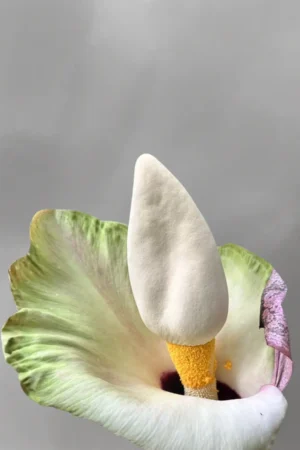
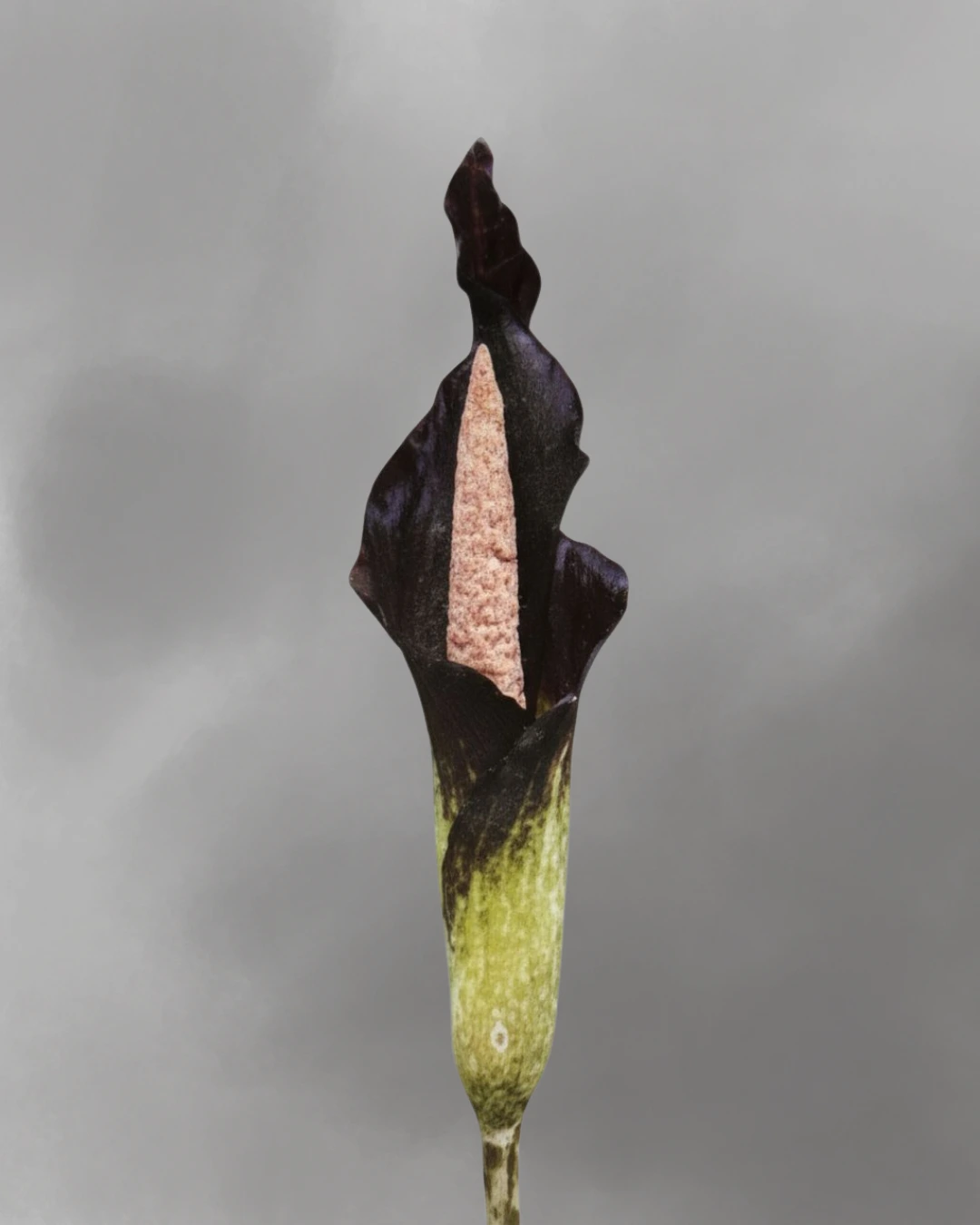
The flowering event of Amorphophallus spectabilis is the most spectacular moment in its life cycle. The plant produces a striking inflorescence — a structure made up of two main parts. The first is the spathe — a large, hood-like outer bract, similar to a single oversized petal, that wraps around the flower. The second is the spadix — the tall, central spike that rises from the centre of the spathe and carries the tiny true flowers at its base.
In the Amorphophallus genus, the spathe often displays deep, rich colours — from purple and maroon to green — and can have a glossy or velvety inner surface. The spadix stands upright and is visually dramatic. Additionally, many Amorphophallus species emit a pungent scent during bloom to attract pollinating insects. After successful pollination, the plant produces clusters of bright berries. These berries may be red, orange-red, or other vivid colours depending on conditions. Consequently, the fruiting stage offers another layer of visual appeal for the collector.
Dormancy Cycle
Like all members of the Amorphophallus genus, A. spectabilis grows from an underground corm — a rounded, bulb-like storage organ. The corm stores energy between growth cycles. Furthermore, the plant follows a clear annual rhythm: it produces its leaf, gathers energy, and then enters a full dormancy period when the leaf dies back naturally.
During dormancy, the corm rests in dry soil. This rest period is essential and should not be skipped. Moreover, the dormancy phase is when the corm builds the energy reserves needed for its next spectacular growth cycle. Consequently, growers should allow the plant to dry down fully and rest before restarting the watering cycle. This rhythm — growth, energy storage, dormancy, regrowth — is one of the most fascinating aspects of growing Amorphophallus spectabilis.
Global Seed Delivery & Phytosanitary Certification
Induare Agro takes global seed delivery seriously. We understand that our customers invest significant trust when ordering rare and exotic seeds internationally. Consequently, we have built our shipping and compliance process to the highest professional standards.
Packaging and Shipping
Every seed is carefully prepared for international transit. Induare Agro uses secure, moisture-controlled packaging designed to protect seed viability during long-haul express shipping. Furthermore, we ship via Global Express courier services to ensure fast, trackable delivery. Additionally, we serve customers across Europe, North America, Asia, the Middle East, Australia, and beyond. Primarily, our goal is that every seed arrives fresh, viable, and ready to plant.
We dispatch orders promptly after receiving payment and completing all export documentation. Moreover, we provide tracking details so you can follow your order from Indonesia to your door. Consequently, you can plan your planting schedule with confidence.
Buyer Peace of Mind
Every order from Induare Agro includes a Phytosanitary Certificate issued by the Indonesian government authority. This certificate is an official document. It confirms that your seeds have been professionally inspected and meet international plant health standards. Furthermore, it ensures your seeds can clear customs in most countries without complications.
Additionally, all our products are organic and free from synthetic treatments. We handle every seed with care from harvest to packaging. Consequently, you receive seeds that reflect the highest export quality standards available in Indonesia. Moreover, Induare Agro is a trusted supplier with a strong track record of successful international deliveries. Primarily, our commitment is your confidence.
How to Grow Amorphophallus spectabilis
Growing Amorphophallus spectabilis is a rewarding experience. Follow these clear steps to give your seed the best possible start.
Step 1 — Prepare Your Growing Mix Use a well-draining tropical mix — combine equal parts coconut coir, perlite, and rich compost. Good drainage is essential. The corm must never sit in waterlogged soil.
Step 2 — Soak the Seed Soak the seed in warm water for 24 hours before planting. This softens the seed coat and encourages faster germination. Change the water once midway through soaking.
Step 3 — Plant at the Correct Depth Plant the seed at a depth of approximately 2–3 cm below the soil surface. Position it with the flatter side facing down. Water lightly after planting.
Step 4 — Provide Warmth and Humidity Place the pot in a warm location with temperatures between 25–30°C (77–86°F). Furthermore, maintain high humidity by covering the pot loosely with a clear plastic sheet or placing it in a humid propagation chamber. Avoid direct harsh sunlight at this stage.
Step 5 — Water Carefully Water only when the top layer of soil feels dry. Overwatering is the most common mistake. Additionally, ensure the pot has drainage holes so excess water escapes freely.
Step 6 — Respect the Dormancy Period When the leaf dies back naturally, reduce watering to near zero. Allow the corm to rest in slightly dry soil for 6–10 weeks. Consequently, the corm will store energy for its next strong growth cycle.
Step 7 — Resume Watering After the dormancy period, resume light watering. New growth will emerge from the corm. Furthermore, you can apply a diluted liquid fertiliser once the new leaf is actively growing.
© Induare Agro — Rare Indonesian Plants, Responsibly Sourced and Globally Delivered.