What Is Amorphophallus tinekeae?
Amorphophallus tinekeae is a rare tropical aroid species native to the rainforests of Borneo, Indonesia. Botanists Wilbert Hetterscheid and Art Vogel formally described it in 2001. Consequently, it remains one of the newer and lesser-known members of the large Amorphophallus genus. This genus contains over 200 tropical species, yet A. tinekeae stands out for its restricted range and highly unusual appearance.
The plant grows naturally in lowland tropical forests and disturbed forest edges. Furthermore, it belongs to the Lambii species group — a set of medium to massive aroid herbs known for their striking inflorescences — the flowering structures — and impressive tubers — the underground storage organs. Collectors around the world actively seek this species because of its extreme rarity in cultivation.
Amorphophallus tinekeae is intolerant of waterlogged soil, which makes it a plant that rewards patient, attentive growers. Additionally, its Bornean origin means it thrives in warm, humid, and well-drained tropical conditions that are hard to replicate outside its native range. This rarity and sensitivity make every viable seed a precious commodity. Induare Agro sources and supplies these seeds directly from Indonesia, ensuring authenticity and freshness.
Aesthetic Features Amorphophallus tinekeae
Amorphophallus is a genus celebrated for dramatic visual contrasts. A. tinekeae is no exception. Moreover, it delivers a stunning combination of bold leaf structure, an exotic bloom, and a fascinating rest period.
Leaf Structure Amorphophallus tinekeae
Amorphophallus tinekeae produces a single, large compound leaf each growing season. The leaf sits on top of a tall petiole — the main stalk — that is often patterned with mottled green and pale markings. Additionally, the leaf blade divides into numerous smaller leaflets, which spread outward to capture maximum filtered light. This canopy-like form makes the plant look like a miniature tree, even in a container.
The leaflets are elongated, smooth-edged, and tapered at their tips. Furthermore, the overall leaf structure gives the plant an architectural quality that adds real drama to any indoor or outdoor tropical garden. Each leaf lasts one full growing season. Consequently, the plant channels all its energy into that single, impressive display before dying back for dormancy.
Flower and Fruit Amorphophallus tinekeae
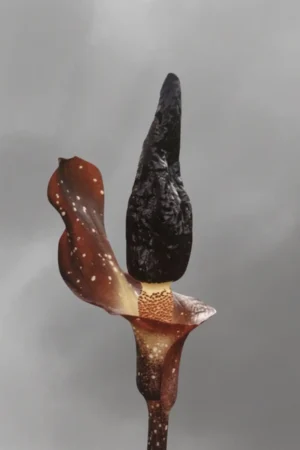
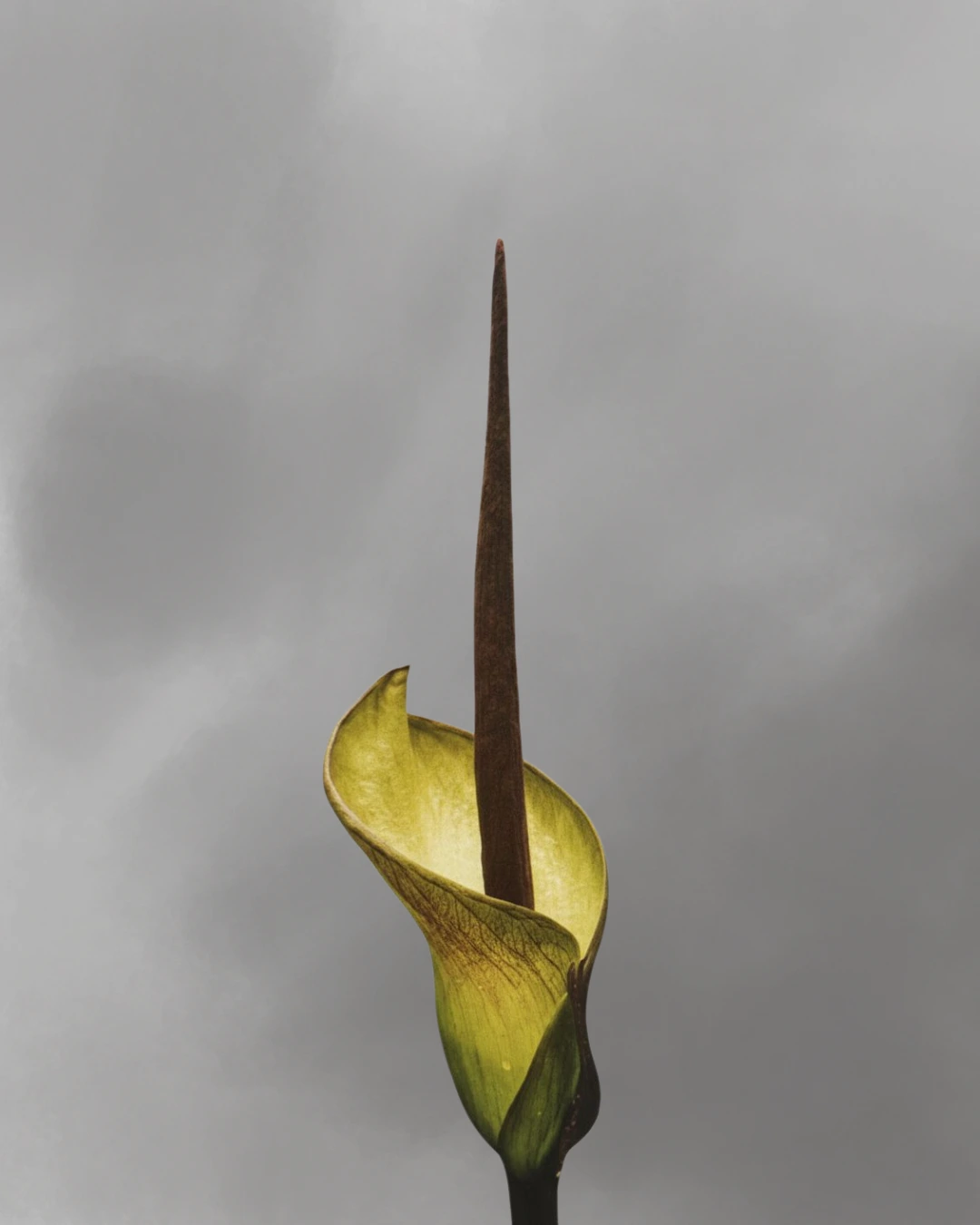
The inflorescence — the flowering structure — of A. tinekeae is equally spectacular. It consists of a central spike called the spadix — a fleshy flower-bearing column — wrapped by a large, hood-like outer bract called the spathe. In the Lambii group, to which A. tinekeae belongs, the spathe is broadly bell-shaped and green on the outside. Moreover, the inside features a striking pale purple coloration. The spadix rises above the spathe and tapers to a pointed tip.
As with many Amorphophallus species, the inflorescence produces an odour to attract insect pollinators. Primarily, the scent draws beetles and flies that serve as natural pollinators in the wild. After successful pollination, the plant develops small berries. Furthermore, these berry clusters add another ornamental dimension. They can range in colour from red to orange, depending on the individual plant and growing conditions.
Dormancy Cycle
Amorphophallus tinekeae follows a clear annual dormancy cycle. After the leaf dies back, the tuber — the underground storage organ — enters a dry rest period. Consequently, growers must reduce watering significantly during this phase. The tuber stores all the energy the plant needs to push out a new leaf or, eventually, a flower in the next season. Additionally, A. tinekeae is notably intolerant of staying wet during dormancy. Overwatering at this stage is the most common mistake and can cause the tuber to rot quickly. Patience during dormancy is always rewarded with a fresh, vigorous flush of growth in the following season.
Global Seed Delivery & Phytosanitary Certification
Induare Agro is a professional Indonesian botanical exporter. Moreover, it is committed to the highest standards of legal, safe, and responsible global seed supply. Every order ships with full documentation and careful preparation to protect seed viability during long-distance transit.
Packaging and Shipping
Induare Agro packs every seed order with care. Primarily, seeds travel in protective moisture-controlled packaging to maintain freshness throughout the journey. Furthermore, all shipments use Global Express courier services to ensure fast delivery to buyers in Europe, North America, Asia, Australia, and beyond. Tracking information is provided with every order. Consequently, buyers can monitor their shipment at every stage of delivery. Induare Agro has extensive experience shipping rare Indonesian aroid seeds to collectors worldwide.
Buyer Peace of Mind
Every shipment from Induare Agro includes a Phytosanitary Certificate. This is an official government-issued document. Additionally, it confirms that the seeds have been inspected and meet the plant health standards of the destination country. This certificate is required for legal import of plant material in most countries. Consequently, buyers avoid customs delays and legal complications. Furthermore, Induare Agro ensures full compliance with CITES and Indonesian export regulations at all times. You can buy with complete confidence, knowing your seeds are legal, inspected, and documented.
How to Grow Amorphophallus tinekeae
Step 1 — Choose the Right Pot and Soil Select a pot with excellent drainage holes. Use a rich, airy mix of coconut coir, perlite, and orchid bark in equal parts.
Step 2 — Plant the Seed Correctly Place the seed just below the surface — about 1–2 cm deep. Do not bury it too deeply, as the young shoot needs to emerge easily.
Step 3 — Provide Warmth and Humidity Keep the growing environment warm, ideally between 22°C and 30°C (72°F–86°F). Additionally, maintain high humidity by misting daily or using a humidity tray.
Step 4 — Water with Care Water gently after planting. Furthermore, allow the top 2 cm of soil to dry slightly between waterings. Never let the soil become soggy.
Step 5 — Supply Indirect Light Place the pot in a bright spot away from direct midday sun. Primarily, filtered light or morning sun works best for young seedlings.
Step 6 — Fertilise During Active Growth Apply a balanced liquid fertiliser every two weeks during the growing season. Moreover, reduce feeding completely once the leaf begins to yellow and die back.
Step 7 — Manage Dormancy Correctly When the leaf dies back, stop watering almost entirely. Consequently, the tuber rests in dry soil for approximately two to four months. Resume gentle watering only when a new shoot tip appears.
© Induare Agro — Specialist Supplier of Rare Indonesian Exotic Plants and Seeds