
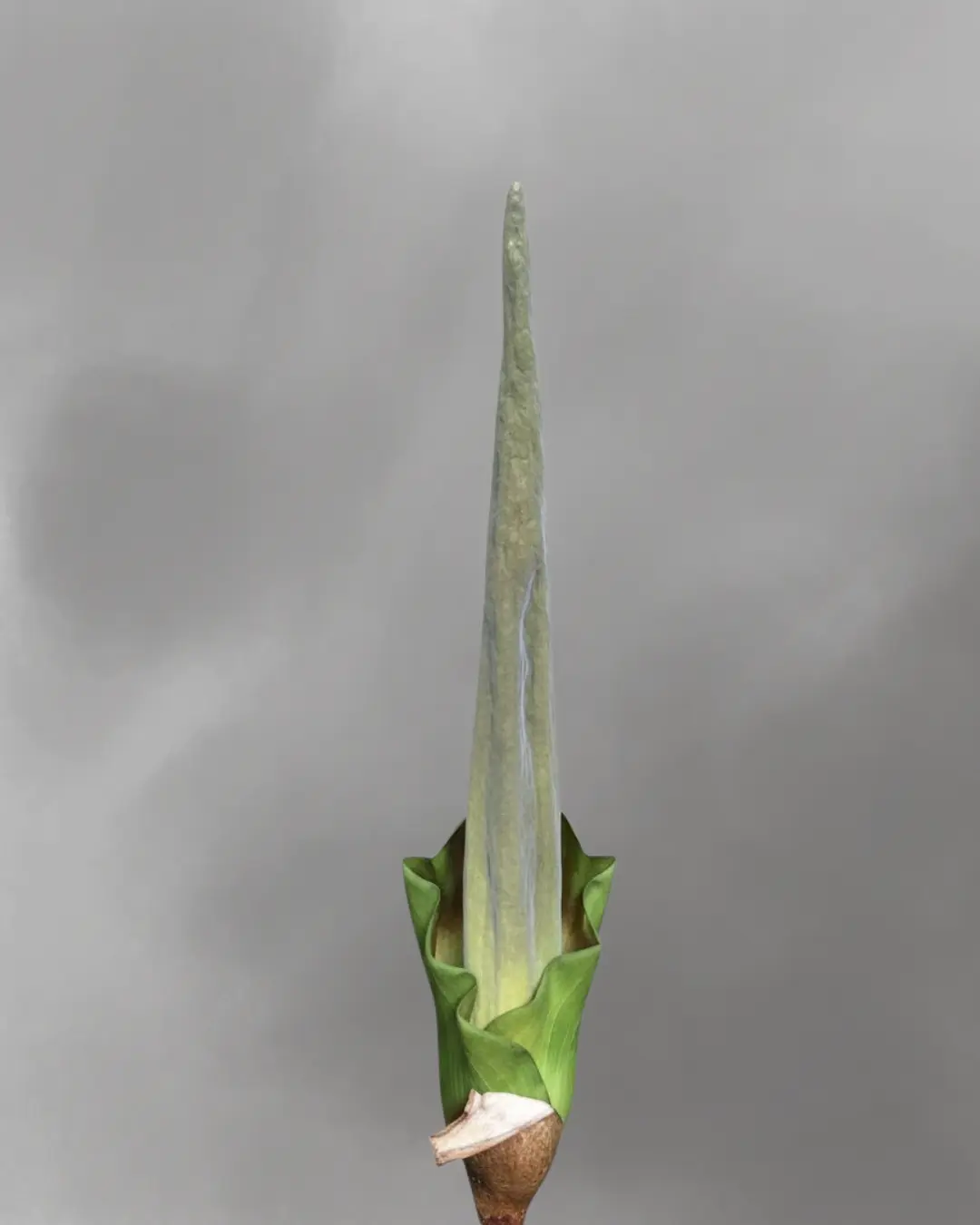
What Is Amorphophallus lambii?
Amorphophallus lambii is a rare and striking aroid from the Araceae family. It grows naturally in the lowland rainforests of Borneo. Specifically, it is found in Sabah in northern Borneo and in Central Kalimantan in southern Borneo. The plant lives along streams and rivers on rich, fertile soil. Consequently, it thrives in warm, humid, and shaded conditions close to water.
The species was formally named after Anthony Lamb. He was an English botanist known for his deep research into the plants of northern Borneo. Furthermore, the plant was first described scientifically by Mayo and Widjaja. It holds a place in the records of the Royal Botanic Gardens, Kew. This gives A. lambii both scientific importance and collector prestige.
This plant is extremely rare in the global horticultural market. Moreover, it takes at least five years of growth before the plant is ready to produce a flower. Consequently, seed availability is very limited. Induare Agro offers a direct, legal, and verified source for collectors worldwide. Additionally, every seed comes fully documented and export-ready from Indonesia.
Aesthetic Features Amorphophallus lambii
Amorphophallus lambii is a visually striking plant at every stage of its life. Its physical traits make it one of the most admired aroids in private collections. Furthermore, each part of the plant — from leaf stalk to flower — shows a bold and dramatic appearance.
Leaf Structure
The plant grows one leaf at a time from an underground storage bulb, called a corm. The leaf grows in a wide, umbrella-like shape. It has deeply divided sections that spread outward from the centre. Additionally, the leaf stalk — called a petiole — is one of the most eye-catching parts of the plant. It shows a beautiful mottled pattern in mixed shades of green. Consequently, even outside of flowering season, the plant remains a visual centrepiece in any collection. The corm and leaf grow larger with each yearly cycle. This means the plant becomes more impressive with age.
Flower and Fruit
After at least five years of growth, the corm stores enough energy to produce a flower. The flower structure — called an inflorescence — is large and dramatic. It has an outer hood, called a spathe, which is green on the outside and deep purple on the inside. Inside the spathe sits a central spike, called a spadix. The spadix varies in colour. Furthermore, the flower releases a strong, unpleasant odour during bloom. This smell attracts flies and beetles, which carry out pollination. Consequently, the fruiting period that follows produces berries. Each berry contains a single seed.
Dormancy Cycle
When a leaf dies and no new leaf appears, the plant enters a rest period called dormancy. Primarily, this is a normal and healthy part of the growth cycle. The corm remains alive underground during this time. Do not let the soil dry out completely during dormancy. Furthermore, once conditions improve, the corm will sprout again on its own. Each new leaf after dormancy is larger than the last. Additionally, this cycle repeats yearly and the plant grows more powerful with every season.
Global Seed Delivery & Phytosanitary Certification
Induare Agro is a professional plant and seed exporter based in Indonesia. The company connects rare Indonesian species with collectors, growers, and research institutions worldwide. Furthermore, Induare Agro holds a full export licence and follows all national and international plant trade regulations.
Packaging and Shipping
Every seed order from Induare Agro includes an official Phytosanitary Certificate. This document is issued by Indonesia’s Plant Health Authority. It confirms that the seeds are clean, pest-free, and disease-free. Consequently, it satisfies the import rules of customs offices in the EU, USA, UK, Australia, Japan, and most other countries. Induare Agro packs every seed with moisture control materials and padded express packaging. Shipments go via Global Express couriers such as DHL and FedEx. Additionally, most international orders arrive within 5–14 business days.
Buyer Peace of Mind
All export documents travel with every parcel. This includes the Phytosanitary Certificate and the commercial invoice. Furthermore, this full-document process ensures smooth customs clearance at the destination. Primarily, Induare Agro built its reputation on legal, transparent, and professional service. Collectors never face the risk of confiscation or legal problems. Additionally, the team provides after-sales guidance to support growers at every stage of cultivation.
How to Grow Amorphophallus lambii
Growing Amorphophallus lambii takes patience, but the results are remarkable. Furthermore, growers in tropical, subtropical, and temperate climates can all succeed. The key is to copy the warm, humid conditions of Borneo’s lowland forests.
Step 1 — Seed Preparation Soak the seed in warm water (25–30°C) for 24–48 hours before planting. Additionally, lightly scratch the seed coat with fine sandpaper. This helps water enter the seed and speeds up sprouting.
Step 2 — Growing Medium Mix Sphagnum moss and coconut fibre in equal parts for best results. Consequently, this mix holds moisture well and allows good air flow around the developing corm. You can also add perlite or bark to improve drainage.
Step 3 — Sowing Plant the seed just below the surface of the mix — about 1–2 cm deep. Furthermore, keep the mix slightly moist at all times. Do not let it dry out completely during the sprouting stage.
Step 4 — Temperature and Humidity Keep the temperature between 25°C and 30°C at all times. Primarily, high humidity (60–80%) helps the seed sprout faster and supports strong early growth. A plastic humidity dome over the pot works well for this.
Step 5 — Light Place the pot in a bright spot with no direct sunlight. Additionally, filtered or indirect light best copies the shaded forest floor where this species naturally grows.
Step 6 — Watering During Growth Keep the soil constantly moist during the active growing phase. Furthermore, make sure the pot has good drainage. Do not let the plant sit in standing water, as this can cause root rot.
Step 7 — Dormancy Care When the leaf dies back and no new leaf appears, reduce watering slightly. Consequently, the corm needs rest — but never let the soil fully dry out. Do not remove the corm from the pot. It will sprout again on its own.
Step 8 — Feeding and Repotting Feed the plant with standard houseplant fertiliser during the growing phase. Repot each year at the start of a new growth cycle. Additionally, move to a slightly larger pot each time to give the growing corm more room.
© Induare Agro — Indonesia’s professional rare seed exporter.
