
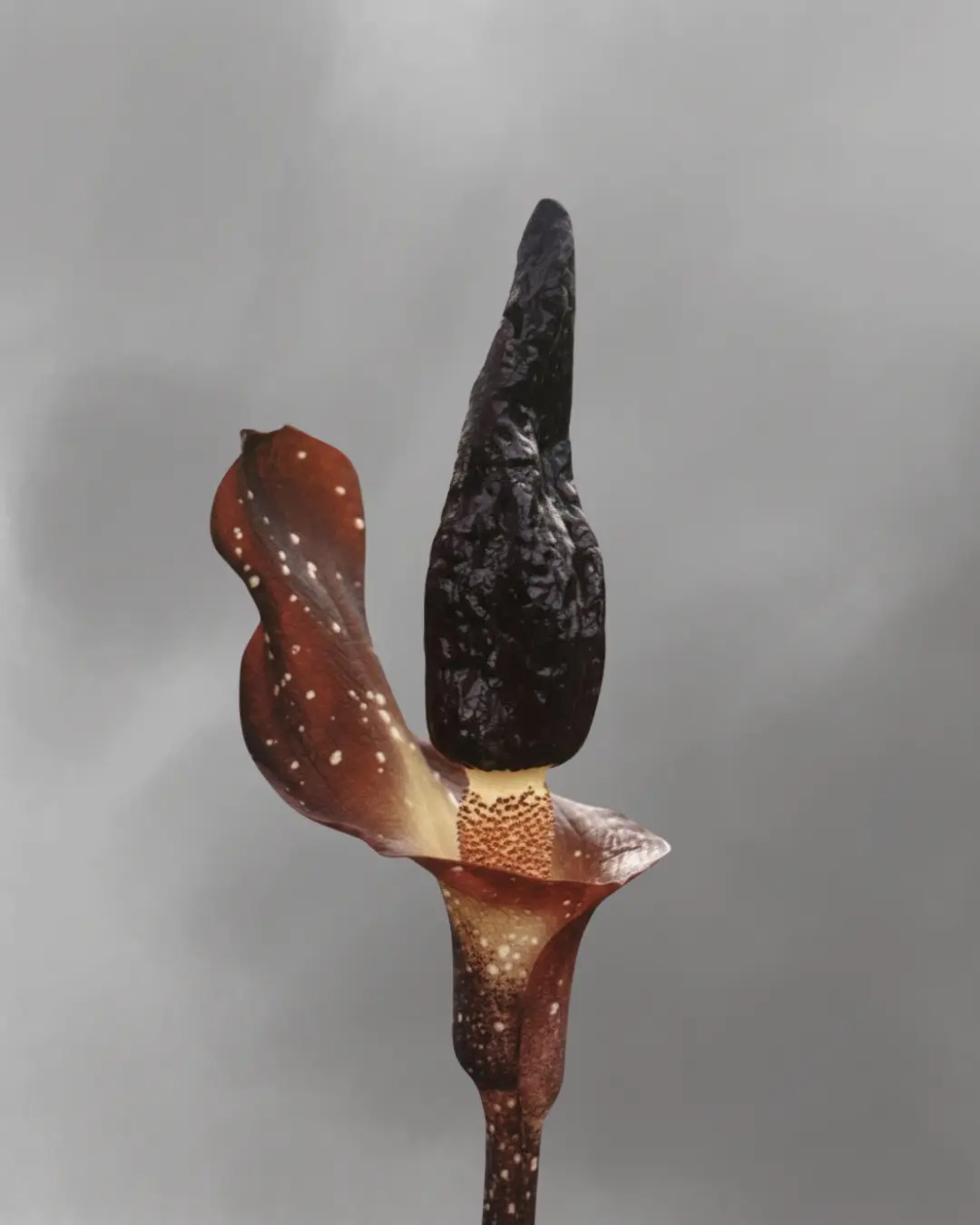
What Is Amorphophallus manta?
Amorphophallus manta is a rare and fascinating tropical plant. It belongs to the family Araceae and originates from the lowland rainforests of Sumatra, Indonesia. Botanists first formally described this species in 1994, publishing it in the scientific journal Blumea. Consequently, it remains one of the lesser-known and harder-to-find species in the entire Amorphophallus genus.
Indonesia is home to around 25 species of Amorphophallus, and A. manta is among the 17 that are strictly endemic. This means it grows nowhere else in the world naturally. Furthermore, its habitat is under increasing pressure from deforestation and land conversion. This makes wild specimens increasingly scarce and seeds almost impossible to source through normal channels.
What makes Amorphophallus manta truly special among collectors? Scientists at the Royal Botanic Gardens, Kew, discovered that A. manta produces a rare cocoa or chocolate-like scent during flowering. Additionally, most Amorphophallus species are notorious for producing foul odors to attract pollinators. A. manta breaks that rule. It offers a surprisingly pleasant aromatic experience alongside its dramatic tropical appearance.
Moreover, this species is part of the “Paeoniifolius-Manta clade” — a distinct evolutionary grouping identified through genetic research. This shows it is botanically unique, not just visually striking. Primarily sought by rare plant collectors, botanical gardens, and aroid enthusiasts, Amorphophallus manta seeds represent a genuine opportunity to grow something truly extraordinary.
Aesthetic Features Amorphophallus manta
Amorphophallus is one of the most visually dramatic plant genera on Earth. A. manta shares the bold and theatrical look of its relatives. Consequently, it makes an unforgettable statement in any tropical collection.
Leaf Structure
The plant grows from a single underground corm — a thick, starchy storage organ, similar to a bulb or tuber. From this corm, a single large leaf emerges on a tall, mottled petiole — a patterned stalk that can resemble a small tree trunk in mature specimens. The leaf blade is deeply divided into many smaller leaflets. Furthermore, the petiole often displays attractive pale green and dark green mottling. This patterning alone makes the plant a visual treat even outside of its flowering season.
Flower and Inflorescence
The flowering structure of Amorphophallus manta follows the classic Araceae design. It produces a spathe — a large, hood-like outer bract or modified leaf — that wraps around the central spadix — a tall, spike-like structure that holds the tiny true flowers at its base. Additionally, the inflorescence appears directly from the soil, without a leaf present at the same time. This dramatic emergence from bare ground makes flowering events feel truly spectacular. Moreover, A. manta is remarkable for producing a cocoa or chocolate-like scent during flowering — a trait confirmed by researchers at the Royal Botanic Gardens, Kew. Consequently, this makes it one of the very few pleasant-smelling species in the entire genus.
After successful pollination, the plant develops clusters of small berries. These berries may be red, orange, or other colors depending on conditions. Primarily, birds and forest animals disperse these seeds across the forest floor.
Dormancy Cycle
Amorphophallus manta follows a clear seasonal rhythm. After the leaf has completed its growing season, it dies back fully and the plant enters dormancy. During this rest period, the corm stores energy underground. Furthermore, the dormancy phase is a natural and healthy part of this plant’s life cycle — not a sign of poor health. Collectors should allow the plant to rest completely during this period. Additionally, it is during dormancy that the corm quietly grows larger, building up the energy needed to produce bigger leaves and, eventually, flowers in future seasons.
Global Seed Delivery & Phytosanitary Certification
Induare Agro specializes in sourcing and exporting rare, organic tropical seeds from Indonesia to collectors and botanical institutions around the world. Consequently, every seed we ship meets the highest standards for freshness, viability, and legal compliance.
Packaging and Shipping
Induare Agro ships all seeds via Global Express courier services. Furthermore, each order is carefully packaged to protect seed viability during international transit. We use professional-grade, moisture-controlled packaging materials. Additionally, every shipment is traceable from dispatch to delivery. Primarily, our goal is to ensure your seeds arrive in perfect planting condition, no matter where in the world you are located.
Buyer Peace of Mind
Every order of Amorphophallus manta seeds from Induare Agro includes a full Phytosanitary Certificate. This is an official government-issued plant health document. Consequently, it certifies that the seeds are free from pests, diseases, and regulated contaminants. Furthermore, this certificate is required by customs authorities in most countries for legal import of plant material. Additionally, it protects you as a buyer from import rejection or confiscation at customs. Primarily, this documentation confirms that your purchase fully complies with international plant trade regulations. You can import with total confidence.
How to Grow Amorphophallus manta
Step 1 — Choose Your Growing Medium Use a well-draining tropical mix. Combine coarse bark, perlite, and quality potting soil in equal parts.
Step 2 — Plant the Seed at the Right Depth Sow seeds just below the surface, around 1–2 cm deep. Ensure the growing medium is moist but never waterlogged.
Step 3 — Provide Warmth and Humidity Maintain a temperature of 22–28°C (72–82°F). Furthermore, high humidity of 70–80% greatly supports healthy germination.
Step 4 — Choose the Right Light Place the pot in bright, indirect light. Additionally, avoid direct midday sun, which can scorch young seedlings.
Step 5 — Water Carefully Water when the top layer of soil feels slightly dry. Consequently, overwatering is the most common cause of corm rot — always allow some drainage.
Step 6 — Fertilise During the Growing Season Apply a balanced, diluted liquid fertiliser every two to three weeks during active growth. Moreover, a fertiliser with higher potassium and phosphorus supports strong corm development.
Step 7 — Allow Full Dormancy When the leaf dies back naturally, reduce watering significantly. Primarily, keep the corm barely moist and store it in a warm, dark location until new growth resumes.
