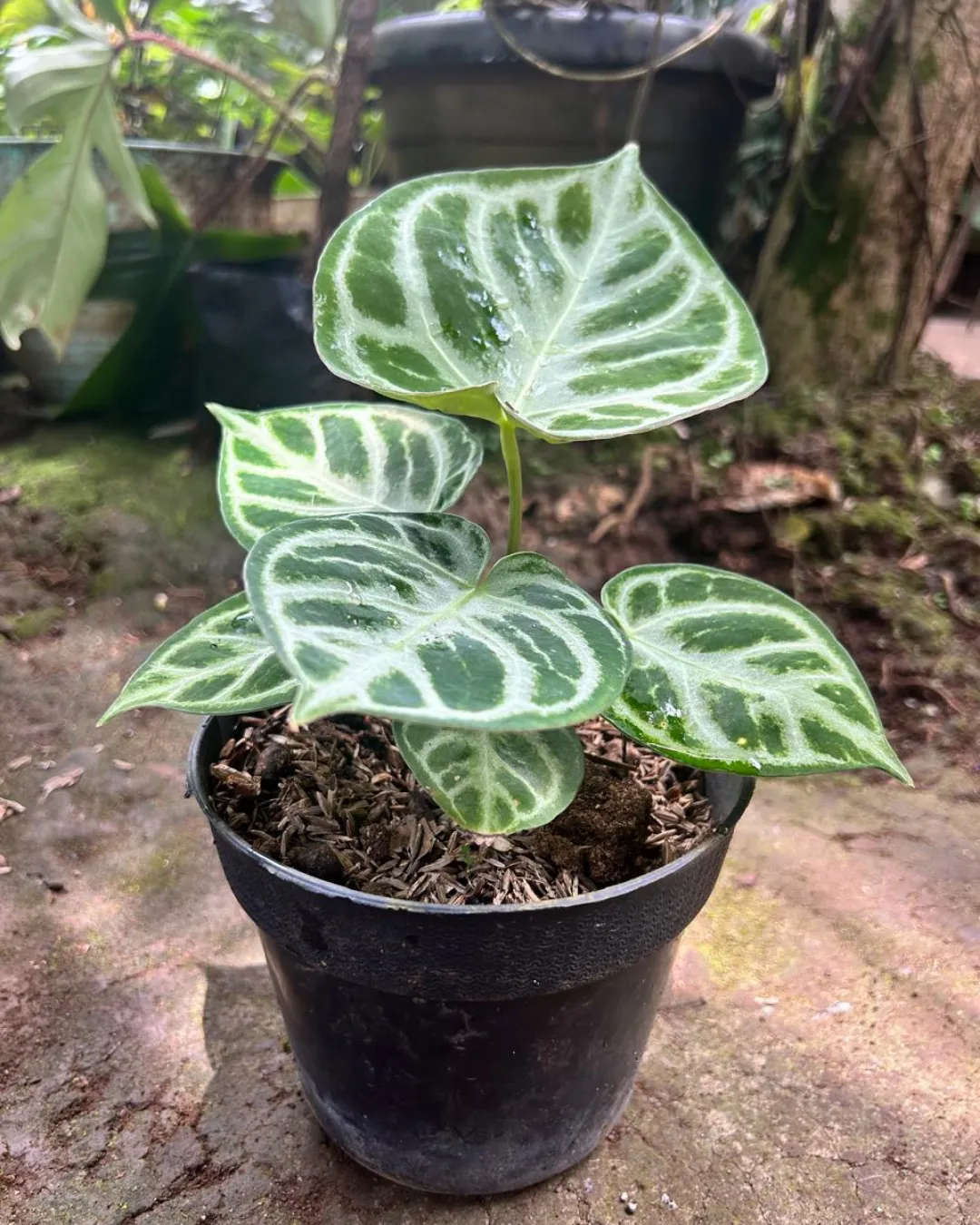
What Is Anthurium Dorayaki Hybrid?
Anthurium dorayaki hybrid is a rare and highly sought-after ornamental plant. It originates from Indonesia, where expert growers developed it as a cross between Anthurium dorayaki and Anthurium crystallinum. Both parent species are native to the tropical rainforests of Central and South America. Furthermore, the hybrid was refined and popularised by Indonesian breeders who are globally respected for their aroid expertise.
The name “Dorayaki” comes from a beloved Japanese sweet — a round, soft, filled pancake. This name perfectly describes the plant’s signature feature: its thick, almost circular leaves. Consequently, collectors around the world immediately recognise this hybrid by its unmistakable rounded silhouette.
This hybrid is rare for several important reasons. First, seed availability is extremely limited. Second, the parent species both require specific tropical conditions to produce viable seeds. Moreover, genuine Anthurium dorayaki hybrid seeds with documented export quality are hard to obtain outside Indonesia.
Induare Agro is one of the few suppliers offering export-grade Anthurium dorayaki hybrid seeds directly from Indonesia. Furthermore, every shipment carries a valid Phytosanitary Certificate. This means buyers receive seeds that are legally cleared and professionally handled.
Plant collectors in Europe, Asia, North America, and beyond actively seek this hybrid. Additionally, its compact growth habit and extraordinary leaf texture make it suitable for both serious collectors and premium indoor gardens. Primarily, it is the combination of rarity, beauty, and Indonesian origin that drives global demand for this extraordinary plant.
Aesthetic Features Anthurium Dorayaki Hybrid
The visual appeal of Anthurium dorayaki hybrid is immediately striking. Consequently, it stands out even among other premium velvet-leaf aroids. Below, we describe its key physical features in detail.
Leaf Structure Anthurium dorayaki hybrid
The leaves of Anthurium dorayaki hybrid are its most iconic feature. They are broad, thick, and nearly circular in outline — resembling a perfect, dark-green disc. Furthermore, the surface is deeply velvety, with a soft texture that invites touch.
Each mature leaf typically reaches 20 to 30 centimetres across when grown indoors. The upper surface is a rich, deep emerald green. Moreover, the leaf’s structure is notably thicker and more robust than those of the parent species.
The venation — the network of veins on the leaf — is bold and highly visible. Silver-white veins radiate outward from the centre of each leaf. Additionally, these veins are wider and more prominent than in the standard Anthurium crystallinum, giving the plant a distinctive architectural look.
The underside of the leaf is slightly paler in colour. Primarily, this contrast between the upper and lower surfaces adds to the visual depth of the plant. The petioles — the stalks that connect each leaf to the stem — are sturdy and upright, supporting the heavy, rounded blades with ease.
Flower and Fruit Anthurium dorayaki hybrid
Like all members of the Anthurium genus, the dorayaki hybrid produces an inflorescence — a flower structure — made up of two parts. The first is the spathe — a hood-like or paddle-shaped outer leaf that wraps around the flower. The second is the spadix — a finger-like spike that carries the tiny individual flowers.
Furthermore, in this hybrid the inflorescence is modest compared to the dramatic foliage. The spathe is typically greenish and not strongly coloured. Consequently, most growers value this plant entirely for its leaves rather than its flowers.
When pollinated, the spadix develops small, fleshy berries — the fruit of the plant. Each berry contains one or more seeds. Additionally, these seeds must be harvested at the correct stage of ripeness to remain viable for planting.
Growth Habit and Dormancy
Anthurium dorayaki hybrid grows in a compact, self-heading form. This means it does not climb or vine like some other Anthurium species. Moreover, it grows sideways — spreading outward — rather than stretching upward. Consequently, it suits small spaces and tabletop displays particularly well.
Growth is moderate in pace. The plant produces new leaves steadily under good conditions. Furthermore, it does not undergo a true dormancy period in the way that bulb plants do. However, growth may slow during cooler months or periods of lower light. Primarily, maintaining stable warmth and humidity keeps the plant in active growth year-round.
Global Seed Delivery & Phytosanitary Certification
Induare Agro takes the safety and legality of international plant shipping very seriously. Consequently, every seed order is prepared and dispatched according to strict international phytosanitary standards.
Packaging and Shipping
Seeds are carefully cleaned, dried to the correct moisture level, and wrapped in protective materials before dispatch. Furthermore, packaging is designed to maintain seed viability throughout long international journeys. Additionally, outer packaging is robust enough to withstand standard courier handling conditions.
Induare Agro ships via Global Express courier services. Primarily, this means faster transit times and full tracking from Indonesia to the buyer’s door. Moreover, express shipping reduces the time seeds spend in transit, which helps preserve their freshness and germination potential.
All shipments include clear labelling with the scientific name, quantity, and country of origin. Additionally, customs documentation is prepared accurately to minimise the risk of delays at border checkpoints.
Buyer Peace of Mind
Every order from Induare Agro comes with a valid Phytosanitary Certificate. This is an official government document — issued by Indonesia’s plant health authority — confirming that the seeds are free from pests and diseases. Furthermore, this certificate is a legal requirement for importing live plant material into most countries.
Buyers can present this certificate directly to their national customs authority. Consequently, the risk of shipment confiscation at the border is significantly reduced. Moreover, the Phytosanitary Certificate confirms the authenticity and traceability of the seeds.
Additionally, Induare Agro provides full export-quality standards for every batch. This means seeds are inspected, documented, and prepared to meet international import regulations. Primarily, this professional approach protects both the buyer and the biodiversity compliance requirements of their country.
How to Grow Anthurium Dorayaki Hybrid
Follow these steps to successfully germinate and grow your Anthurium dorayaki hybrid seeds.
Step 1 – Prepare the Growing Medium Use a loose, well-draining mix of orchid bark, perlite, and peat moss. The medium should hold some moisture but never become waterlogged.
Step 2 – Sow the Seeds Place each seed on the surface of the moist medium. Press lightly to ensure contact with the substrate, but do not bury seeds deeply.
Step 3 – Maintain Warmth and Humidity Cover the pot or tray with a clear lid or plastic wrap to retain humidity. Keep temperatures between 22°C and 28°C for best germination results.
Step 4 – Provide Indirect Light Place the germination tray in a bright spot away from direct sunlight. Furthermore, a grow light set to 12 hours per day works excellently indoors.
Step 5 – Water Carefully Mist the surface lightly if it begins to dry out. Additionally, avoid overwatering at the seedling stage, as this is the most common cause of failure.
Step 6 – Transplant to Individual Pots Once seedlings develop two or more true leaves, move each to its own small pot. Primarily, use a chunky, airy mix of bark, perlite, and coco coir for ongoing growth.
Step 7 – Ongoing Care Place the growing plant in bright, indirect light with humidity above 60%. Moreover, feed monthly with a balanced, diluted liquid fertiliser during the growing season.


