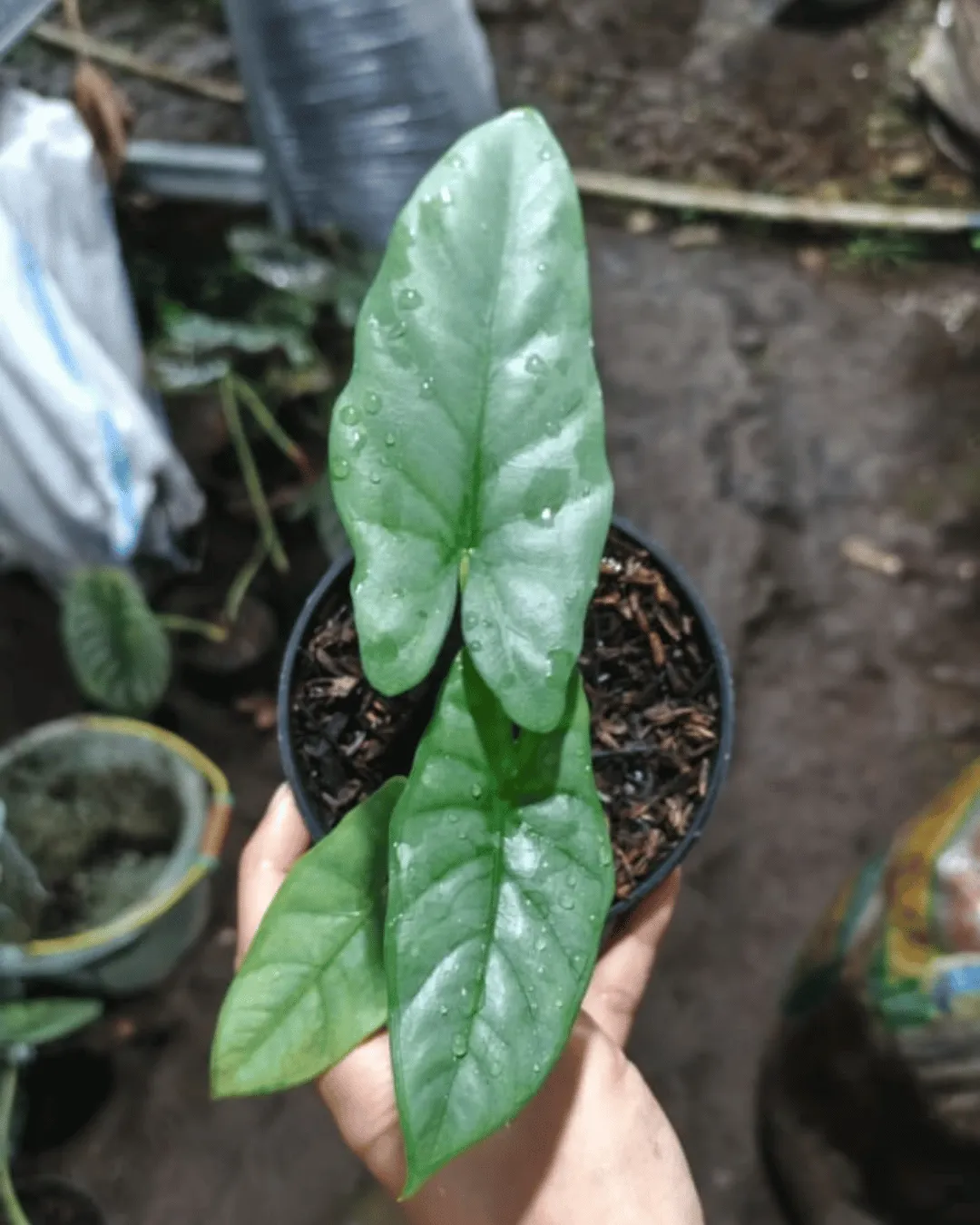
What Is Alocasia Corazon?
Alocasia corazon is a rare and highly coveted aroid from the tropical rainforests of the Philippines. The name corazon means “heart” in Spanish. It refers to the plant’s signature heart-shaped leaves, which immediately set it apart from other species. Additionally, this cultivar is believed to have been named in honor of Maria Corazon Aquino, the Philippines’ first female president — giving it both botanical beauty and cultural significance.
In its native habitat, Alocasia corazon grows beneath the dense canopy of lowland rainforests. It thrives in limestone-rich areas at altitudes up to 300 meters. The environment there is warm, humid, and shaded — conditions that shape its unique appearance. Consequently, this plant has adapted to filtered light, high moisture, and rich organic soil.
Globally, Alocasia corazon remains scarce in mainstream horticulture. Most collectors seek it eagerly but find it difficult to source. Moreover, its visual impact is immediate. No other Alocasia combines its pale, glossy foliage with a silvery-blue metallic sheen quite like this cultivar. Induare Agro is proud to make authentic, export-quality seeds available to collectors around the world.
Aesthetic Features Alocasia Corazon
Alocasia corazon stands out in any collection. Its physical features are dramatic, elegant, and unmistakably tropical. Below, we break down its key traits in plain terms.
Leaf Structure Alocasia corazon
The leaves of Alocasia corazon are its greatest asset. They are elongated and heart-shaped, with a smooth, slightly glossy surface. Furthermore, each leaf carries a distinctive metallic sheen — a pale silvery-blue tone that shifts subtly in different lighting conditions. The veins are often darker and contrast beautifully against the lighter leaf base. This contrast adds depth, structure, and visual drama.
Mature leaves can grow up to 30 centimeters long indoors. Outdoors in ideal tropical conditions, they grow considerably larger. Additionally, the upright stems give the plant a clean, architectural form. It suits both minimalist interiors and lush tropical garden displays.
Flower and Fruit Alocasia corazon
Alocasia corazon rarely flowers indoors. When it does bloom outdoors, it produces a spadix — a small central flower spike — surrounded by a spathe, which is a hood-like outer leaf that wraps around it protectively. The flowers are modest compared to the foliage. Consequently, most collectors grow this plant purely for its stunning leaves rather than its blooms.
Outdoors, the plant may occasionally produce small berry-like fruits after flowering. Moreover, all parts of the plant contain calcium oxalate crystals. These crystals cause irritation if swallowed. Always keep this plant away from children and pets.
Dormancy Cycle
Like many tropical aroids, Alocasia corazon can enter a rest period — known as dormancy — during cooler months. During dormancy, the plant may drop some or all of its leaves. This is normal and not a sign of death. Furthermore, the corm — the underground storage stem — stays alive below the soil. Primarily, you should reduce watering during this period. Additionally, keep the plant warm and away from cold drafts. New growth will return in spring as temperatures rise.
Global Seed Delivery & Phytosanitary Certification
Induare Agro is committed to professional, legal, and safe global seed delivery. We understand that international buyers need more than just healthy seeds. They need confidence in the entire process — from packaging to customs clearance.
Packaging and Shipping
Every seed order from Induare Agro is packed with expert care. Seeds are cleaned, inspected, and moisture-controlled before packing. Consequently, they arrive in optimal condition for germination. We use Global Express shipping services to reach buyers in Europe, North America, Asia, the Middle East, and beyond. Furthermore, tracking information is provided for every shipment. You always know where your order is.
Buyer Peace of Mind
Every order includes a Phytosanitary Certificate — an official government-issued document confirming that the seeds are pest-free, disease-free, and legally cleared for international export. Moreover, this certificate is required by customs authorities in most countries. It protects both the buyer and the destination country’s biosecurity. Additionally, Induare Agro complies fully with Indonesian export regulations and international plant trade standards. Primarily, our goal is simple: your seeds arrive safely, legally, and ready to grow.
How to Grow Alocasia Corazon
Growing Alocasia corazon from seed requires patience and the right conditions. Furthermore, following these steps carefully gives your seed the best chance of becoming a thriving plant.
Step 1 — Prepare the Growing Medium Use a well-draining mix of peat, perlite, and organic compost. Avoid heavy soil that retains too much moisture. Good drainage prevents root rot from the very beginning.
Step 2 — Soak the Seed Soak the seed in warm water for 12 to 24 hours before planting. This softens the outer coating and speeds up germination. Additionally, it signals to the seed that it is time to sprout.
Step 3 — Plant at the Right Depth Plant the seed just below the soil surface — about 1 to 2 centimeters deep. Press the soil gently around it without compacting. Primarily, ensure the planting spot is warm, between 22°C and 28°C.
Step 4 — Maintain Humidity and Warmth Cover the pot with a clear plastic bag or humidity dome to trap warmth and moisture. Germination typically takes 2 to 6 weeks. Consequently, patience is essential at this stage.
Step 5 — Provide Bright Indirect Light Once the first shoot appears, remove the cover. Place the seedling in bright, indirect light. Never expose young seedlings to direct sun — it will scorch the delicate new leaves.
Step 6 — Water Carefully Water when the top 2 to 3 centimeters of soil feel dry. Furthermore, never let the seedling sit in standing water. Consistent moisture — not sogginess — is the key.
Step 7 — Feed During the Growing Season Begin fertilizing with a diluted, balanced liquid fertilizer once the plant has 2 to 3 established leaves. Feed every two to four weeks in spring and summer. Moreover, stop fertilizing in autumn and winter when growth slows.
