What Is Alocasia princeps?
Alocasia princeps is a rare and sought-after tropical plant. It originates from the rainforests of Borneo, growing on well-drained slopes and ridgetops from sea level to 1,200 metres altitude. Botanists first formally described it in 1888. Today, collectors around the world consider it a true jewel of the Araceae family.
This species is exceptionally rare in the global plant trade. It does not appear in ordinary nurseries or garden centres. Consequently, it commands serious attention from high-end collectors. Furthermore, its two named cultivars — ‘Purple Cloak’ and ‘Candy Sticks’ — add even more prestige to the species. Primarily, it is grown as a prized indoor specimen. Additionally, it thrives outdoors in tropical gardens across Southeast Asia.
Induare Agro sources seeds directly from Indonesia. Moreover, every seed is fresh, organically grown, and export-certified. This makes Alocasia princeps the ideal addition to any serious plant collection.
Aesthetic Features Alocasia princeps
Alocasia princeps stands apart from almost every other tropical plant. Its visual features are dramatic, refined, and truly unforgettable. Below, we break down the key physical traits that make this species so desirable.
Leaf Structure Alocasia princeps
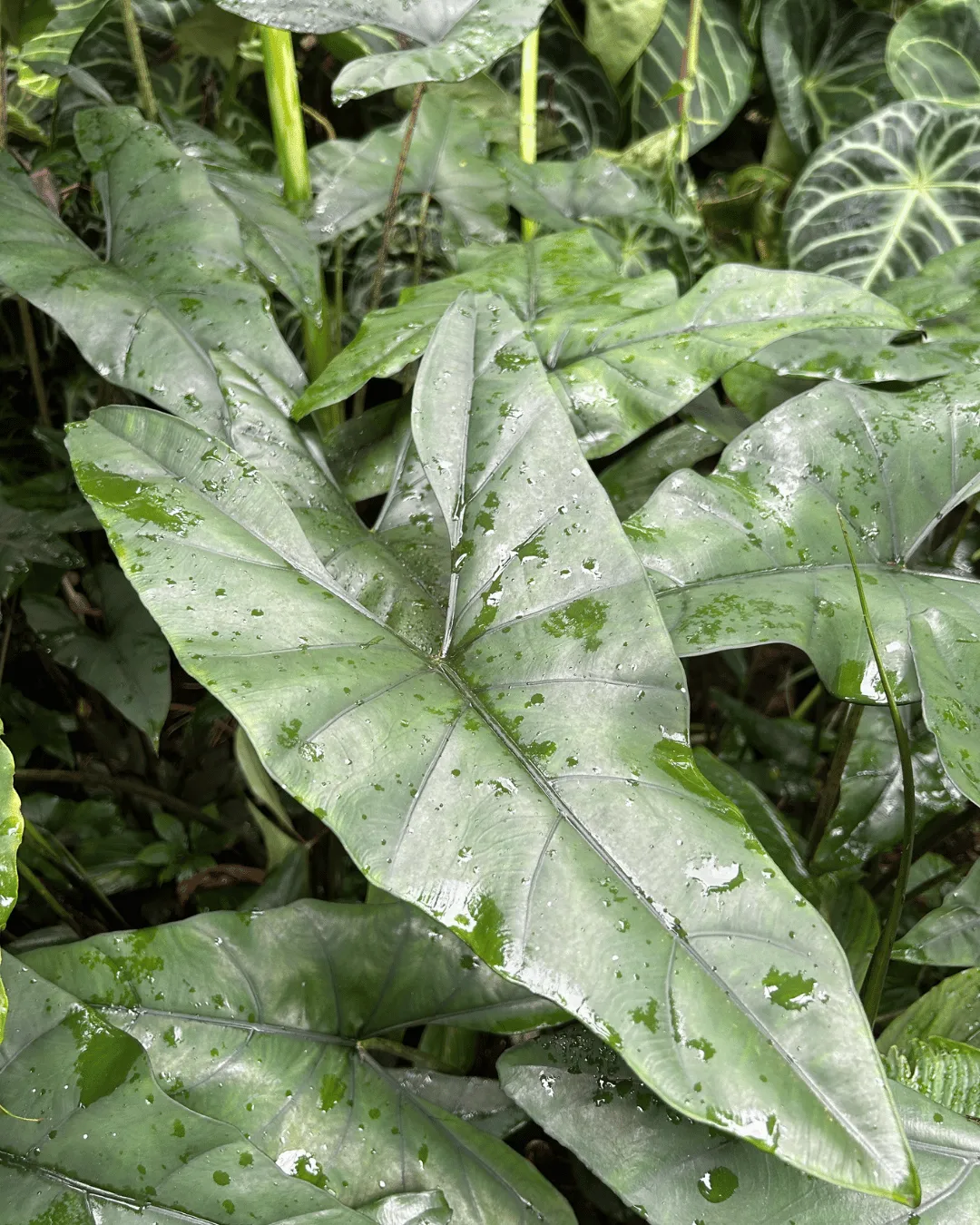
The leaves of Alocasia princeps are distinctively V-shaped. Each leaf blade is broad and arrow-like — what botanists call hastate — meaning it resembles a pointed spearhead. The upper surface is a glossy, dark green with silver or grey overtones. Furthermore, the underside of each leaf is a deep purple-red colour. This two-tone contrast is the reason collectors nicknamed it the “Purple Cloak.”
The leaves can grow up to 60 cm long. Additionally, the leaf surface is thick and durable. It holds its shape exceptionally well. The petioles — the stalks that connect each leaf to the stem — are dark purple-red and slightly textured. Moreover, colour intensity is strongest on newly emerged leaves. As leaves age, the purple tones soften, but the plant remains visually striking at all stages.
The overall habit is upright and architectural. Indoors, the plant typically reaches 30–90 cm tall. In tropical outdoor conditions, mature plants can exceed 1.5–2 metres in height. Consequently, this species works beautifully both as a compact indoor specimen and as a bold garden accent plant.
Flower and Fruit Alocasia princeps
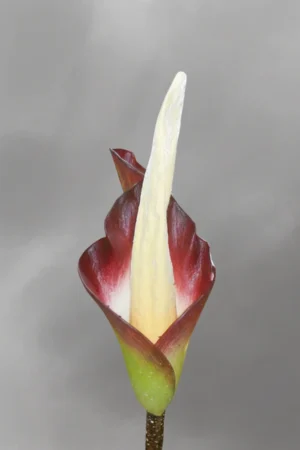
Alocasia princeps produces a classic aroid inflorescence — a flower structure common to its family. The spathe — a hood-like outer leaf that wraps around the flower — is pinkish-white and elegant. Inside sits the spadix — a finger-like spike that holds the tiny true flowers. The spadix is cream-coloured and slender.
After successful pollination, the plant produces small berries. These berries turn orange-red when ripe. Primarily, each berry contains a single seed. Furthermore, this is why fresh, viable seeds are rare and valuable. Induare Agro harvests seeds at peak ripeness. Consequently, germination rates are kept as high as possible.
Dormancy Cycle
Alocasia princeps follows a natural dormancy cycle. During cooler months or periods of lower light, the plant may drop some or all of its leaves. This is completely normal behaviour. Additionally, it is not a sign that the plant is dying. The corm — a swollen underground stem that stores energy, much like a bulb — remains alive and ready to resprout.
Moreover, dormancy is one reason why fresh seeds and careful storage matter so much. Induare Agro ships seeds at the correct moisture level for safe transit. This protects viability during long-distance delivery.
Global Seed Delivery & Phytosanitary Certification
Induare Agro is a professional Indonesian plant exporter. We specialise in rare exotic seeds and organic tropical plants. Furthermore, we have deep experience navigating international plant trade regulations. Every order we ship meets the legal and biosecurity requirements of the destination country.
Packaging and Shipping
We ship all seeds via Global Express courier services. Primarily, this means fast, trackable delivery to most countries worldwide. Additionally, each shipment includes a Phytosanitary Certificate — an official government document. This certificate confirms that the seeds are free from pests and diseases. Moreover, it is issued by the Indonesian Ministry of Agriculture. Consequently, buyers can import the seeds legally and without customs delays in most countries.
Seeds are packed with professional care. We use moisture-controlled wrapping to keep each seed fresh during transit. Furthermore, we label all packages clearly with botanical names and export documentation. Every order from Induare Agro reflects our commitment to quality and professionalism.
Buyer Peace of Mind
We understand that importing rare plant seeds is a serious investment. Consequently, Induare Agro provides complete documentation with every shipment. The Phytosanitary Certificate removes legal uncertainty at customs. Additionally, our Express courier tracking gives buyers full visibility from dispatch to delivery.
Moreover, we offer dedicated support for buyers who need guidance on import requirements. Our team is experienced with export regulations across Asia, Europe, North America, and Oceania. Furthermore, we are transparent about stock availability. We only sell what we have. Primarily, our stock is seasonal and limited — which is why early ordering is strongly recommended.
How to Grow Alocasia princeps
Growing Alocasia princeps from seed is a rewarding experience. Follow these steps for the best results.
Step 1 — Prepare Your Growing Medium Use a well-draining mix of coco coir, perlite, and orchid bark. The mix must hold some moisture but never stay waterlogged. Good drainage is the single most important factor for success.
Step 2 — Plant the Seed Place the fresh seed just below the soil surface — approximately 1 cm deep. Keep the growing medium slightly moist at all times. Do not allow it to dry out completely during germination.
Step 3 — Provide Warmth Maintain a temperature of 25–30°C for optimal germination. Use a heat mat if needed. Furthermore, consistent warmth dramatically speeds up sprouting.
Step 4 — Provide Bright Indirect Light Place the seedling in a spot with bright, filtered light. Avoid direct sun, which can scorch the young leaves. Additionally, aim for 6–8 hours of indirect light per day.
Step 5 — Maintain Humidity Alocasia princeps loves high humidity. Aim for above 60% relative humidity. Moreover, misting the leaves lightly with clean water helps if your environment is dry.
Step 6 — Feed and Monitor Growth Once the seedling establishes its first true leaf, begin a light liquid fertiliser routine. Use a balanced fertiliser every two weeks during the growing season. Additionally, reduce feeding during dormancy periods.
Step 7 — Repot as Needed As the plant grows, move it into a slightly larger pot each season. Always use fresh, well-draining mix. Primarily, avoid pots that are too large, as excess soil can hold too much moisture.
All seeds are sourced, packed, and shipped by Induare Agro — Indonesia’s trusted supplier of rare exotic seeds and export-quality tropical plants.