What Is Amorphophallus angulatus?
Amorphophallus angulatus is one of the rarest aroids found anywhere in the world today. It is native to Sarawak, in Malaysian Borneo, where it grows at around 550 metres above sea level. Primarily, it lives at the base of sandstone cliffs inside untouched primary rainforest. Very few collectors outside Borneo have ever seen this plant in person. Furthermore, it was only formally named and described in 1994 by botanists Hetterscheid and Vogel — making it a relatively recent discovery. Its extreme rarity in the wild, combined with how hard it is to find seeds, places A. angulatus among the most sought-after exotic plants on the global collector market. Induare Agro now makes this species available to verified buyers worldwide. Additionally, every seed comes with full legal documentation. This is one of the few legitimate sources for this rare Bornean aroid outside of Southeast Asia.
Aesthetic Features Amorphophallus angulatus
Amorphophallus angulatus is a compact and visually captivating plant. It grows from a round, dark brown underground bulb — called a corm — which measures roughly 3 cm across. Consequently, the small corm makes this species ideal for container growing. The plant produces a single leaf per growing cycle. Furthermore, that one leaf makes a bold and lasting visual statement.
Leaf Structure Amorphophallus angulatus
The leaf stalk — called a petiole — grows to about 30 cm tall. It has a greenish colour with a distinct reddish-purple flush. Additionally, young seedling leaves show a strong red or lilac-red tone across their entire surface. This dramatic colouring fades to mid-green as the plant matures. The leaf blade spreads to roughly 40 cm wide. Furthermore, it divides into pointed, lance-shaped leaflets. Each leaflet grows 17–19 cm long and 4–5 cm wide. Consequently, the full leaf has a bold, tropical look that draws immediate attention in any collection.
Flower and Fruit Amorphophallus angulatus
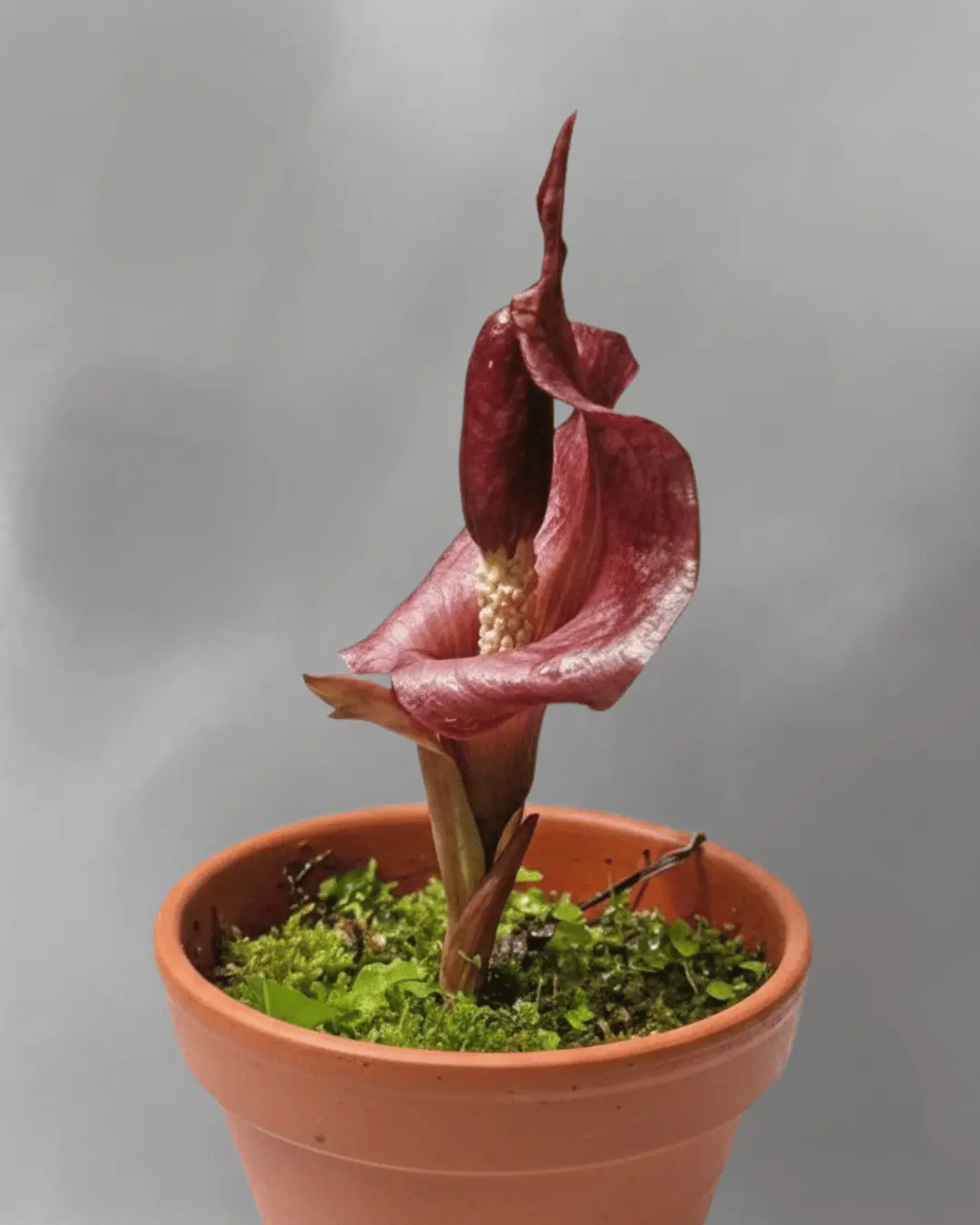
A. angulatus produces a flower structure known as an inflorescence. This consists of an outer hood — called a spathe — and an inner spike called a spadix. The spathe shows a mix of purple and green tones. Furthermore, the flower emits a scent that attracts flies and beetles as pollinators. This is a natural, evolution-driven process common across the Amorphophallus genus. Additionally, after pollination, the plant produces berries. Each berry contains a single seed. Consequently, viable seed is extremely rare and only available for a short window each season.
Dormancy Cycle
Like all members of its genus, A. angulatus follows a yearly rest cycle. One leaf grows, reaches its full size, and then dies back. Primarily, this signals the start of the dormancy period. During dormancy, the corm rests underground and stores energy. Additionally, it should not dry out completely during this time. The corm will re-sprout on its own when it is ready. Furthermore, each new growth cycle produces a slightly larger plant than the previous one.
Global Seed Delivery & Phytosanitary Certification
Induare Agro is a professional plant seed exporter based in Indonesia. The company specialises in rare and exotic Indonesian and Bornean plant species. Furthermore, Induare Agro serves collectors, botanical gardens, and research institutions across the globe. Every order is handled with care, precision, and full legal compliance.
Packaging and Shipping
Every seed order from Induare Agro includes an official Phytosanitary Certificate. This document is issued by Indonesia’s Plant Health Authority. It confirms the seeds are free from pests and plant disease. Consequently, it satisfies customs rules in the EU, USA, UK, Australia, Japan, and most other countries. Additionally, all seeds are packed with moisture control materials and cushioned express packaging. This protects seed health throughout the entire shipping journey. Shipments go out via Global Express couriers such as DHL and EMS. Furthermore, most international orders arrive within 5–14 business days.
Buyer Peace of Mind
Induare Agro follows a strict, compliance-first export process. All required documents accompany every parcel. This includes the Phytosanitary Certificate and a full commercial invoice. Consequently, buyers never face legal risk or unexpected customs delays. Furthermore, the Induare Agro team provides after-sales support to help collectors at every stage of growing. Every order is transparent, traceable, and fully above board.
How to Grow Amorphophallus angulatus
Growing Amorphophallus angulatus is a rewarding challenge. Furthermore, its compact size makes it well suited to pot culture in any climate. The key is to replicate the cool, humid conditions of its native Bornean forest floor. Follow these steps for the best results:
Step 1 — Seed Preparation Soak the seed in warm water (26–30°C) for 24–48 hours before planting. Additionally, lightly scratch the seed surface with fine sandpaper. This helps water enter the seed and speeds up sprouting.
Step 2 — Growing Medium Mix 50% potting soil, 30% perlite or coarse sand, and 20% compost or worm castings. Consequently, this blend drains well and holds just enough moisture. It also gives the young corm the nutrients it needs to develop.
Step 3 — Sowing Plant the seed 2–3 cm deep in a pot with drainage holes. Furthermore, keep the soil moist — but never waterlogged — throughout the sprouting stage.
Step 4 — Temperature and Humidity Keep the temperature between 20°C and 28°C. Primarily, this species prefers slightly cooler conditions than lowland aroids. Aim for humidity between 60–80%. A humidity dome or enclosed tray works well during germination.
Step 5 — Light Place the pot in bright, indirect light. Additionally, avoid direct sunlight at all times. This species grows naturally in deep forest shade and does not tolerate strong UV exposure.
Step 6 — Watering Water moderately during the active growing season. Let the top 2–3 cm of soil dry slightly between waterings. Furthermore, never let the pot sit in standing water. Root rot is the most common cause of failure in cultivation.
Step 7 — Dormancy Care When the leaf turns yellow and collapses, reduce watering right away. Consequently, the corm needs a dry rest period — but the soil must not fully dry out. Do not remove the corm from the pot. It will re-sprout on its own at the start of the next cycle.
Step 8 — Repotting and Feeding Repot each year at the beginning of a new growth cycle. Move to a slightly larger pot each time. Additionally, apply a slow-release organic fertiliser (NPK 10-10-10) at the start of the season. This supports corm growth and produces a larger, more impressive leaf each year.


