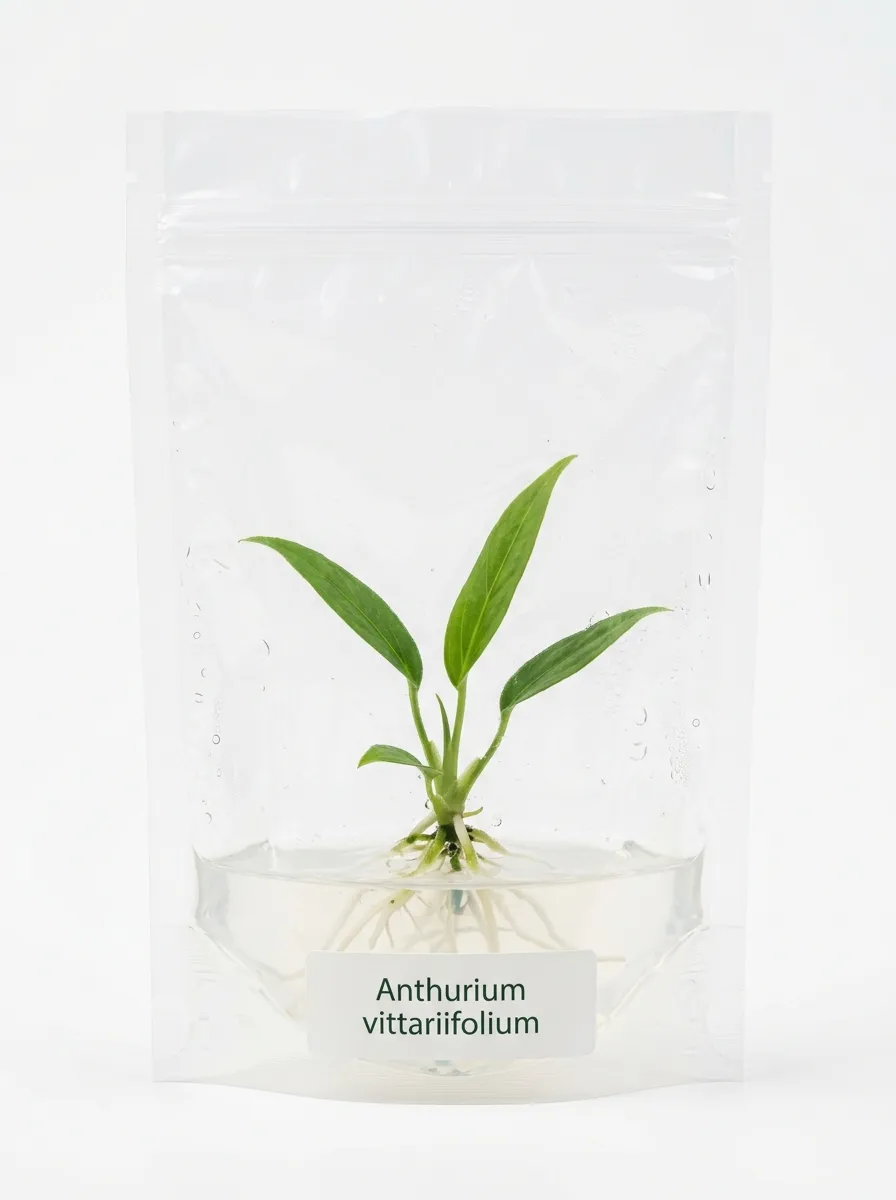
What Is Anthurium vittariifolium?
Anthurium vittariifolium is a rare aroid prized for its dramatic pendant leaves. This species originates from the humid rainforests of Colombia and Ecuador. Additionally, it grows naturally as an epiphyte, clinging to tree trunks high above the forest floor. Its long, strap-like foliage rarely appears in typical plant collections. Consequently, growers worldwide seek this species out as a true collector’s centerpiece.
Aesthetic Features Anthurium vittariifolium
This species belongs to the genus Anthurium, known for its striking leaf shapes and glossy textures. Moreover, this particular species stands apart even within its own genus.
Leaf Structure Anthurium vittariifolium
The leaves grow extremely long and narrow, resembling hanging ribbons. Additionally, mature specimens can produce leaves reaching over a meter in length. This pendant growth habit gives the plant a dramatic, sculptural presence. Primarily, collectors display this species in hanging baskets to showcase its full leaf drop.
Color and Pattern Anthurium vittariifolium
New leaves emerge in a soft, pale green color. Furthermore, they deepen to a rich, glossy dark green as they mature. The surface catches light beautifully, adding subtle shine to any indoor collection. Unlike patterned aroids, this species relies on pure form rather than variegation for its appeal.
Growth Habit
Anthurium vittariifolium grows as an epiphyte in nature, meaning it lives on other trees without harming them. Consequently, it thrives in loose, airy growing media rather than dense soil. The root system develops slowly but firmly once established. Moreover, this slow, steady growth pattern makes the plant a long-term collector’s investment.
Why Choose Tissue Culture Over Seeds or Cuttings
Tissue culture production offers clear advantages over traditional propagation methods. Additionally, this method suits rare aroids like Anthurium vittariifolium particularly well.
Genetic Consistency
Each plantlet develops from cloned plant tissue, not from seed. Consequently, every plantlet carries genetics identical to the parent plant. This process, called true-to-type propagation, guarantees the exact leaf shape and growth pattern collectors expect. Furthermore, buyers avoid the genetic variation common with seed-grown plants.
Disease-Free Guarantee
The entire production process happens inside a sterile laboratory. Additionally, this sterile environment eliminates common pests and soil-borne diseases before shipping. Every plantlet leaves the lab completely clean and ready for growth. Consequently, buyers receive a healthier starting point than field-grown alternatives.
Global Plantlet Delivery & Phytosanitary Certification
Induare Agro ships rare tissue culture plantlets safely to collectors worldwide. Moreover, every shipment follows strict international plant health regulations for living plant material.
Packaging and Shipping
Each plantlet ships inside its original sterile culture vessel to protect the roots. Additionally, Induare Agro seals every package to maintain humidity during transit. Orders move through trusted global express couriers for fast delivery. Consequently, plantlets arrive in strong, ready-to-acclimatize condition.
Buyer Peace of Mind
Every shipment includes an official Phytosanitary Certificate — a document confirming the plant is pest-free and approved for legal export. Furthermore, this certificate allows smooth customs clearance in most countries. Induare Agro stands behind every plantlet with full transparency and support.
How to Acclimatize Anthurium vittariifolium
Step 1: Open the sterile package carefully in a clean, indoor space. Avoid direct exposure to outdoor air during this first step.
Step 2: Rinse the roots gently with lukewarm water to remove leftover agar gel. Consequently, this prevents mold growth once the plant sits in soil.
Step 3: Plant the roots into a light, airy mix such as sphagnum moss or orchid bark. Keep the humidity high around the plant during this stage.
Step 4: Place the plantlet in bright, indirect light away from direct sun. Moreover, low light exposure protects the young, tender leaves.
Step 5: Gradually reduce humidity over two to four weeks as new roots form. Consequently, the plant adjusts safely to normal room conditions.


