What Is Artocarpus Rigidus?
Artocarpus Rigidus is a rare tropical tree species native to the rainforests of Indonesia, Malaysia, and Thailand. Local communities often call it “Monkey Jack,” and botanists know it as a wild relative of jackfruit. Primarily, this tree grows in lowland evergreen forests, often reaching altitudes of up to 1,000 meters.
This species thrives in humid, undisturbed rainforest conditions. Additionally, it depends on stable tropical climates found across Sumatra, Java, Borneo, and parts of mainland Southeast Asia. Consequently, wild populations remain limited, making every seed a genuine botanical treasure.
Collectors value Artocarpus Rigidus for its rarity and its deep connection to Indonesia’s native forests. Moreover, this tree rarely appears in commercial cultivation, which adds to its appeal among exotic plant enthusiasts. For anyone building a serious rare-plant collection, this species offers a direct link to wild tropical biodiversity.
Aesthetic Features Artocarpus Rigidus
Artocarpus Rigidus displays a striking combination of bold foliage and unusual fruit. Furthermore, the tree’s overall structure reflects its wild rainforest origin, with sturdy branches and a tall, upright growth habit.
Leaf Structure Artocarpus rigidus
The leaves are oblong to oval in shape, with a leathery texture. Additionally, the upper surface stays smooth, while the underside carries small, rough hairs along the veins. This tough leaf structure helps the plant survive strong tropical sun and heavy rainfall.
Flower and Fruit Artocarpus rigidus
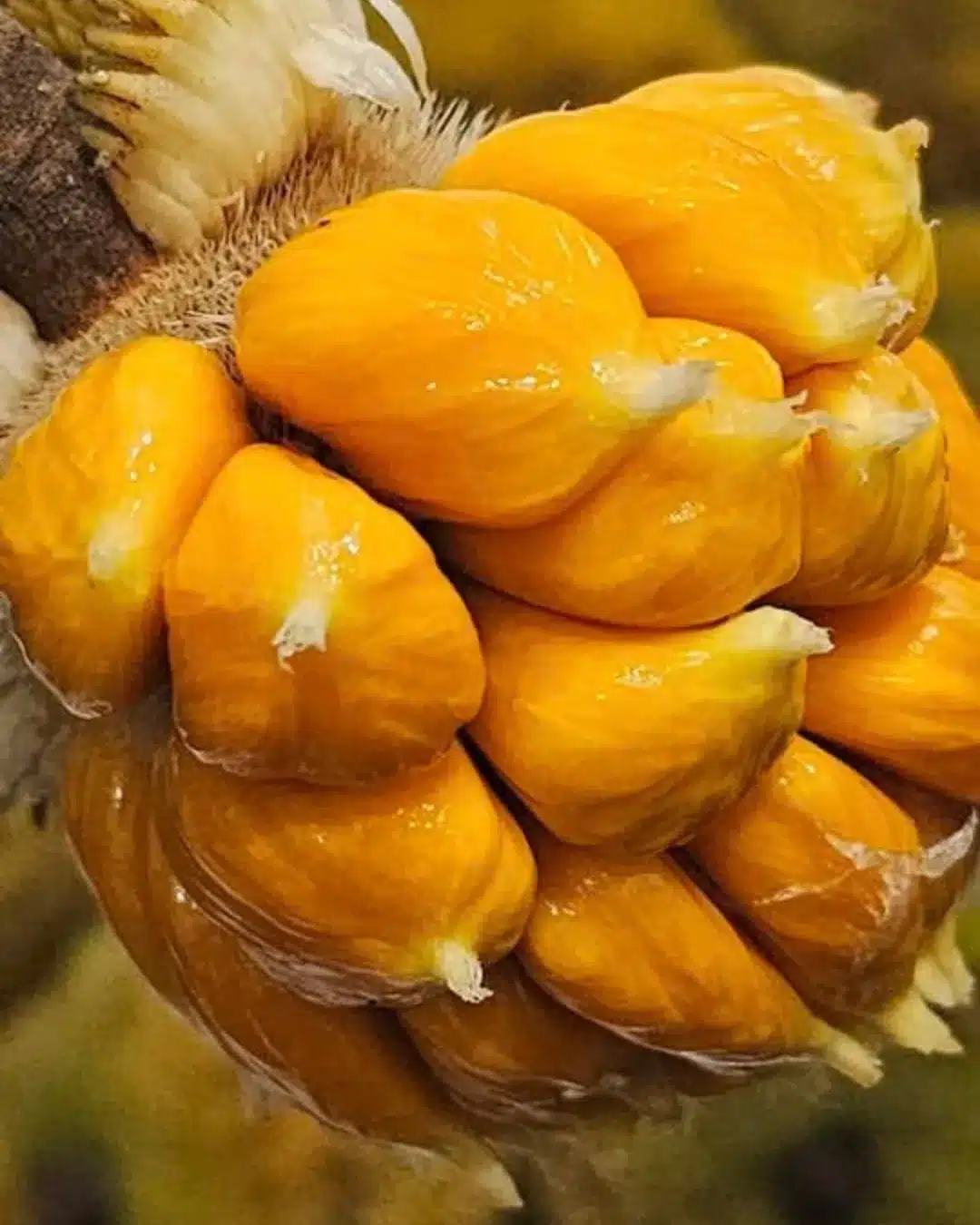
The tree produces round, spiny fruit that ripens from green-yellow to a warm orange color. Inside, the pulp — the soft, edible flesh surrounding the seeds — tastes naturally sweet. Consequently, this fruit attracts both wildlife and local foragers in its native habitat.
Dormancy Cycle Artocarpus rigidus
Like many tropical hardwoods, Artocarpus Rigidus follows a seasonal growth rhythm tied to rainfall patterns. During drier months, growth slows naturally. However, the plant resumes active growth once humidity and rainfall increase again.
Global Seed Delivery & Phytosanitary Certification
Induare Agro ships every seed order with full legal compliance and professional care. Consequently, international buyers receive their seeds safely, without customs delays or legal complications.
Packaging and Shipping
Each seed gets packed using methods designed to preserve freshness during transit. Furthermore, Induare Agro uses Global Express shipping to minimize delivery time worldwide. This approach protects seed viability, even across long international routes.
Buyer Peace of Mind
Every order includes an official Phytosanitary Certificate, confirming the seed’s legal and biological safety. Additionally, this certificate satisfies customs requirements in most countries. Therefore, buyers can import their seeds with full confidence and legal protection.
How to Grow Artocarpus Rigidus
Step 1: Soak the seed in clean, room-temperature water for 24 hours. This step softens the outer seed coat and speeds up germination.
Step 2: Plant the seed in a well-draining, organic-rich soil mix. Keep the planting depth shallow, about 1–2 centimeters.
Step 3: Place the pot in a warm, humid location with indirect sunlight. Maintain consistent moisture without waterlogging the soil.
Step 4: Watch for sprouting within 2–6 weeks, depending on conditions. Once seedlings emerge, gradually introduce more direct light.
Step 5: Transplant young plants into larger containers as roots develop. Continue providing warmth, humidity, and steady watering.


