What Is Cinnamomum zeylanicum?
Cinnamomum zeylanicum is the botanical name for true Cinnamon, also known as Ceylon Cinnamon. This species is native to Sri Lanka, an island once called Ceylon. Furthermore, the plant also grows naturally in parts of southern India and Myanmar. Cinnamomum zeylanicum belongs to the Lauraceae family, the same family as bay laurel and avocado. Historically, this tree shaped world trade. Additionally, ancient Egyptians used its bark in embalming, and European powers fought for control of its supply for centuries. Consequently, it remains one of the most legendary spice plants ever cultivated. Today, true Cinnamon seeds are genuinely hard to source outside specialist growers. Moreover, true Ceylon Cinnamon is frequently confused with cheaper cassia varieties, which makes a verified, organically grown seed source especially valuable. Induare Agro supplies authentic, export-grade seeds for collectors who want the real species, not a substitute.
Aesthetic Features Cinnamomum zeylanicum
Cinnamomum zeylanicum is a beautiful evergreen tree at every stage of growth. Additionally, its foliage, flowers, and fruit each carry a distinctive charm. Primarily, its aromatic qualities set it apart from ordinary garden trees. Below is a closer look at its defining features.
Leaf Structure Cinnamomum Zeylanicum
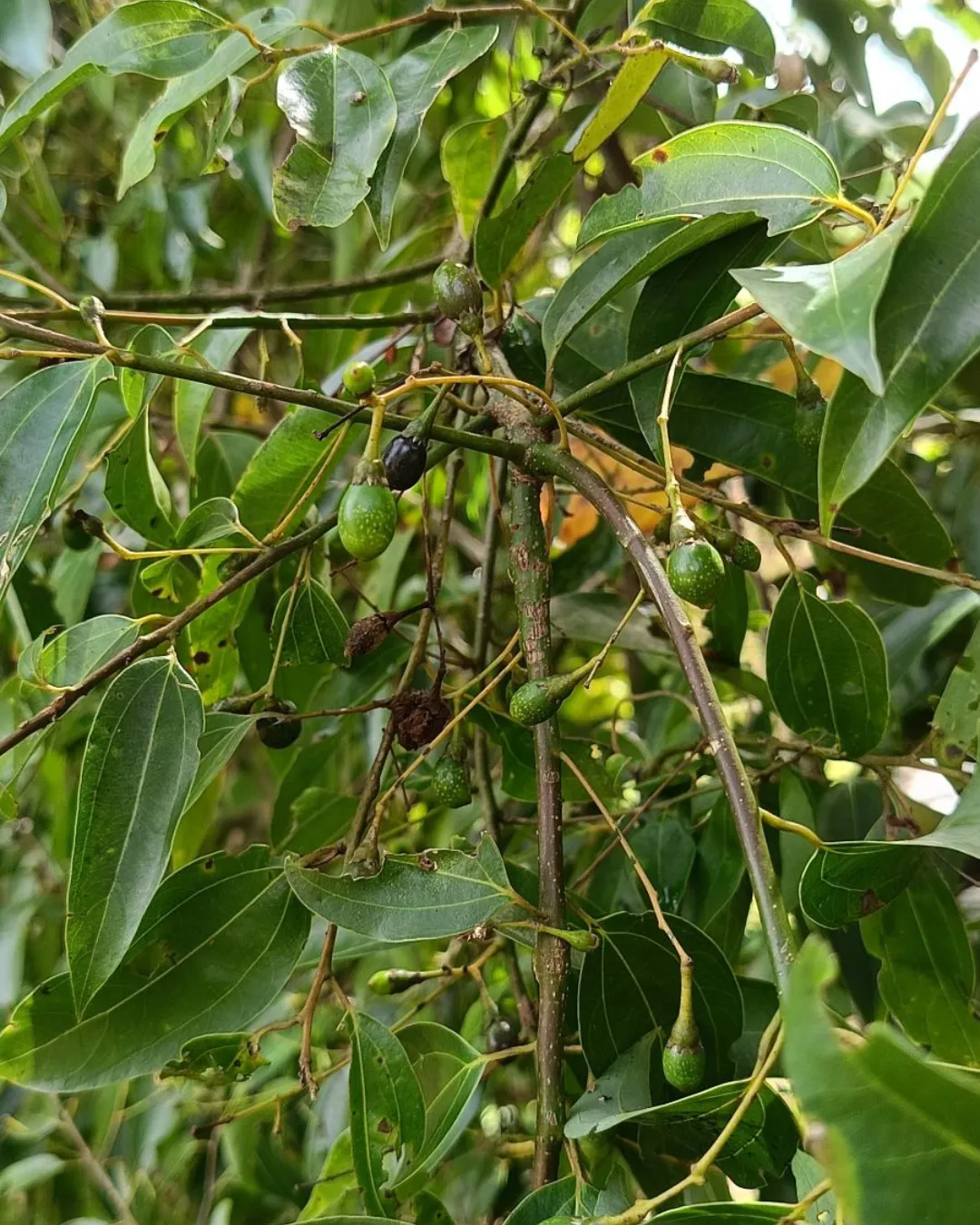
The leaves of Cinnamomum trees are glossy, oval-shaped, and leathery to the touch. Young leaves emerge with a striking pink to reddish hue. Furthermore, they slowly mature into a deep, glossy green as the tree ages. Each leaf has three prominent veins running from base to tip, a trait typical of the Cinnamomum genus. Moreover, crushing a leaf releases the same warm, sweet aroma found in the bark. Consequently, even before harvest, the whole tree smells unmistakably of cinnamon. The leaves grow in an alternating pattern along smooth, slender branches.
Flower and Fruit Cinnamomum Zeylanicum
Cinnamomum zeylanicum produces small, star-shaped flowers in loosely drooping clusters called panicles — branching flower stems, like a small flowering bush. The flowers are pale yellow to cream in colour. Additionally, they release a distinct, somewhat strong scent that attracts pollinating insects. Primarily, flowering happens during the warmer months in tropical climates. After pollination, the tree produces small oval fruits known as drupes — fleshy fruits with a single hard seed inside, much like a tiny olive. These fruits start green and ripen to a deep purple-black colour. Furthermore, the ripe fruit itself carries a faint cinnamon scent, even though the spice comes from the bark, not the fruit.
Bark and Growth Habit
The true value of Cinnamomum zeylanicum lies in its inner bark, which is dried and rolled into the cinnamon quills sold worldwide. The outer bark is brownish-grey and relatively smooth. Consequently, growers peel it away to reach the fragrant inner layer. The tree itself grows as a bushy evergreen, reaching 9 to 15 metres in height at maturity. Moreover, it can be pruned and coppiced — cut back at the base — to encourage the thin new shoots used for bark harvesting. Primarily, plants grown from seed take a few years to mature before any bark can be harvested. Additionally, the tree also makes an attractive ornamental specimen even without harvesting, thanks to its dense, glossy canopy.
Global Seed Delivery & Phytosanitary Certification
Induare Agro specialises in rare exotic seeds and Indonesian plants, sourced and shipped with full legal compliance. Furthermore, every seed batch is organically grown and carefully selected for viability. Additionally, we serve collectors across Europe, North America, Asia, and Australia with confidence and consistency.
Packaging and Shipping
Induare Agro packs every seed order using professional, moisture-controlled materials. Primarily, this protects germination quality during long international transit. Furthermore, all orders ship via Global Express courier services, offering fast, fully trackable delivery. Each shipment includes an official Phytosanitary Certificate, the government-issued document confirming the seeds are free from pests and disease. Consequently, your parcel clears customs without unnecessary delay. Additionally, tracking details are provided so you can follow your order from dispatch to doorstep.
Buyer Peace of Mind
Importing rare seeds across borders requires a trustworthy partner. Furthermore, Induare Agro has deep experience preparing export documentation for rare plants in Indonesia. We provide every buyer with full certificate documentation ahead of shipment. Moreover, our support team is ready to answer any customs or import questions. Consequently, you can order with full confidence in both legality and quality. Additionally, every seed is organically harvested, with no synthetic chemical treatments used at any stage. Primarily, our goal is to connect collectors worldwide with Indonesia’s finest botanical exports.
How to Grow Cinnamomum zeylanicum
Growing true Cinnamon from seed is a rewarding long-term project. Additionally, these simple steps will give your seed the best start.
Step 1 – Seed Preparation Soak the seed in lukewarm water for 12–24 hours before planting. This helps soften the outer coat and supports faster germination.
Step 2 – Planting Medium Use a well-draining mix of organic compost and coarse sand. Furthermore, plant the seed just below the surface, about 1 cm deep.
Step 3 – Warmth and Humidity Keep the pot in a warm, humid spot above 24°C (75°F). Additionally, cover the pot loosely with plastic to retain moisture.
Step 4 – Light Requirements Provide bright, indirect light during germination and early growth. Consequently, avoid harsh direct sun, which can scorch young seedlings.
Step 5 – Transplanting Once the seedling reaches 15–20 cm tall, move it to a larger pot or sheltered garden bed. Moreover, choose a spot protected from strong wind.
Step 6 – Ongoing Care Water regularly to keep the soil consistently moist but never waterlogged. Additionally, feed with organic fertiliser every 6–8 weeks during the growing season.
Step 7 – Long-Term Growth Expect slow, steady growth over the first few years. Furthermore, mature trees can later be pruned to encourage the thin shoots used for bark harvesting.
