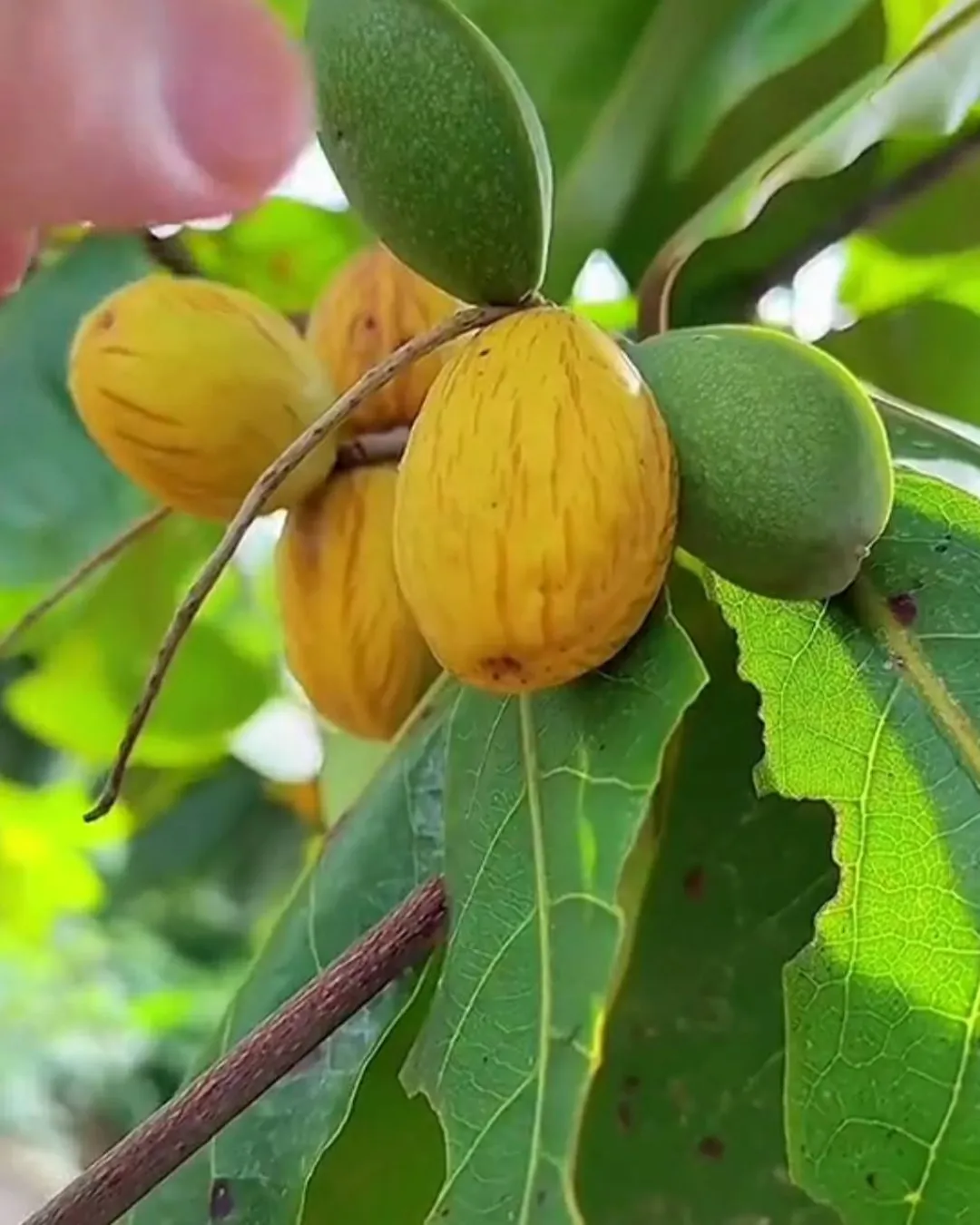
What Is Terminalia catappa?
Terminalia catappa is a rare and highly sought-after tropical tree species. This plant originates from the coastal regions of tropical Asia and the Indo-Pacific islands, including Indonesia. Furthermore, it grows naturally along sandy shorelines, where strong sun and salty winds shape its resilience. Collectors around the world prize this tree for its striking form and adaptability. Consequently, dedicated growers consider it a must-have addition to any tropical plant collection.
Aesthetic Features Terminalia catappa
This species belongs to the genus Terminalia, known for producing hardy, wide-canopied trees across tropical regions. Additionally, this particular species stands out for its ornamental leaves and unusual growth pattern.
Leaf Structure Terminalia catappa
The leaves grow large, broad, and glossy green. Additionally, they form neat spiral clusters at the branch tips, creating a distinctive layered canopy. As seasons shift, the leaves turn brilliant shades of red, orange, and yellow before falling. This natural color change adds ornamental value throughout the year. Moreover, gardeners often plant this species specifically for its dramatic seasonal display.
Flower and Fruit Terminalia catappa
Small white flowers appear along thin spikes during the warmer months. These flowers carry little fragrance but attract bees and small pollinators easily. Following pollination, the tree produces oval-shaped fruit with a fibrous outer husk. Inside, a single edible seed develops, similar in taste to a mild almond. Primarily, this seed is the reason collectors cultivate this species for planting.
Dormancy Cycle
This tree follows a natural leaf-shedding cycle twice each year. Consequently, it briefly appears bare before flushing with fresh new growth. This dormancy period — a natural resting phase — helps the tree conserve energy and strengthen its roots. Growers should not worry during this phase, as it is completely normal.
Global Seed Delivery & Phytosanitary Certification
Induare Agro ships rare seeds safely to collectors worldwide. Furthermore, every shipment follows strict international plant health standards.
Packaging and Shipping
Each seed undergoes careful cleaning and drying before packing. Additionally, Induare Agro uses moisture-controlled packaging to protect seed viability during transit. Every order ships through trusted global express couriers. Consequently, buyers receive their seeds quickly and in optimal condition.
Buyer Peace of Mind
Every shipment includes an official Phytosanitary Certificate — a document confirming the seeds are pest-free and legally approved for export. Moreover, this documentation allows customs clearance without unnecessary delays. Induare Agro prioritizes transparency and trust with every shipment.
How to Grow Terminalia catappa
Step 1: Soak the seed in clean water for 24 hours before planting. This softens the outer husk and speeds up germination.
Step 2: Plant the seed in well-draining, sandy soil. Bury it about 2 cm deep with the pointed end facing sideways.
Step 3: Place the pot in full sunlight for at least six hours daily. Warm temperatures encourage faster sprouting.
Step 4: Water regularly but avoid soggy soil. Consequently, root rot risk stays low during germination.
Step 5: Transplant the seedling outdoors once it reaches 30 cm tall. Choose a spot with open space for future canopy growth.
