
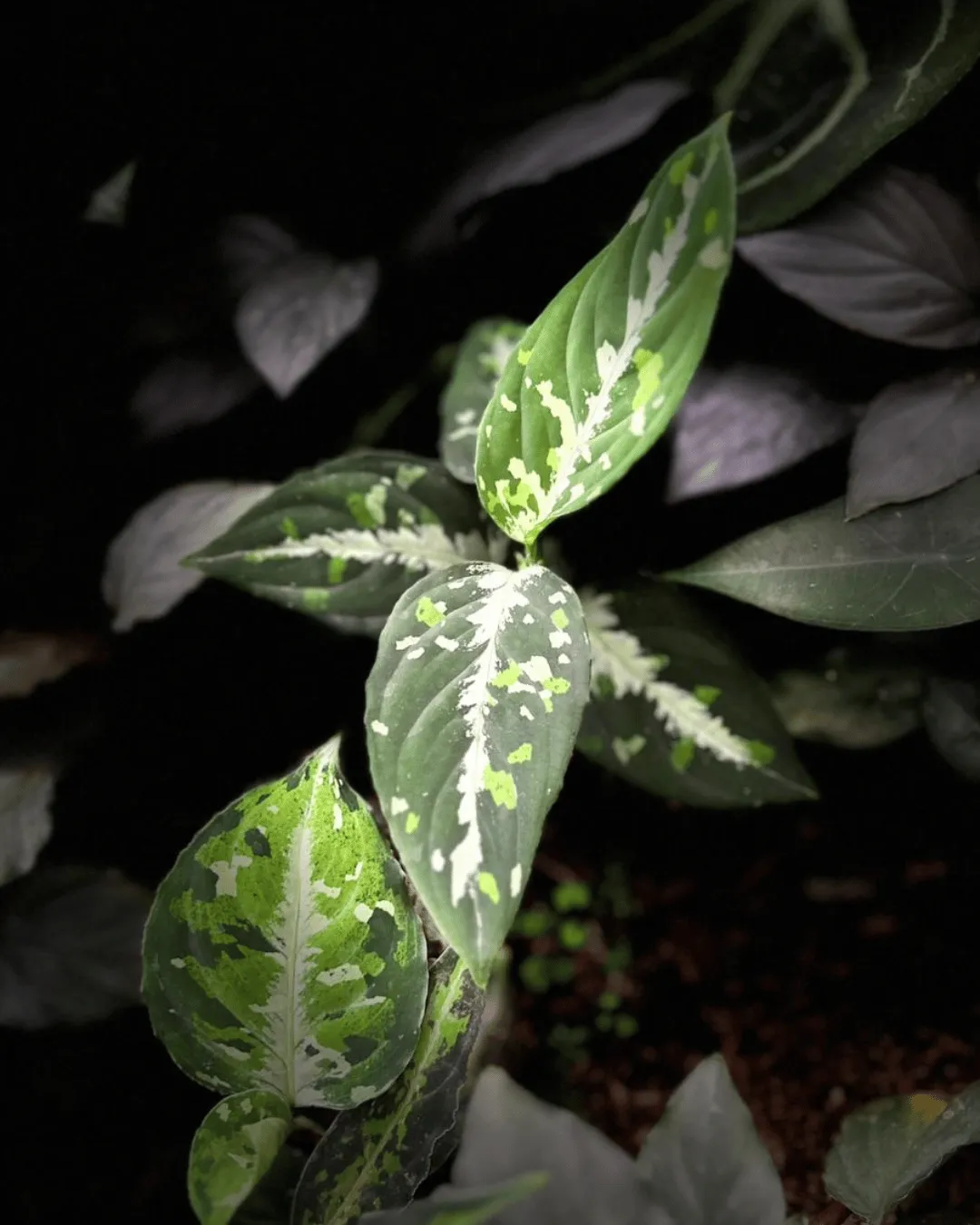
What Is Aglaonema pictum tricolor?
Aglaonema pictum tricolor is one of the most coveted rare plants in the world. It originates from the volcanic mountain slopes of Sumatra and Nias, Indonesia. This plant grows naturally beneath thick tropical rainforest canopies. It thrives in shaded, humid, mossy understory environments. These highly specific growing conditions make it almost impossible to mass-produce.
Furthermore, this species belongs to the Araceae family — the same botanical family as Monstera and Anthurium. The Araceae family includes many globally important ornamental plants. Aglaonema pictum tricolor stands apart, even within this elite group. It is a slow-growing, evergreen perennial that reaches about 60 cm in height. Additionally, its slow growth rate limits commercial supply worldwide.
Consequently, serious plant collectors place this species at the top of their wish lists. Demand for it grows every year, but supply remains restricted. Primarily, rarity comes from its narrow native habitat in Indonesia. It grows only at specific elevations with precise humidity and temperature levels. Moreover, propagation from seed requires skill, patience, and proper conditions.
Induare Agro sources these seeds directly from their native Indonesian habitat. We supply export-quality seeds that meet strict international phytosanitary standards. Additionally, every batch is fresh, organic, and handled with professional care. This makes Aglaonema pictum tricolor from Induare Agro the preferred choice for collectors worldwide.
Aesthetic Features Aglaonema pictum tricolor
Aglaonema pictum tricolor is famous for its extraordinary appearance. No other houseplant produces the same visual effect. Furthermore, every leaf is a living work of art. Below, we describe its key physical features in plain language.
Leaf Structure
The leaves of Aglaonema pictum tricolor are oval and slightly elongated. They have a soft, matte, almost velvety surface texture. Furthermore, each leaf displays three distinct color zones. These zones are deep forest green, bright lime green, and soft silver-white. Together, these three tones create a pixelated camouflage pattern. Consequently, the plant is widely known as the Camouflage Plant. The edges of each leaf may show gentle, natural waves. Additionally, the leaves grow on upright, non-woody stems — meaning the stems do not produce hard wood. The plant grows in a compact, bushy shape. Moreover, it stays manageable in size, reaching about 30 to 60 cm tall indoors.
Flower and Fruit
Aglaonema pictum tricolor produces a distinctive aroid flower structure. The flower consists of a spadix — a fleshy central spike covered in tiny individual flowers. The spadix is surrounded by a spathe — a hood-like outer leaf, usually greenish-white in color. Furthermore, the plant displays protogyny — female flowers open before male flowers on the same spike. This natural design reduces self-pollination. Additionally, after successful pollination, the plant may produce small red berries. These berries contain the seeds that collectors and growers prize so highly. Primarily, most growers remove the inflorescence early. This redirects the plant’s energy to producing larger, more vibrant foliage.
Growth Habit and Care Requirements
Aglaonema pictum tricolor is a slow-growing plant. Consequently, patience is essential when growing it from seed. The plant grows best in bright, indirect light. Direct sunlight will scorch and bleach the delicate camouflage pattern. Furthermore, it prefers consistently warm temperatures above 18°C (64°F). High humidity — above 60% — supports healthy leaf development. Additionally, the growing medium must be porous and well-draining. A mix of indoor potting soil, perlite, and orchid bark works very well. The plant does not tolerate waterlogged roots. Moreover, the stems and leaves contain calcium oxalate crystals. Keep it away from pets and small children.
Global Seed Delivery & Phytosanitary Certification
Induare Agro is a professional supplier of rare and exotic plant seeds from Indonesia. We serve collectors, nurseries, and botanical institutions worldwide. Furthermore, all our products meet international export and biosafety requirements. We are committed to legal, ethical, and professional global shipping.
Packaging and Shipping
Every seed order is carefully prepared before it leaves our facility. Induare Agro uses professional-grade packaging to protect seeds during long-distance transit. Furthermore, we ship via Global Express courier services. This ensures fast, trackable delivery to your door. Additionally, each shipment includes a valid Phytosanitary Certificate. This is an official plant health document — a government-issued certificate that proves seeds are free from pests and diseases. Consequently, your seeds meet the legal import requirements of most countries. Moreover, our team monitors each shipment until it arrives safely.
Buyer Peace of Mind
Induare Agro understands that buying rare seeds internationally requires trust. Consequently, we provide full documentation with every order. The Phytosanitary Certificate protects you at customs. Furthermore, all seeds are organic — grown without synthetic pesticides or chemicals. Additionally, every seed batch is tested for freshness before dispatch. We supply only viable, export-quality material. Primarily, our goal is your confidence as a buyer and your success as a grower. Moreover, our team is available to assist you with any questions about care and cultivation.
How to Grow Aglaonema pictum tricolor
Follow these steps to germinate and grow your Aglaonema pictum tricolor seeds successfully.
Step 1 – Prepare Your Growing Medium Use a mix of peat moss, perlite, and fine orchid bark. The mix must drain freely and hold just enough moisture. Fill a small seedling tray or pot with this mix.
Step 2 – Sow the Seeds Place each seed on the surface of the moist growing medium. Press it gently into the surface without burying it deeply. Cover the tray with a clear plastic dome or cling film to retain humidity.
Step 3 – Provide Warmth and Indirect Light Place the tray in a warm spot with temperatures between 24–28°C (75–82°F). Provide bright, indirect light — never direct sun. A germination heat mat is helpful for consistent results.
Step 4 – Maintain Moisture and Humidity Mist the surface lightly whenever it begins to dry out. Do not allow the medium to become soggy or waterlogged. Germination typically takes 4 to 8 weeks.
Step 5 – Transplant Carefully Once seedlings show 2 to 3 true leaves, they are ready to transplant. Move each seedling to its own small pot with fresh aroid mix. Additionally, maintain high humidity during the first few weeks after transplanting.
Step 6 – Long-Term Care Keep the plant in bright, indirect light. Water when the top layer of the medium feels dry. Furthermore, fertilize lightly every 4 weeks during the growing season. Avoid cold drafts and temperatures below 18°C.
