
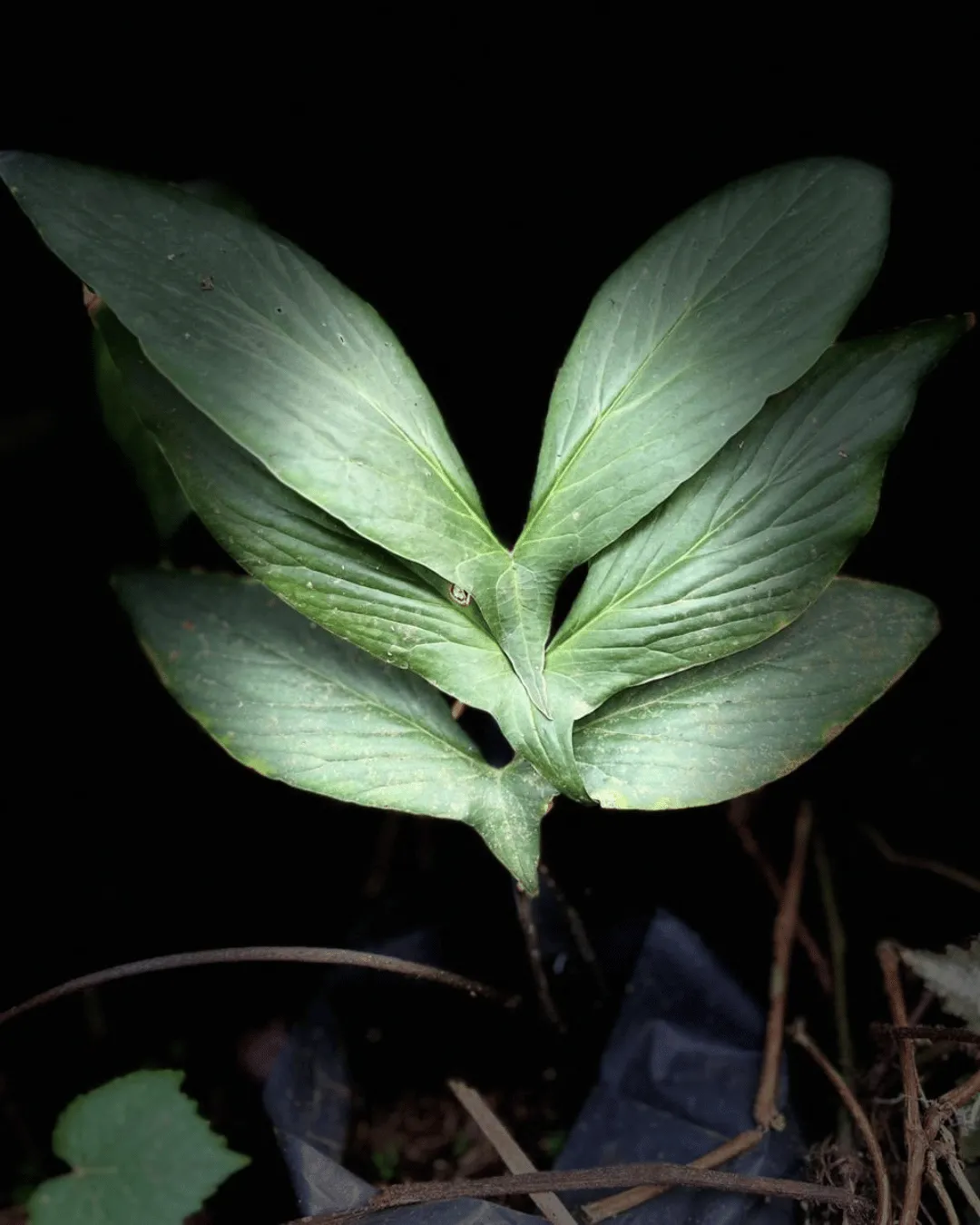
What Is Cyrtosperma hambalii?
Cyrtosperma hambalii is a flowering plant in the family Araceae — the same family as well-known aroids. Moreover, it belongs to a small genus of only about 12 species worldwide. Scientists formally described this species in 2001, when botanists A. Dearden and A. Hay published their findings in Aroideana. Furthermore, this species is known only from the Timika region of southern West Papua, making it one of the most geographically restricted aroids on the planet.
This plant grows naturally in tropical wetlands at low altitudes. Additionally, it thrives along stream margins and waterlogged forest floors where humidity stays very high year-round. Consequently, it is extremely rare in the wild. Habitat loss from human activity has made wild populations even smaller. Primarily for these reasons, dedicated plant collectors around the world compete fiercely to obtain specimens. Furthermore, it is virtually impossible to find this species in standard nurseries. Induare Agro is proud to offer export-quality, organically grown seeds of this magnificent and rare Indonesian plant.
Aesthetic Features Cyrtosperma hambalii
The visual appeal of Cyrtosperma hambalii is truly unlike any other aroid. Primarily, its unique combination of sculptural leaves and an extraordinarily tall flower spike sets it apart. Collectors describe it as “strikingly elegant.” Furthermore, every part of this plant has something remarkable to show. Below, we break the aesthetic features into three key areas.
Leaf Structure
The leaves of Cyrtosperma hambalii are narrow and sagittate — meaning arrow-shaped, like a pointed blade with two rear lobes that stand upright. Furthermore, those two rear lobes project straight up like “rabbit’s ears,” giving the plant its most recognisable silhouette. The anterior lobe — the front tip of the leaf — points gently downward. Consequently, the overall effect is one of bold geometric symmetry.
The leaf stalks (called petioles) are unusually short for the genus. Moreover, those petioles have very long sheathing bases — a feature that is rare among Cyrtosperma species. The foliage colour is a deep olive green with subtle mottled brown tones. Additionally, the leaf surface carries a leathery texture that gives each plant a refined, sculptural presence.
Flower and Fruit
The inflorescence — the flowering structure — of Cyrtosperma hambalii is nothing short of spectacular. Primarily, it consists of two parts: the spathe and the spadix. The spathe is a long, hood-like outer bract (a modified leaf that wraps around the flower). Furthermore, this spathe grows to approximately 53 cm (about 21 inches) in height. It is very slender and stands perfectly erect, rising high above the leaves.
Externally, the spathe is dark greenish-brown with eight green vertical stripes. Additionally, the interior surface is a dramatic blackish colour. The spadix — the central finger-like spike that holds the tiny flowers — is about 6 cm long. Moreover, the flowers themselves are hexamerous, meaning they have parts arranged in groups of six. Consequently, this floral structure is unusual and highly prized by botanists and collectors alike. The anthers — the pollen-producing parts — are visibly extended beyond the flower at the time of pollination. Fruit characteristics have not been formally recorded in the wild.
Dormancy Cycle and Growth Habit
Cyrtosperma hambalii is a rhizomatous perennial. This means it grows from a creeping underground stem called a rhizome — an underground root-like structure that stores energy. Furthermore, this rhizome allows the plant to survive periods of environmental stress. Primarily, the plant thrives in wet tropical conditions and does not appreciate dry spells.
In cultivation, the plant may show reduced growth during cooler or drier periods. Consequently, growers should maintain consistently warm and humid conditions to avoid stress. Additionally, the plant is semi-aquatic by nature — it grows happily in waterlogged soil or even in a shallow water reservoir. Moreover, this adaptability makes it suitable for both specialised bog gardens and indoor tropical collections.
Global Seed Delivery & Phytosanitary Certification
At Induare Agro, we believe rare plants deserve exceptional care in transit. Furthermore, we understand that international buyers have strict requirements. Consequently, every order we ship meets the highest legal and phytosanitary standards.
Packaging and Shipping
Induare Agro ships Cyrtosperma hambalii seeds using Global Express courier services. Moreover, each seed is carefully prepared and packaged to retain freshness and viability during transit. Additionally, our team inspects every seed before packing. Primarily, we use professional horticultural packaging materials that protect the seed from moisture damage, pressure, and temperature changes during the journey. Furthermore, we serve buyers in North America, Europe, Asia, Australia, the Middle East, and beyond.
Before any shipment leaves Indonesia, Induare Agro applies for and obtains all mandatory export permits from the Indonesian Ministry of Agriculture. Additionally, each shipment goes through a laboratory inspection to confirm it is free from pests and disease. Consequently, every order arrives with a full Phytosanitary Certificate — the internationally recognised plant health document that customs authorities in most countries require for live plant material imports.
Buyer Peace of Mind
Induare Agro is committed to 100% legal and transparent trade. Furthermore, we never ship without proper documentation. Each Phytosanitary Certificate is issued by certified Indonesian agricultural authorities. Consequently, buyers can import with full confidence and avoid customs complications. Moreover, we handle all the paperwork on your behalf. Additionally, we notify buyers at each key stage — from export permit issuance through laboratory clearance to final dispatch. Primarily, our goal is to make the experience of owning a rare Indonesian exotic plant as smooth as possible.
How to Grow Cyrtosperma hambalii
Growing Cyrtosperma hambalii is a rewarding project for experienced plant enthusiasts. Furthermore, following the right steps from the beginning gives your seed the best possible start.
Step 1 – Prepare Your Growing Medium Use a mix of perlite, cocopeat, and peat soil for good moisture retention. Keep the medium consistently moist or place the container in a shallow tray of water. Additionally, avoid dry or compacted soil at all times.
Step 2 – Provide the Right Light Place your seedling in bright, indirect light. Avoid direct midday sun, which can scorch the leaves. Furthermore, a south- or east-facing window with filtered light works very well.
Step 3 – Maintain Temperature and Humidity Keep temperatures between 20°C and 28°C (68°F to 82°F) at all times. Additionally, this genus is sensitive to cold and should never drop below 16°C (61°F). Furthermore, aim for 60–80% ambient humidity for optimal growth.
Step 4 – Water Consistently Water regularly to keep the medium evenly moist. Additionally, you can allow the plant to sit in a shallow water reservoir, replicating its natural stream-side habitat. Consequently, root rot is rarely a problem when the medium is correct.
Step 5 – Feed During Active Growth Apply a balanced liquid fertiliser at half strength once per month during the growing season. Moreover, reduce or pause feeding during cooler or slower-growth periods. Furthermore, avoid over-fertilising, as this can damage the root system.
Step 6 – Monitor and Enjoy Watch for early signs of new leaf growth — this indicates the plant is settling in well. Additionally, maintain high humidity by misting or using a humidifier nearby. Consequently, a well-cared-for Cyrtosperma hambalii will reward you with its extraordinary sculptural beauty for many years.
