
What Is Barringtonia edulis?
Barringtonia edulis is a rare and highly sought-after evergreen tree. It originates from the tropical islands of Fiji and Vanuatu in the southwestern Pacific. Scientists first described this remarkable species in 1866. Its common name, Cutnut, reflects the distinct shape of its edible seed kernel. Additionally, it carries other local names such as Pao Nut, Heart Tree, and Yum-Yum Tree — names that hint at its cultural and culinary importance across Pacific communities.
This tree grows in humid coastal forests at altitudes below 400 metres. It thrives near the ocean, along roadsides, and in cultivated gardens. Consequently, it adapts well to tropical and subtropical garden settings around the world. Furthermore, it is extremely rare outside its native Pacific islands. That rarity makes it a true collector’s gem among exotic plant enthusiasts globally. Induare Agro is proud to offer genuine, export-quality seeds of this extraordinary species to collectors worldwide.
The Cutnut is not just a beautiful tree. It also provides nutritious edible seeds that taste remarkably like peanuts. Moreover, traditional Pacific communities use the bark medicinally and the wood for crafting canoe paddles. This combination of ornamental, edible, and cultural value makes Barringtonia edulis one of the most complete rare exotic plants available today.
Aesthetic Features Barringtonia edulis
Barringtonia is a genus of over 70 tropical flowering trees in the family Lecythidaceae. The species Barringtonia edulis stands out even within this remarkable genus. Its visual features are dramatic, elegant, and genuinely unlike most garden trees. Furthermore, every part of the tree — from its glossy leaves to its pendulous flowers — makes a bold statement.
Leaf Structure
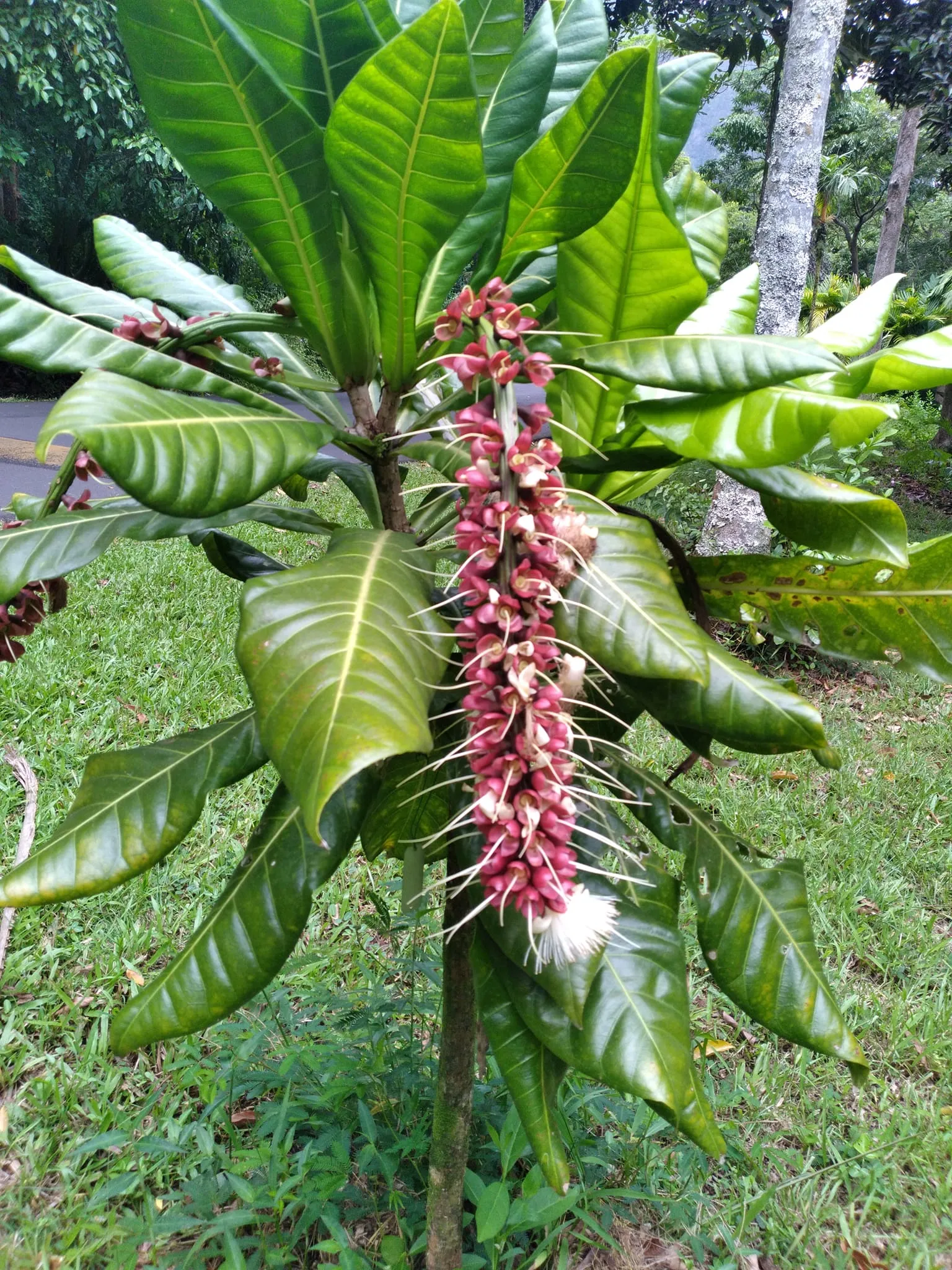
Barringtonia edulis produces large, glossy, deep-green leaves. The leaves cluster at the tips of the branches, forming a dense, crown-like canopy. Each leaf can grow up to 45 cm (18 inches) long and 18 cm (7 inches) wide. Additionally, new growth emerges in a striking orange colour before it matures to rich green. The leaf surface is smooth and shiny. The veins are prominent and clearly visible. Moreover, the leaf edges are slightly wavy, giving the foliage a soft, flowing appearance. This combination creates a lush, tropical look that stands out in any garden or greenhouse setting.
Flower and Fruit
The flowers of Barringtonia edulis are one of its most dramatic features. The tree produces a long, dangling flower spike — called a raceme (a cluster of flowers on a central stem) — that can reach up to 80 cm (31 inches) in length. Each spike carries dozens of small, closely packed flowers. The flowers have four white, squarish petals and a projecting burst of stamens — the pollen-producing parts — that give each bloom a fluffy, brush-like look. Furthermore, the flower bases are reddish-brown, creating a beautiful colour contrast. Moths and bats pollinate these flowers at night, making the tree a valuable wildlife attractor.
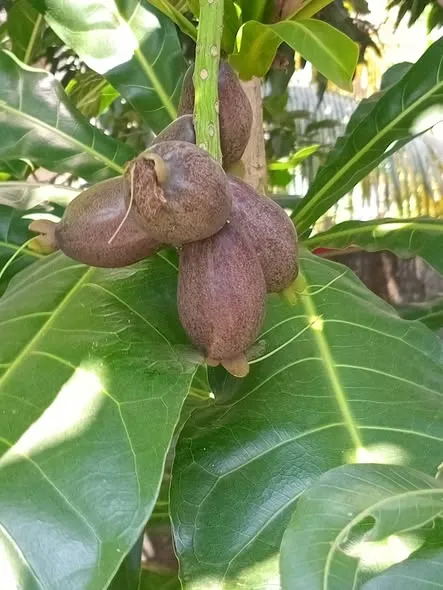
After pollination, the tree produces oblong berries — simple fleshy fruits — up to 10 cm (4 inches) long. The fruits are covered with short, dense hairs and start out greyish-green. Consequently, as they ripen, they turn reddish or purplish, adding further ornamental value. The seeds inside have a firm shell. The kernel — the inner edible part — resembles a peanut in both shape and flavour. A single flower spike can produce up to 40 fruits. This generous yield makes the tree both beautiful and productive.
Bark and Tree Form
Barringtonia edulis grows into a tall, lightly branched tree. It can reach up to 18 metres (60 feet) in its natural habitat. The trunk grows up to 40 cm (16 inches) in diameter. The bark is smooth and greyish-brown in colour. Primarily, the tree has a graceful, upright form with minimal branching. This gives it a clean, architectural silhouette that suits both tropical gardens and large containers. Additionally, the tree is an evergreen — it keeps its leaves all year round — so it always provides shade and visual interest. Its striking appearance makes it a standout centrepiece in any exotic plant collection.
Global Seed Delivery & Phytosanitary Certification
Buying rare exotic seeds internationally requires trust. Induare Agro understands this. Consequently, every order is handled with the highest level of care, professionalism, and legal compliance. We make the process simple, safe, and reliable for collectors in any country.
Packaging and Shipping
Induare Agro ships all seeds using Global Express courier services. Your order arrives quickly and safely, wherever you are in the world. Furthermore, each seed is carefully packed to protect viability during transit. We use protective, moisture-controlled packaging materials. This ensures the seed arrives in the best possible condition for planting. Additionally, every shipment is fully tracked, so you always know where your order is.
Buyer Peace of Mind
Every order from Induare Agro includes an official Phytosanitary Certificate. This is a government-issued plant health document. It certifies that the seeds have been inspected and meet international import standards. Consequently, your seeds clear customs legally and smoothly in most countries. Moreover, Induare Agro operates with full export compliance. We handle all the necessary documentation on your behalf. You simply place your order and receive your rare seeds with confidence. Our commitment is to make rare plant collecting accessible, legal, and stress-free for serious collectors worldwide.
How to Grow Barringtonia edulis
Growing Barringtonia edulis is a rewarding experience. Follow these steps for the best results.
Step 1 — Seed Soaking Soak the seed in warm water for 24–48 hours before planting. This softens the hard outer shell and speeds up germination.
Step 2 — Prepare the Potting Mix Use a rich, well-draining tropical potting mix. Add organic compost to improve soil fertility and moisture retention.
Step 3 — Planting Plant the seed at a depth of about 2–3 cm in a pot or seed tray. Keep the planting medium consistently moist — damp but not waterlogged.
Step 4 — Warmth and Humidity Place the pot in a warm, humid spot with temperatures above 20°C (68°F). Provide bright, indirect light in the early stages. Barringtonia edulis loves tropical warmth.
Step 5 — Germination and Early Care Germination typically takes 3–8 weeks. Furthermore, keep the soil evenly moist throughout this period. Avoid direct harsh sun on young seedlings.
Step 6 — Transplanting Once the seedling reaches 15–20 cm (6–8 inches) tall, transplant it to a larger pot or a sunny outdoor location. Additionally, choose a spot with full sun to partial shade. The tree thrives in coastal or humid garden environments.
Step 7 — Ongoing Care Water regularly to keep the soil moist. Apply a balanced organic fertiliser every 2–3 months. Moreover, the tree tolerates light to heavy soils and even slightly saline conditions, making it highly adaptable.
All seeds are sourced, inspected, and exported by Induare Agro — your trusted partner in rare exotic seeds and Indonesian plants.
