
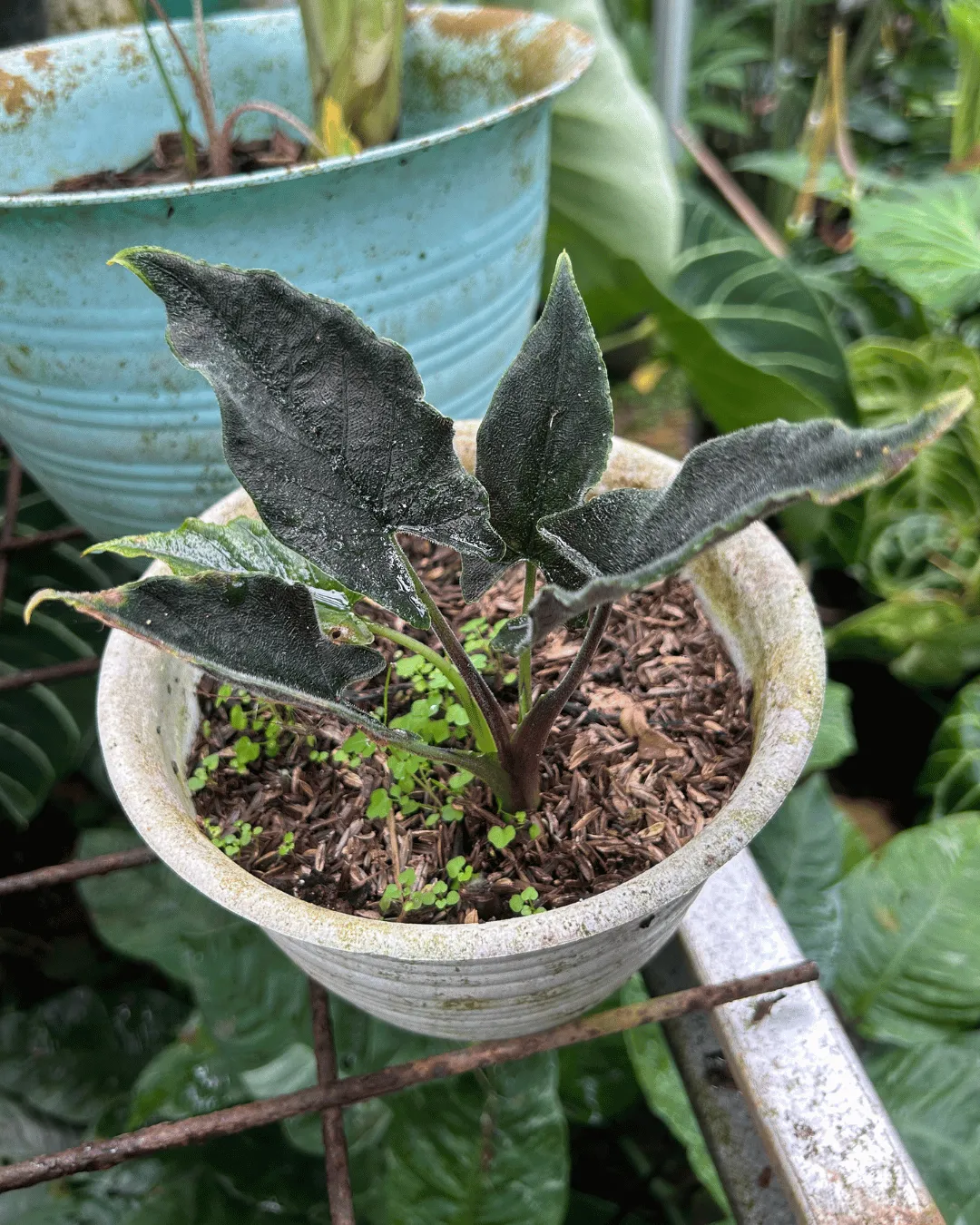
What Is Alocasia Antoro Velvet?
Alocasia Antoro Velvet is a breathtaking tropical plant. It was recently discovered in the humid rainforests of Indonesia. Botanists and collectors link it to the species Alocasia chienlii, though its cultivar name — “Antoro Velvet” — honours its discoverer and its signature velvety leaves. Furthermore, it belongs to the longiloba group of Alocasias, a lineage native to Borneo’s mist-covered elevations of 500–1,500 metres. These high-altitude habitats provide warm temperatures, filtered light, and rich, moist soil. Consequently, this plant thrives in environments that mirror those forest conditions.
Alocasia Antoro Velvet is rare for several reasons. First, its natural habitat is remote and difficult to access. Second, it produces seeds sparingly in the wild. Additionally, few nurseries around the world cultivate it at commercial scale. This scarcity drives enormous demand among plant collectors in Europe, North America, Asia, and beyond. Induare Agro sources these seeds directly from Indonesia. Moreover, every seed passes strict quality checks before export. Collectors trust Induare Agro because of its transparent, professional supply chain.
This plant belongs to the family Araceae — a large group of tropical plants that includes popular species such as Monstera and Philodendron. Within this family, Alocasia Antoro Velvet stands out for its unique texture. No other plant in its genus combines near-black colouring with a soft, hair-covered leaf surface. Primarily for this reason, it commands premium prices in rare plant markets globally.
Aesthetic Features Alocasia Antoro Velvet
Alocasia Antoro Velvet is a visual masterpiece. Its physical appearance sets it apart from every other tropical plant in its class. The following sections describe its most striking features in plain language.
Leaf Structure
The leaves of Alocasia Antoro Velvet are broadly ovate — meaning they are wide and egg-shaped. They range from deep green to near-black in colour. Furthermore, each leaf surface is covered in fine, dense hairs called pubescence — tiny soft fibres that create the famous velvety texture. This texture absorbs light rather than reflecting it. Consequently, the leaves appear matte and rich, not shiny.
The veins stand out in a paler green tone. They are raised above the leaf surface, creating a striking visual contrast. Additionally, the leaf blades have a slightly arrow-shaped base — a shape botanists call sagittate. Each leaf typically grows 20–30 cm in length. The petioles — the stems that attach the leaves to the plant body — are firm, green, and lightly striped. Overall, the plant forms a tidy upright rosette, with leaves arranged in a compact cluster.
Flower and Fruit
Alocasia Antoro Velvet rarely flowers indoors. When it does flower, it produces a spadix — a finger-like central spike — surrounded by a spathe — a hood-like outer leaf. This floral structure is typical of the Araceae family. The spathe is usually pale green or cream in colour. Moreover, fruiting after flowering is uncommon in cultivated plants. Therefore, seeds are exceptionally rare and are sourced only during specific seasonal windows. Induare Agro works directly with growers in Indonesia to secure these limited seed batches.
Dormancy Cycle
Alocasia Antoro Velvet may enter a dormancy period — a natural rest phase — in cooler months or when conditions are not ideal. During dormancy, the plant drops its leaves and stores energy in its corm — a rounded underground stem that functions like a bulb. This is normal and not a sign of plant death. Additionally, each new leaf that emerges after dormancy starts pale and soft. Over several days, it deepens to its signature dark, velvety colour. Consequently, every growth cycle brings fresh excitement for the collector.
Global Seed Delivery & Phytosanitary Certification
Induare Agro is a professional plant and seed exporter based in Indonesia. Furthermore, it is committed to legal, ethical, and scientifically sound seed export practices. Every order ships with full documentation and expert packaging.
Packaging and Shipping
Induare Agro ships all seeds via Global Express courier services. These services include trusted providers with fast, trackable delivery to most countries worldwide. Moreover, seeds are packaged using professional methods to maintain viability during transit. Each seed is cleaned, inspected, and carefully protected against moisture, heat, and physical damage. Additionally, packaging materials meet international export standards for organic plant material. Customers receive tracking information as soon as their order ships.
Buyer Peace of Mind
Every seed order from Induare Agro includes a Phytosanitary Certificate. This is an official government-issued document. It certifies that the seeds are free from pests, diseases, and banned substances. Furthermore, it is required by customs authorities in most importing countries. Consequently, buyers face no legal complications at the border. The certificate is prepared by Indonesia’s official plant quarantine authority. Additionally, Induare Agro handles all export paperwork on behalf of the buyer. This makes the purchase process smooth and stress-free for collectors worldwide.
How to Grow Alocasia Antoro Velvet
Growing Alocasia Antoro Velvet from seed is a rewarding experience. Follow these steps carefully to give each seed the best possible start.
Step 1 – Prepare Your Growing Mix Use a well-draining aroid mix. Combine peat or coco coir, perlite, and orchid bark in equal parts. This keeps the growing medium moist but never waterlogged.
Step 2 – Sow the Seed Place the seed on the surface of the moist mix. Press it lightly so it makes contact with the medium. Do not bury it deeply — a shallow position encourages germination.
Step 3 – Provide Warmth and Humidity Maintain a temperature of 22–28°C (72–82°F) around the seed. Cover the container with a clear plastic lid or bag to retain humidity. Additionally, place it in a bright spot away from direct sunlight.
Step 4 – Water with Care Mist the surface lightly when it begins to dry. Furthermore, never allow water to pool at the base of the container. Consistent moisture — not sogginess — is the key to successful germination.
Step 5 – Wait for Germination Germination typically takes 2–6 weeks under ideal conditions. Be patient and keep conditions stable. Consequently, a healthy seedling will emerge with the characteristic dark, velvety first leaf.
Step 6 – Transplant the Seedling Once the seedling has 2–3 leaves, move it to a small individual pot. Use the same aroid mix. Moreover, place the young plant in bright, indirect light and maintain humidity above 60%.
Step 7 – Ongoing Care Water when the top 2–3 cm of soil feel dry. Feed monthly with a balanced liquid fertiliser during the growing season. Additionally, keep temperatures above 18°C (65°F) at all times to prevent cold stress.
