
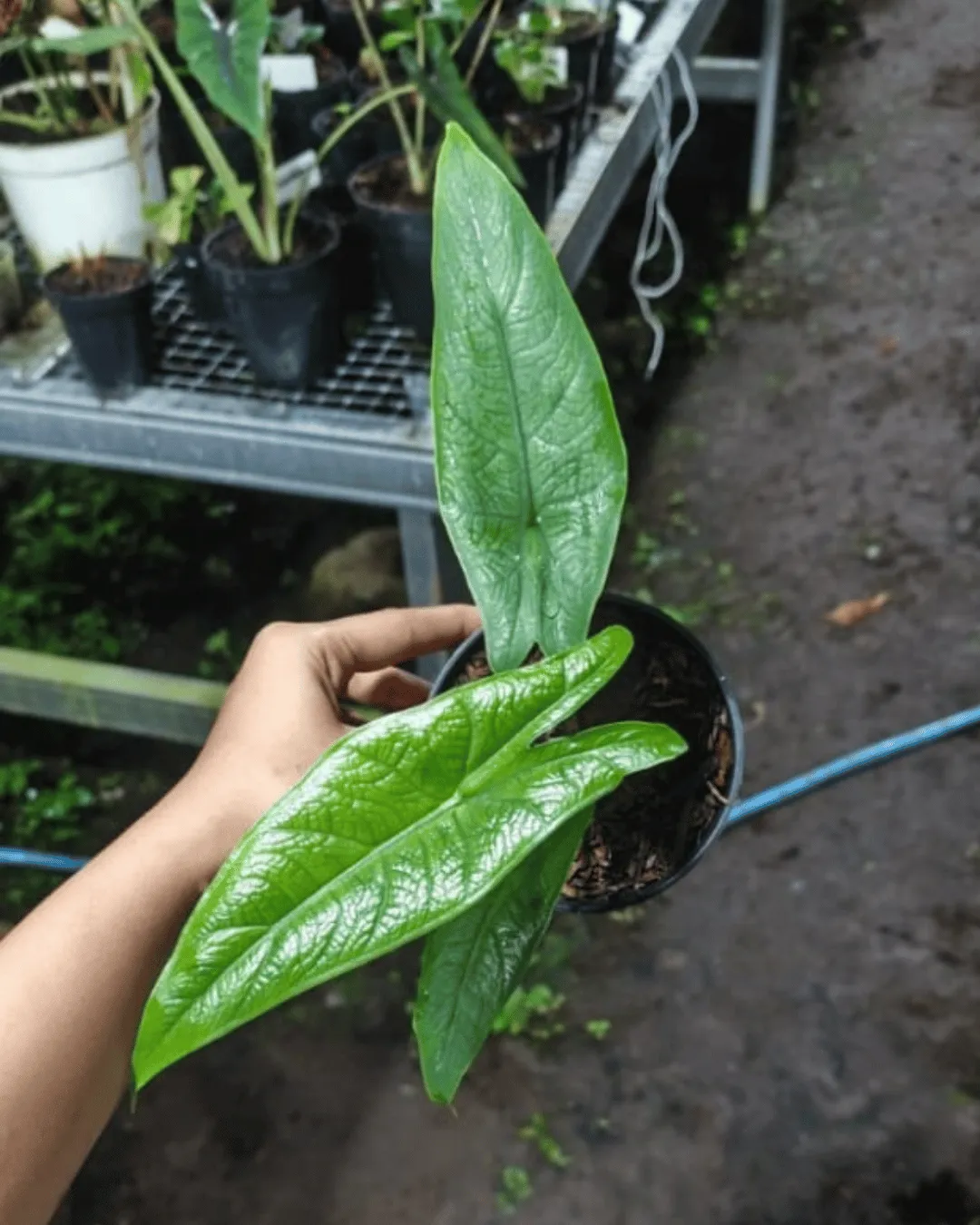
What Is Alocasia Karpet Sulawesi?
Alocasia karpet sulawesi is a rare and largely undescribed species from the tropical island of Sulawesi, Indonesia. It grows naturally in the shaded understory of humid rainforests. The plant thrives under a thick forest canopy where light is soft and filtered. Collectors prize it globally because it rarely appears in the commercial plant trade. Furthermore, its origin in the biodiversity-rich island of Sulawesi makes it truly one-of-a-kind. Sulawesi is home to a remarkable number of plant species found nowhere else on Earth. Consequently, any plant native to this island carries both scientific and collector interest. Additionally, Alocasia karpet sulawesi belongs to the large genus Alocasia, which contains around 90 accepted species across tropical Asia and Australia. Most of these species are rare in cultivation. Primarily, collectors and botanical enthusiasts seek this variety for its extraordinary leaf texture. Moreover, its compact yet bold growth form fits beautifully in both indoor and outdoor tropical garden settings. Induare Agro is proud to offer certified, fresh organic seeds of this exceptional Indonesian plant to buyers worldwide.
Aesthetic Features Alocasia Karpet Sulawesi
Few plants can match the visual drama of Alocasia karpet sulawesi. Its appearance is striking from the moment a new leaf unfurls. Furthermore, each growth stage reveals a new layer of beauty that seasoned collectors appreciate deeply.
Leaf Structure
The leaves of Alocasia karpet sulawesi are its most outstanding feature. They are broad, heart-shaped to arrow-shaped, and carry a deeply textured surface. Primarily, this surface texture gives the leaf a soft, carpet-like feel — which is exactly where the common name “karpet” (Indonesian for “carpet”) comes from. The upper side of each leaf is a rich, deep green. The leaf surface has a subtle, velvety quality that catches light at different angles. Additionally, prominent veins run across each leaf, creating a bold pattern. These veins are usually a slightly lighter green, creating strong visual contrast. The leaves can reach a considerable size as the plant matures. Furthermore, mature leaves tend to develop a more pronounced arrow shape over time. The overall effect is lush, tropical, and highly decorative.
Flower and Fruit
Like other members of the Alocasia genus, Alocasia karpet sulawesi produces a distinctive flower structure. This structure consists of a spadix — a finger-like spike carrying tiny flowers — and a spathe — a hood-like outer leaf that wraps around it. The flower is modest and inconspicuous compared to the spectacular foliage. Consequently, most growers cultivate this plant purely for its leaves. Fruit production is rare in cultivation. Moreover, fruiting typically occurs only in plants grown outdoors in warm, tropical conditions. The small berries, when produced, are red-orange and sit along the spadix. Primarily, the plant’s ornamental value lies entirely in its magnificent leaf display.
Dormancy Cycle
Alocasia karpet sulawesi grows from a corm — an underground storage organ, similar to a bulb, that holds water and nutrients. During cooler or drier periods, the plant may enter a dormancy phase. Additionally, this is completely normal and not a sign that the plant has died. During dormancy, the leaves may yellow and fall. Primarily, the corm remains alive underground and will reshoot when warmth and moisture return. Consequently, growers should reduce watering during dormancy. Moreover, they should keep the corm slightly warm and avoid letting it dry out completely. Once growing conditions improve, the plant rebounds vigorously.
Global Seed Delivery & Phytosanitary Certification
Induare Agro ships rare and exotic plant seeds to collectors in every corner of the world. Furthermore, every shipment meets the strictest international plant export standards. Buyers receive their seeds in full compliance with global phytosanitary regulations.
Packaging and Shipping
Induare Agro uses professional, protective packaging for every seed order. Additionally, seeds are carefully wrapped to maintain freshness and viability during long international transit. Every package ships via Global Express courier services. Consequently, delivery times are fast and tracking is available at every stage. Moreover, seeds are prepared fresh at the time of dispatch to ensure maximum germination potential. Each order also includes all required export documentation.
Buyer Peace of Mind
Every order from Induare Agro includes an official Phytosanitary Certificate. This certificate — an internationally recognized government-issued document — confirms that the seeds are free from pests and diseases. Furthermore, it allows legal entry into most countries around the world. Primarily, this protects the buyer from customs delays and legal complications. Additionally, Induare Agro works directly with Indonesian agricultural authorities to issue these certificates correctly. Consequently, you can import with full confidence and complete peace of mind. Moreover, our team is available to answer any questions about documentation requirements in your country.
How to Grow Alocasia Karpet Sulawesi
Growing Alocasia karpet sulawesi from seed is a rewarding process. Follow these steps for the best results.
Step 1 — Prepare Your Growing Medium Use a light, well-draining mix of potting soil, perlite, and coconut coir. Furthermore, ensure the container has drainage holes to prevent waterlogging.
Step 2 — Sow the Seeds Place seeds just beneath the surface of the moist growing medium. Additionally, do not bury them too deep — a depth of 1 cm is ideal.
Step 3 — Provide Warmth and Humidity Place the container in a warm spot with temperatures between 22°C and 28°C (72°F–82°F). Moreover, covering the pot with a clear plastic dome helps maintain humidity and speeds germination.
Step 4 — Provide Bright Indirect Light Position the seedlings near a bright window. Primarily, avoid direct sunlight, which can scorch the delicate young leaves.
Step 5 — Water Consistently Keep the growing medium moist but never waterlogged. Consequently, water when the top layer of soil feels slightly dry to the touch.
Step 6 — Fertilize During Active Growth Once seedlings establish, apply a balanced liquid fertilizer every two weeks. Furthermore, reduce feeding during any dormancy period.
Step 7 — Repot as the Plant Grows Transplant into a larger container once the roots begin to outgrow the current pot. Additionally, always use fresh, well-draining soil when repotting.
