What Is Amorphophallus prainii?
Amorphophallus prainii is a rare and protected aroid species endemic to the lowland tropical rainforests of North Sumatra, Indonesia. It belongs to the family Araceae — the same remarkable plant family as Monstera and Philodendron. This species grows in humid, shaded forest understories, often near rivers and on limestone soils. Furthermore, Indonesian law recognizes this plant as a protected species under Government Regulation No. 7/1999. That legal status reflects just how rare and ecologically valuable it truly is.
Collectors and botanical institutions around the world seek Amorphophallus prainii for its extreme rarity. It is found naturally across Indochina, peninsular Malaysia, and the Indonesian archipelago. Additionally, its range within Sumatra is limited, making wild populations small and highly localized. Consequently, access to viable, legally sourced seeds is extremely limited. Induare Agro sources these seeds responsibly and supplies them with full export documentation.
Moreover, this species offers a growth experience unlike any other aroid on the market. It grows from a corm — a swollen underground stem that stores energy and nutrients. The plant produces one dramatic leaf per year, followed by a striking inflorescence. Primarily for this reason, Amorphophallus prainii is a prized centerpiece in rare plant collections, botanical gardens, and high-end private greenhouses worldwide.
Aesthetic Features Amorphophallus prainii
Amorphophallus is one of the most visually spectacular genera in the entire plant kingdom. Amorphophallus prainii is a compact yet commanding species. It grows between 10 and 40 cm tall. Furthermore, every part of this plant commands attention — from its textured leaf stalk to its unusual and fleeting flower.
Leaf Structure Amorphophallus prainii
Amorphophallus prainii produces a single compound leaf each growing season. The leaf emerges directly from the underground corm — the swollen, bulb-like energy store. The leaf stalk is mottled and patterned, often resembling snakeskin. Additionally, the horizontal leaf blade divides into many smaller leaflets. This creates a lush, palm-like canopy effect. The entire leaf structure can reach an impressive height for such a compact plant. Primarily, this single leaf is the plant’s main energy-gathering tool for the entire growing year.
Flower and Fruit Amorphophallus prainii
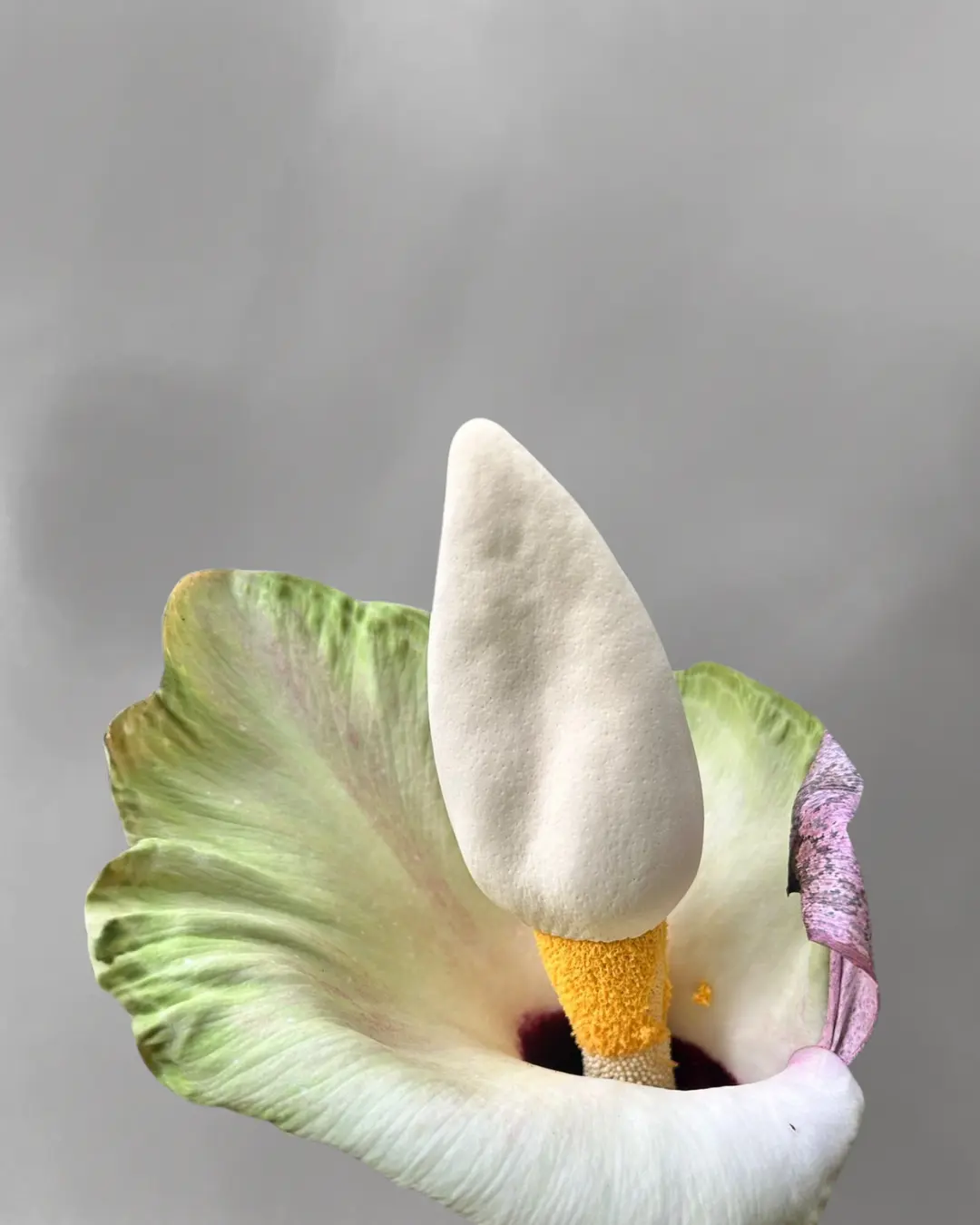
The inflorescence — the flower structure — is the most dramatic feature of Amorphophallus prainii. It appears before or independently of the leaf. The flower consists of two parts: a spathe — a hood-like outer leaf or bract — and a spadix — the central fleshy spike that holds the tiny true flowers. The spathe of A. prainii displays striking coloration, with maroon and white tones. Furthermore, the spathe emits a scent during its brief bloom period to attract pollinators such as carrion flies and beetles. This flowering event lasts only a few days. Consequently, witnessing it in person is a rare and unforgettable experience for any collector. After successful pollination, the plant develops small, rounded berries.
Dormancy Cycle
Amorphophallus prainii follows a dramatic and well-defined dormancy cycle. After the leaf completes its growing season, it yellows and dies back. The plant then retreats fully underground into the corm. Moreover, this dormancy period can last several months. During this time, the plant conserves all its energy for the next growth flush. Cultivators should reduce watering significantly during dormancy. Additionally, the corm should be stored in a dry, warm, and well-ventilated place. This cycle makes the plant a living seasonal spectacle in any collection.
Global Seed Delivery & Phytosanitary Certification
Induare Agro is committed to professional, legal, and reliable global seed export. Furthermore, we understand that international buyers need complete confidence when purchasing rare exotic seeds online. Every order is prepared with the highest standards of care and compliance.
Packaging and Shipping
Induare Agro ships all seeds via Global Express courier services. Consequently, delivery is fast and trackable from door to door. Each seed is carefully packaged to preserve freshness and germination viability during transit. Moreover, we use protective, moisture-controlled packaging materials designed for live plant material. Seeds arrive in optimal condition, ready for immediate planting. Additionally, every shipment comes with a Phytosanitary Certificate — an official government-issued plant health document required for legal plant import across most countries worldwide.
Buyer Peace of Mind
A Phytosanitary Certificate is not just a piece of paper. It is official proof that your seeds are free from pests, diseases, and contaminants. Furthermore, it is the required document for legal customs clearance in the United States, European Union, Australia, Japan, and most other importing nations. Induare Agro works directly with Indonesia’s official plant quarantine authority to issue this certificate for every order. Consequently, buyers never need to worry about shipments being held or rejected at customs. Moreover, our team handles all export paperwork on your behalf. You simply order — we handle the rest.
How to Grow Amorphophallus prainii
Growing Amorphophallus prainii is a rewarding experience. Follow these steps for the best results.
Step 1 — Choose Your Container Select a wide, shallow pot with good drainage holes. The pot should be at least 30 cm (12 inches) in diameter to give the corm room to expand.
Step 2 — Prepare Your Soil Mix Use a well-draining mix of equal parts peat moss, perlite, and coarse sand. Good drainage is essential. Waterlogged soil will cause the corm to rot.
Step 3 — Plant the Seed or Corm Sow seeds in a slightly acidic, moist seed-raising mix. Be patient — germination can take several months. Press seeds shallowly into the surface and keep the mix consistently moist.
Step 4 — Provide the Right Light Place your plant in bright, indirect light. Amorphophallus prainii thrives in partial shade. Avoid harsh direct midday sun, which can scorch the leaves.
Step 5 — Maintain Warmth and Humidity Keep temperatures between 18°C and 30°C (65°F–85°F). High humidity is essential. Use a humidifier or place the pot on a tray of pebbles and water to raise moisture levels around the plant.
Step 6 — Water During the Growing Season Water regularly when the top 2–3 cm of soil feels dry. Additionally, never let the pot sit in standing water. Consistent moisture encourages strong, healthy growth.
Step 7 — Fertilize Regularly Feed every 4–6 weeks with a balanced liquid fertilizer diluted to half strength. Primarily during the active growing season, this will support leaf development and corm enlargement.
Step 8 — Manage Dormancy When the leaf begins to yellow and die back, reduce watering gradually. Allow the soil to dry out almost completely. Furthermore, store the corm in a warm, dry place during dormancy. Resume watering when new growth appears.
© Induare Agro — Indonesia’s trusted source for rare exotic seeds and plants. All seeds are ethically sourced and supplied with full export documentation.


