
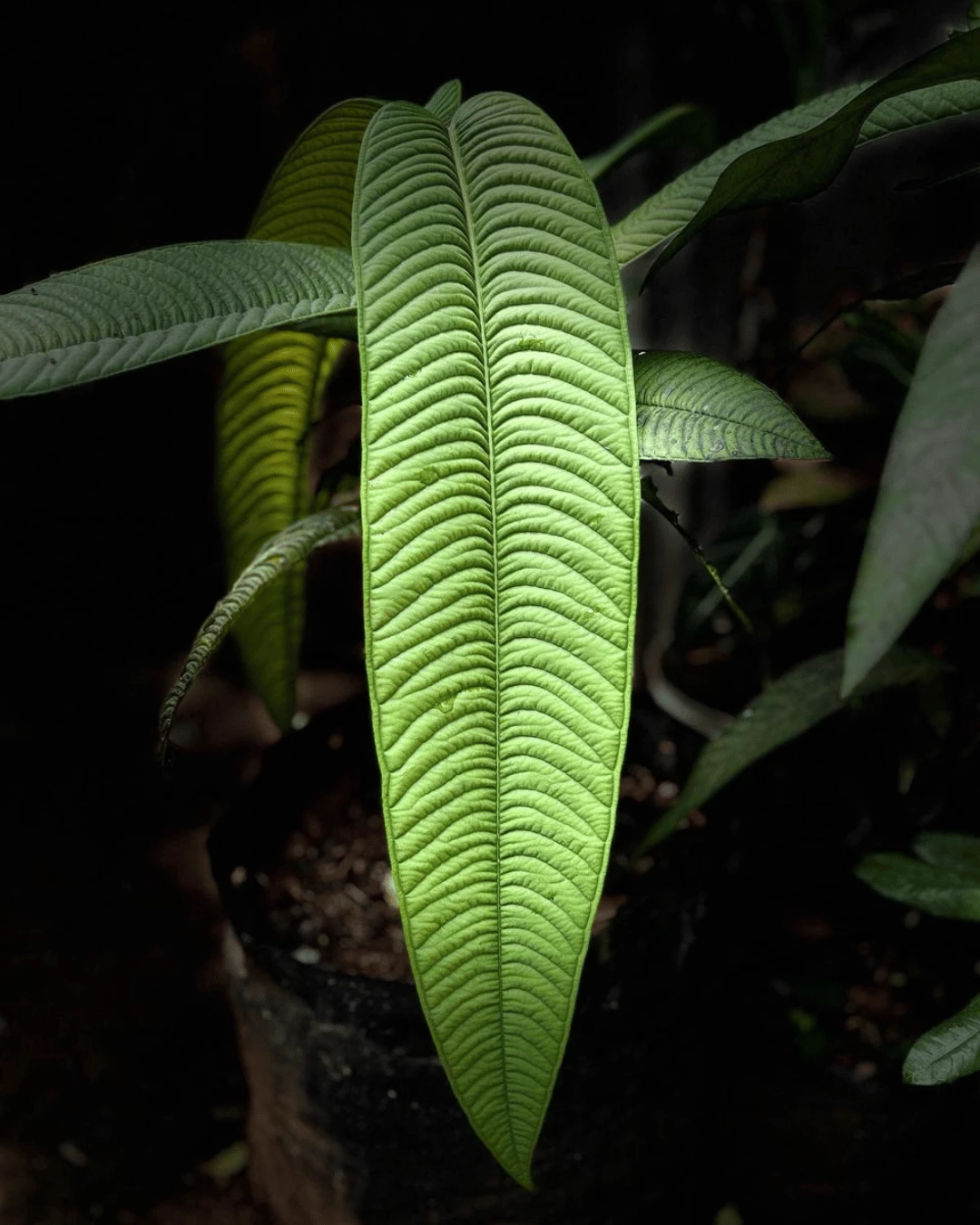
What Is Syzygium jiewhoei?
Syzygium jiewhoei is one of the rarest tropical trees on Earth. It grows naturally in the lowland rainforests of Kuala Kencana, near Timika, in Papua Province, Indonesia. Furthermore, it was only formally described as a new species in 2017. Three botanists from Indonesia and Singapore — G.G. Hambali, S. Sunarti, and Y.W. Low — made this discovery. They named the tree after Tan Jiew Hoe, a well-known supporter of botany and natural history in Singapore. Consequently, this species carries both scientific importance and a remarkable human story.
The tree reaches up to 9 metres in height in the wild. Additionally, it has a broad, conical crown that gives it a grand, architectural presence. Its bark is grayish-brown and peels in thin, papery layers. Moreover, the leaves are among the largest in the entire Syzygium genus. They can grow up to 105 cm long and 25 cm wide. Furthermore, young leaves emerge in a deep purple colour before turning bright green at maturity.
Induare Agro is one of the very few verified suppliers of authentic Syzygium jiewhoei seeds in the world. Additionally, all seeds are sourced directly from Papua, Indonesia — the plant’s only known native habitat. This makes Induare Agro the most trusted source for collectors who want genuine, origin-verified specimens.
Aesthetic Features Syzygium jiewhoei
Syzygium jiewhoei is a visually powerful tree. Every part of it — from the giant leaves to the trunk-borne flowers — makes a bold statement. Consequently, it has quickly become one of the most talked-about rare plants among serious collectors worldwide.
Leaf Structure
The leaves of S. jiewhoei are extraordinary in size. They can reach 105 cm in length and 25 cm in width. Furthermore, they have a prominent, grid-like vein pattern — a feature that makes them look almost like the leaves of Anthurium veitchii, a famous ornamental aroid. The leaves grow in opposite pairs on upright shoots. Additionally, when viewed from above, they appear to form two neat rows. Young leaves start out purple and turn a rich, glossy green as they grow. Primarily, this colour shift adds seasonal drama to the plant’s overall display.
Flowers and Fruit
S. jiewhoei is a cauliflorous tree. This means its flowers grow directly from the trunk — not from the branch tips. Furthermore, each cluster can contain up to 250 small white flowers. These blooms produce large amounts of nectar for up to three days after opening. Consequently, they attract Asian honey bees (Apis cerana) and stingless bees (Trigona laeviceps) in large numbers. This makes the tree a valuable plant for pollinator-friendly gardens.
After flowering, the tree produces fruit that are salmon-pink in colour. The fruit are oval to slightly ellipsoid in shape and have a light groove along one side. Additionally, each fruit holds a single seed. The fruit have a sour taste and are edible. Moreover, the vivid colour of the ripe fruit against the dark green canopy creates a truly spectacular display.
Crown and Bark
The tree develops a broad, conical crown as it matures. Primarily, this gives it a strong visual presence in any garden or landscape setting. The bark is grayish-brown and peels away in thin, papery sheets. Furthermore, this peeling texture adds a tactile and visual quality that collectors find highly appealing. Additionally, the overall growth habit is upright and well-structured, making it easy to train and display in a garden environment.
Global Seed Delivery & Phytosanitary Certification
Induare Agro is a professional botanical seed exporter based in Indonesia. The company specialises in rare Indonesian plant species. Furthermore, Induare Agro supplies collectors, botanical gardens, and research institutions across the world. Every order follows a strict export process. Consequently, buyers receive seeds that are legally cleared, fully documented, and ready to import.
Packaging and Shipping
Induare Agro packs every seed order with professional care. Each parcel includes moisture control materials to keep seeds viable during transit. Additionally, cushioned express packaging protects the seeds from physical damage. Shipments go out via Global Express couriers such as DHL and EMS. Furthermore, most international orders arrive within 5–14 business days. Every parcel includes the Phytosanitary Certificate and a commercial invoice. Primarily, this full documentation package ensures smooth customs clearance in most countries.
Buyer Peace of Mind
Every seed order from Induare Agro includes an official Phytosanitary Certificate. This document is issued by Indonesia’s Plant Health Authority. It confirms that the seeds are free from pests and disease. Consequently, it meets the import standards of customs authorities in the EU, USA, UK, Australia, Japan, and most other regulated markets. Furthermore, Induare Agro provides after-sales support to help growers at every stage. Additionally, every order is fully traceable from Papua to your door. Primarily, collectors can buy with confidence — knowing every step is legal, safe, and professionally managed.
How to Grow Syzygium jiewhoei
Syzygium jiewhoei is a tropical tree that grows best in warm, humid conditions. Furthermore, growers in tropical and subtropical regions will find it easiest to cultivate outdoors. Additionally, temperate growers can succeed with container growing in a heated greenhouse. Follow these steps for the best results:
Step 1 — Seed Preparation Soak the seed in warm water (25–30°C) for 24–48 hours before planting. Additionally, change the water once during soaking. This softens the outer coat and speeds up sprouting.
Step 2 — Growing Medium Use a rich, well-draining soil mix. Combine 60% quality potting soil with 40% perlite or coarse sand. Consequently, this blend holds enough moisture without becoming waterlogged.
Step 3 — Sowing Plant the seed 2–3 cm deep in a pot with drainage holes. Furthermore, keep the soil evenly moist throughout the sprouting stage. Do not let the soil dry out fully during this period.
Step 4 — Temperature and Humidity Keep the temperature between 24°C and 34°C for best results. Primarily, high humidity (70–85%) speeds up germination. Use a plastic humidity dome or place the pot inside a clear bag to hold moisture.
Step 5 — Light Place the pot in bright, indirect light after sprouting. Additionally, protect the seedling from harsh, direct afternoon sun. Strong sunlight can scorch the large young leaves.
Step 6 — Watering Water regularly during the active growing season. Let the top 2–3 cm of soil dry slightly between waterings. Furthermore, never leave the pot sitting in standing water. Root rot is the biggest risk for young trees.
Step 7 — Fertilising Apply a balanced liquid fertiliser (NPK 10-10-10) every four weeks during the growing season. Consequently, this supports strong leaf growth and healthy root development. Additionally, switch to a low-nitrogen fertiliser when the tree begins to flower.
Step 8 — Repotting Repot each year as the tree grows. Move to a larger container each time to allow the roots to expand. Furthermore, add fresh compost to the new pot to give the tree a boost of nutrients at the start of each season.
© Content produced for Induare Agro — Indonesia’s professional rare seed exporter.
