What Is Amorphophallus borneensis?
Amorphophallus borneensis is a rare and striking tuberous plant from the island of Borneo, Indonesia. It grows naturally in lowland rainforests at altitudes between 300 and 500 metres. Consequently, it thrives in warm, humid conditions beneath a dense tree canopy. This species is found exclusively in Borneo. Furthermore, it is listed in South Kalimantan as part of its confirmed native range. Collectors worldwide consider it one of the hardest Amorphophallus species to source legally. Induare Agro works directly with Bornean growers to make this possible. Additionally, every seed is fresh, verified, and ready to plant upon arrival. This is a genuine opportunity for any serious rare plant collector.
Aesthetic Features Amorphophallus borneensis
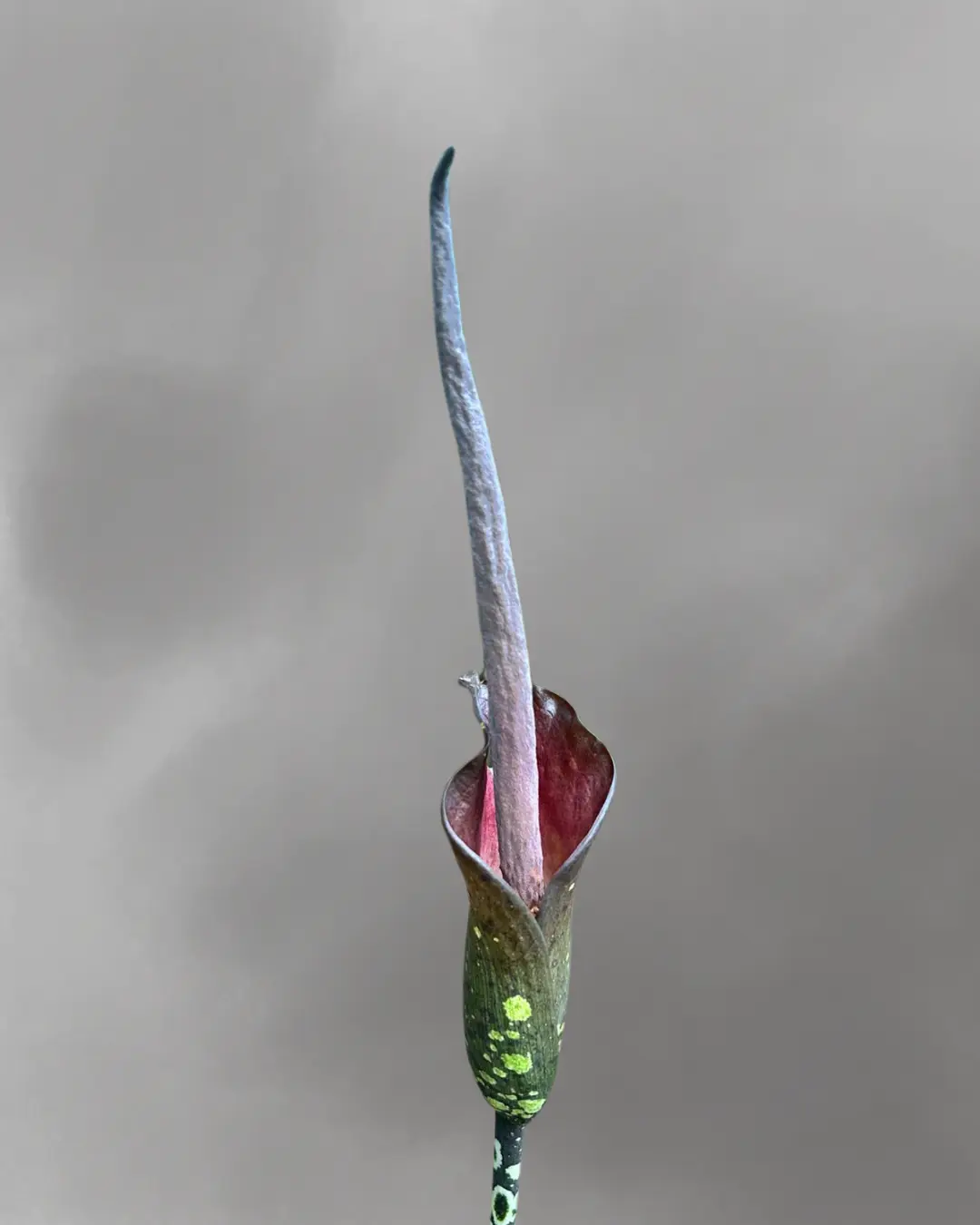
Amorphophallus borneensis is a visually dramatic plant. It stands out in any collection due to its large size and bold markings. The leaf stalk — called a petiole — is heavily mottled with pale patches. Furthermore, this mottled pattern sometimes looks like lichen growing on bark. Consequently, many growers describe it as one of the most visually striking petioles in the genus. The stalk can grow up to 6 feet (about 1.8 metres) tall in healthy conditions.
Leaf Structure Amorphophallus borneensis
The leaf sits at the top of the tall petiole. It spreads out in a wide, umbrella-like shape with deeply divided sections. Furthermore, in tropical conditions the full leaf can reach up to 180 cm in height. Only one leaf grows at a time. Additionally, each new leaf grows bigger than the one before. Primarily, this happens because the underground bulb — called a corm — stores more energy with every cycle. This slow, steady growth is one of the most fascinating traits of A. borneensis.
Flower and Fruit Amorphophallus borneensis
The flower of A. borneensis is one of its most dramatic features. It emerges directly from the ground before the leaf appears. The outer part — called a spathe, or hood-like outer leaf — is green to deep purple in colour. Furthermore, the inner spike — called a spadix — ranges from white to pink depending on its stage. The full flower structure can reach up to 8 feet (about 2.4 metres) tall. Consequently, it is one of the tallest inflorescences in the Amorphophallus genus. The flower releases a strong, fermented odour to attract flies and beetles as pollinators. After pollination, the plant produces orange-yellow fruits. Additionally, each fruit holds a single seed — which is exactly what Induare Agro carefully harvests and ships to collectors worldwide.
Dormancy Cycle
A. borneensis follows a natural annual rest cycle. The leaf grows, matures, and then dies back completely. Primarily, this is normal and healthy — not a sign the plant is dying. During this rest period, the corm stores energy underground. Furthermore, the plant will re-sprout on its own when conditions are right. Each rest cycle adds more mass to the corm. Additionally, a corm that weighs around 1 kg or more will eventually be large enough to produce its first flower. This can take several years, which is why patience is a key trait for any collector of this species.
Global Seed Delivery & Phytosanitary Certification
Induare Agro is a professional plant seed exporter based in Indonesia. The company specialises in rare and exotic Indonesian plant species. Furthermore, every seed order is handled with full export compliance from start to finish. Induare Agro is one of the very few suppliers able to legally export Amorphophallus borneensis seeds to international buyers.
Packaging and Shipping
Every order from Induare Agro includes an official Phytosanitary Certificate. This is a government-issued document from Indonesia’s Plant Health Authority. Consequently, it confirms the seeds are free from pests and disease. Furthermore, it satisfies the import rules of customs offices in the EU, USA, UK, Australia, Japan, and most other countries. Seeds are packed with moisture-control materials and cushioned express packaging. Additionally, all shipments go out via Global Express couriers such as DHL and EMS. Most international orders arrive within 5–14 business days.
Buyer Peace of Mind
Induare Agro follows a strict, fully legal export process on every order. Collectors never need to worry about confiscated parcels or missing documents. Furthermore, all paperwork — including the Phytosanitary Certificate and commercial invoice — travels with every shipment. Primarily, this guarantees smooth customs clearance at the destination. Additionally, the Induare Agro team provides after-sales support to help growers at every stage of cultivation.
How to Grow Amorphophallus borneensis
Growing Amorphophallus borneensis takes patience and consistency. Furthermore, it is suitable for growers in tropical, subtropical, and temperate climates — as long as warmth and humidity are provided. Follow these steps for the best results:
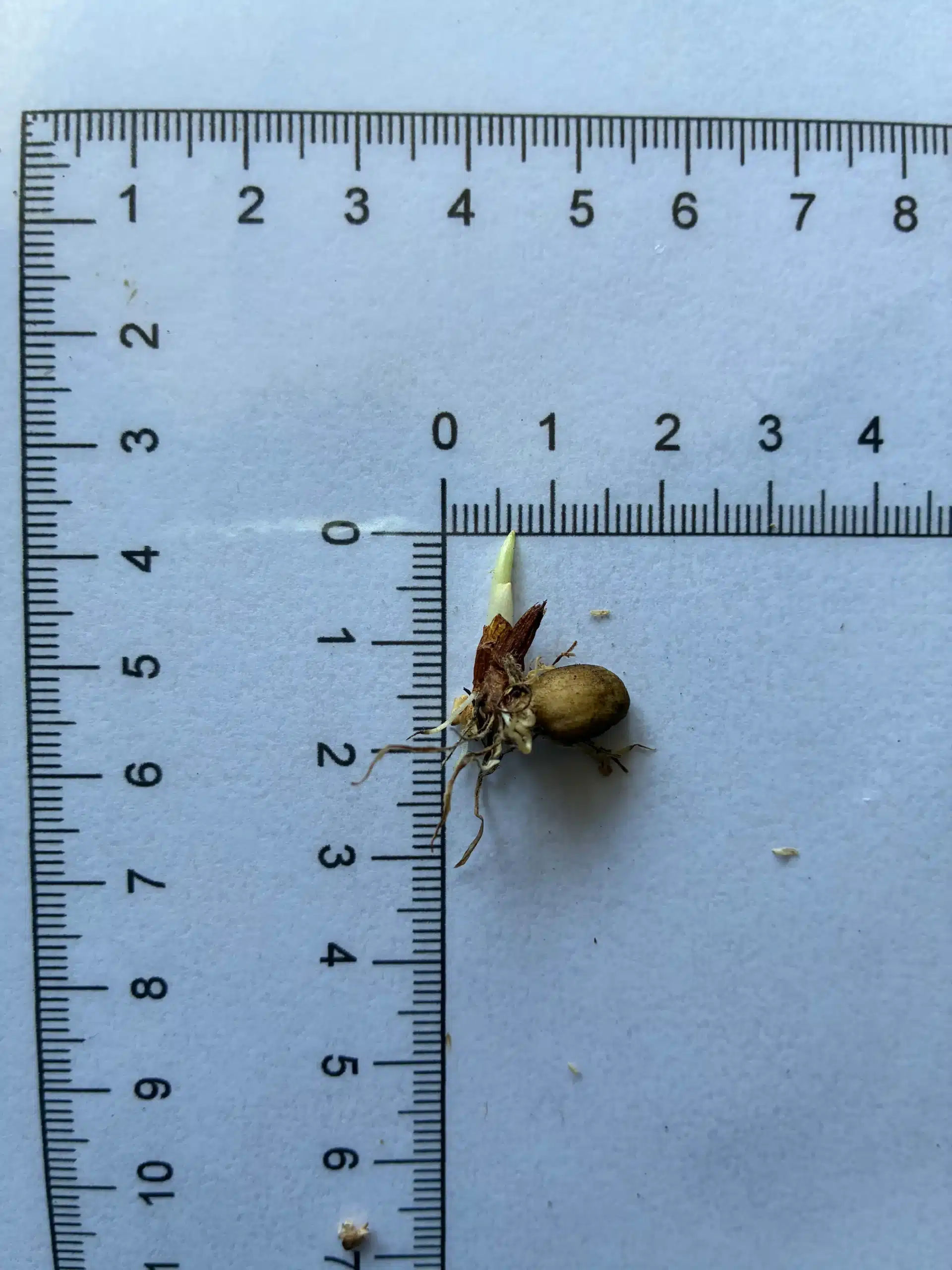
Step 1 — Seed Preparation Soak the seed in warm water (25–30°C) for 24–48 hours before planting. Additionally, lightly scratch the seed coat with fine sandpaper to help water enter faster.
Step 2 — Growing Medium Mix 50% potting soil, 30% bark chips or perlite, and 20% compost. Consequently, this mix drains well and prevents root rot. Good drainage is essential for all Amorphophallus species.
Step 3 — Sowing Plant the seed 2–3 cm deep in a pot with drainage holes. Furthermore, keep the soil moist but never waterlogged throughout the sprouting stage.
Step 4 — Temperature and Humidity Maintain a temperature of 25–30°C for best results. Primarily, high humidity (60–80%) speeds up germination significantly. Use a humidity dome or a clear plastic cover over the pot.
Step 5 — Light Place the pot in bright, indirect light. Additionally, avoid direct sunlight during the early stage. Strong sun can stress the young seedling and slow its growth.
Step 6 — Watering Water moderately during active growth. Let the top 2–3 cm of soil dry out slightly between waterings. Furthermore, never let the pot sit in a tray of standing water. Root rot is the most common reason this plant fails.
Step 7 — Dormancy Care When the leaf yellows and collapses, this is the start of dormancy. Consequently, reduce watering to once a month — only when the soil is very dry. Do not discard the pot. The corm is alive underground and will re-sprout on its own.
Step 8 — Repotting and Feeding Repot each year at the start of a new growth cycle. Move to a slightly larger pot each time. Additionally, apply a balanced organic fertiliser (NPK 10-10-10) at the start of the growing season. This helps the corm grow heavier and closer to flowering size.


