What Is Amorphophallus infundibuliformis?
Amorphophallus infundibuliformis is a rare tuberous plant from the Araceae family. It originates from the tropical rainforests of Borneo, specifically Sarawak and West Kalimantan. This species grows in the wet tropical lowland biome. Furthermore, it is one of the few white-flowered Amorphophallus species identified in that region. Unlike common aroids, this plant thrives on a wide variety of soil types. Consequently, it avoids limestone substrates entirely, making it biologically distinct from its close relatives.
This species is locally abundant in parts of Sarawak. However, it remains virtually unknown outside specialist botanical circles. Additionally, its funnel-shaped flower structure gives it the Latin name infundibuliformis, meaning “funnel-formed.” This trait makes it instantly recognisable among collectors. Moreover, access to genuine seeds is extremely limited. Primarily, dedicated plant hunters and rare-seed enthusiasts seek this species for its scientific and aesthetic uniqueness.
Induare Agro is proud to offer export-quality seeds of this remarkable Indonesian plant. Furthermore, every seed is harvested fresh, handled with care, and prepared for safe international delivery.
Aesthetic Features Amorphophallus infundibuliformis
The physical appearance of Amorphophallus infundibuliformis is striking and highly distinctive. Each feature sets it apart from ordinary tropical plants. Consequently, collectors with a passion for exotic flora will find this species deeply rewarding to grow and observe.
Leaf Structure Amorphophallus infundibuliformis
The plant produces a single leaf per growing season. This is a common trait in all Amorphophallus species. The leaf grows on a tall petiole — a long upright stalk. Additionally, the petiole of A. infundibuliformis is highly diagnostic. It features raised white wart-like growths on its surface. Furthermore, the leaf blade is divided into multiple ascending leaflets. These leaflets spread outward from a central point, creating an elegant, umbrella-like canopy. The overall leaf structure is bold and architectural. Primarily, it adds dramatic visual interest to any garden space or greenhouse.
Flower and Fruit Amorphophallus infundibuliformis
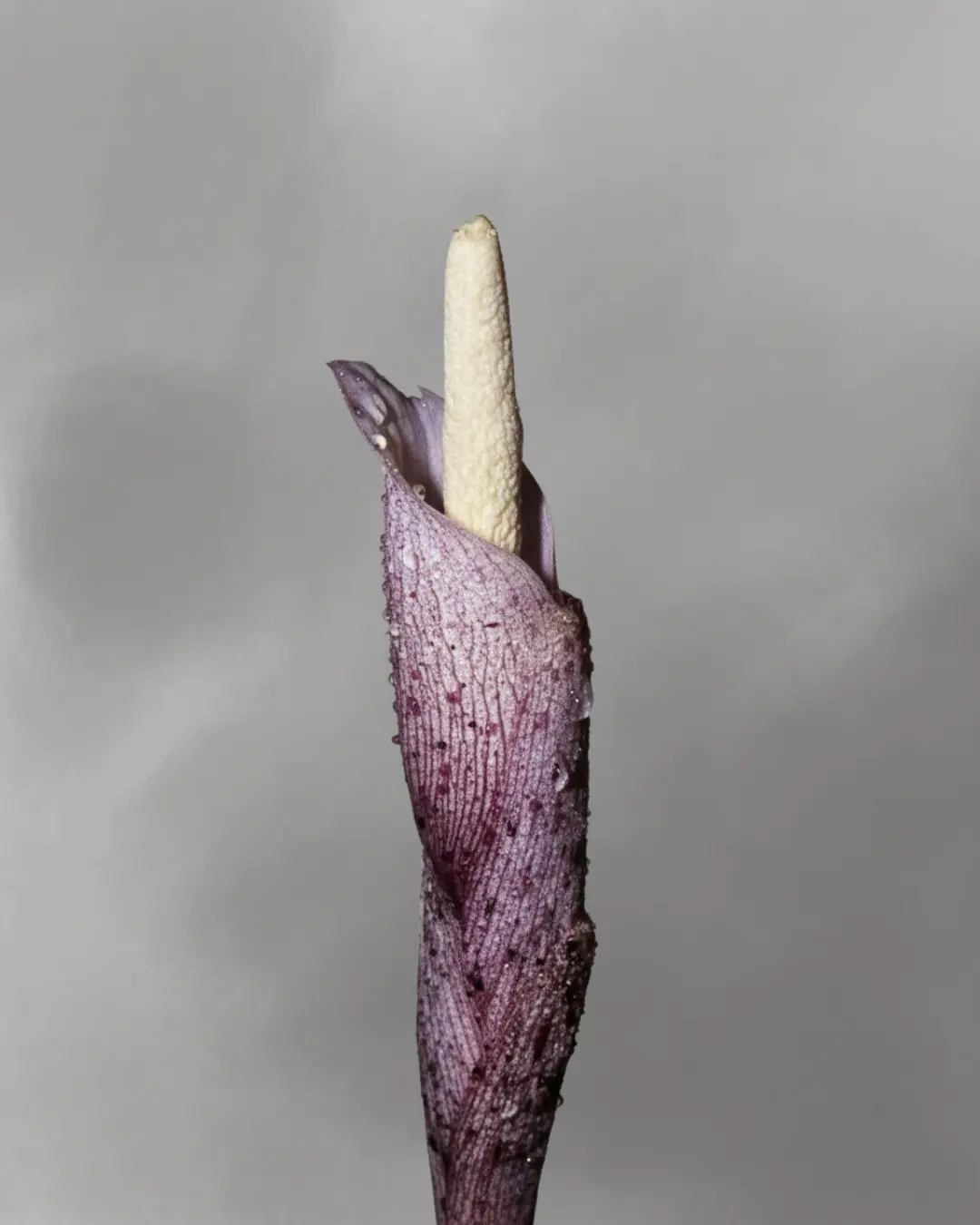
The flower of Amorphophallus infundibuliformis is composed of two main parts. The first is the spathe — a hood-like outer leaf that wraps around the flower. In this species, the spathe is white and forms a distinctive funnel shape when erect. Consequently, this funnel form is the key visual feature that gives the species its name. The second part is the spadix — a central spike that holds the tiny individual flowers. Moreover, the spadix appendix is covered with hooked staminodes — small, hook-shaped structures. These are visible only when the spathe is opened. Additionally, the male flowers are arranged in rows along the upper spadix. The female flowers sit at the lower base. After pollination, the plant produces fleshy berries. Furthermore, these berries are a vital part of its seed dispersal in the wild.
Dormancy Cycle
Amorphophallus infundibuliformis follows a clear seasonal dormancy cycle. The plant produces one leaf at a time. That leaf feeds the underground corm — a rounded, starch-storing tuber — for an entire growing season. Consequently, the leaf dies back naturally at the end of the season. The corm then enters a dormant rest period. Moreover, this dormancy is completely normal and expected. After resting, the corm sends up either a new leaf or, in mature plants, a flower spike. Primarily, the cycle of leaf, dormancy, and re-emergence is one of the most fascinating aspects of growing this plant. Additionally, growers find this predictable cycle easy to manage with basic horticultural knowledge.
Global Seed Delivery & Phytosanitary Certification
Induare Agro takes global seed delivery seriously. Every order is prepared with strict attention to quality and legal compliance. Furthermore, the goal is to ensure your seeds arrive safely, legally, and in perfect condition — wherever you are in the world.
Packaging and Shipping
Each seed is carefully cleaned and moisture-checked before packing. Induare Agro uses professional packaging designed for international transit. Additionally, all shipments travel via Global Express courier services. Consequently, delivery is fast, trackable, and reliable. Moreover, every package includes a valid Phytosanitary Certificate. This certificate is an official government-issued plant health document. It confirms that the seeds are free from pests and disease. Furthermore, it meets the import biosecurity requirements of most countries worldwide. Primarily, this ensures a smooth, hassle-free customs clearance for the buyer.
Buyer Peace of Mind
Induare Agro is a trusted supplier of rare Indonesian and exotic plant seeds. Additionally, every seed lot passes quality inspection before dispatch. Consequently, buyers receive only fresh, viable, export-grade seeds. Furthermore, the Phytosanitary Certificate protects both the buyer and the shipment at the border. Moreover, the team at Induare Agro provides responsive customer support. Primarily, the mission is to connect rare plant lovers worldwide with authentic seeds from Indonesia. This is genuine export-quality service, backed by real botanical expertise.
How to Grow Amorphophallus infundibuliformis
Follow these steps to successfully germinate and grow your Amorphophallus infundibuliformis seed.
Step 1 – Soak the Seed Soak the fresh seed in warm water for 24 hours before planting. This softens the seed coat and encourages faster germination.
Step 2 – Prepare the Growing Mix Use a rich, well-draining mix of coco peat, perlite, and orchid bark. The mix must stay moist but must never become waterlogged.
Step 3 – Plant the Seed Plant the seed just below the soil surface, approximately 1–2 cm deep. Place the pot in a warm spot with indirect light and high humidity.
Step 4 – Maintain Warmth and Moisture Keep the temperature between 22°C and 30°C at all times. Water regularly to maintain consistent moisture without causing root rot.
Step 5 – Watch for Sprouting Germination typically occurs within 2–6 weeks under good conditions. Additionally, patience is important — some seeds may take slightly longer.
Step 6 – Transition to a Larger Pot Once the first leaf has fully opened, move the young plant to a larger container. Furthermore, begin a light fertiliser regime every two weeks to support corm development.
Step 7 – Respect the Dormancy Period When the leaf yellows and dies back, reduce watering significantly. Allow the corm to rest in dry soil until the next growth cycle begins.
