What Is Amorphophallus konjac?
Amorphophallus konjac is one of the most remarkable plants in the Araceae family. It is widely known by several names — Devil’s Tongue, Voodoo Lily, and Konjac. Furthermore, it is the only member of its genus that has been widely grown as both an ornamental plant and a food crop. The plant is native to the forest margins and open woodlands of East Asia. Its natural range covers southern China, Japan, Vietnam, and extends south into parts of Indonesia and Southeast Asia. Consequently, it has thrived for centuries across a wide belt of subtropical and tropical climates.
Collectors around the world prize this species for its spectacular size, unusual appearance, and botanical depth. Additionally, its underground storage organ — called a corm — contains glucomannan. This is a natural dietary fibre used in food products such as konjac noodles, jellies, and health supplements across Japan and China. Furthermore, mature corms can reach up to 28 cm in diameter. This makes the plant impressive both above and below ground.
Induare Agro offers fresh, certified seeds of this extraordinary species. Additionally, every order comes fully documented with a Phytosanitary Certificate. This makes Induare Agro one of the very few suppliers worldwide able to ship this plant legally and reliably to collectors across the globe.
Aesthetic Features Amorphophallus konjac
Amorphophallus konjac is a visually striking plant at every stage of its life cycle. Its physical features are bold, architectural, and unlike almost anything else in the plant world. Furthermore, the contrast between its leaf stage, flower stage, and dormancy makes it one of the most dynamic plants a collector can grow.
Leaf Structure Amorphophallus konjac
The plant produces a single leaf each growing season. This leaf sits on a tall stalk — called a petiole — that can reach 1.2 to 1.5 metres in height. Furthermore, the petiole is covered in a distinctive pattern of pale pink and olive green mottled spots. This gives it a snake-like, almost reptilian appearance. Consequently, the leaf blade spreads out from the top of this stalk in a wide, umbrella-like shape. It divides into many smaller leaflets. Together, they form a lacy, deeply cut canopy that can reach up to 1.2 metres across. Additionally, the overall silhouette of the plant is bold and architectural. It makes a strong visual statement in any garden or indoor collection.
Flower and Fruit Amorphophallus konjac
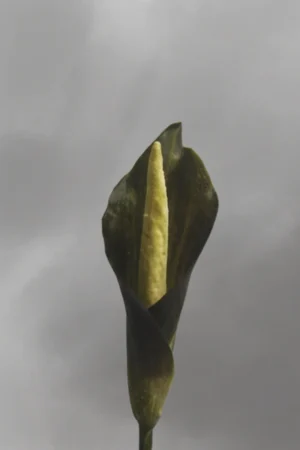
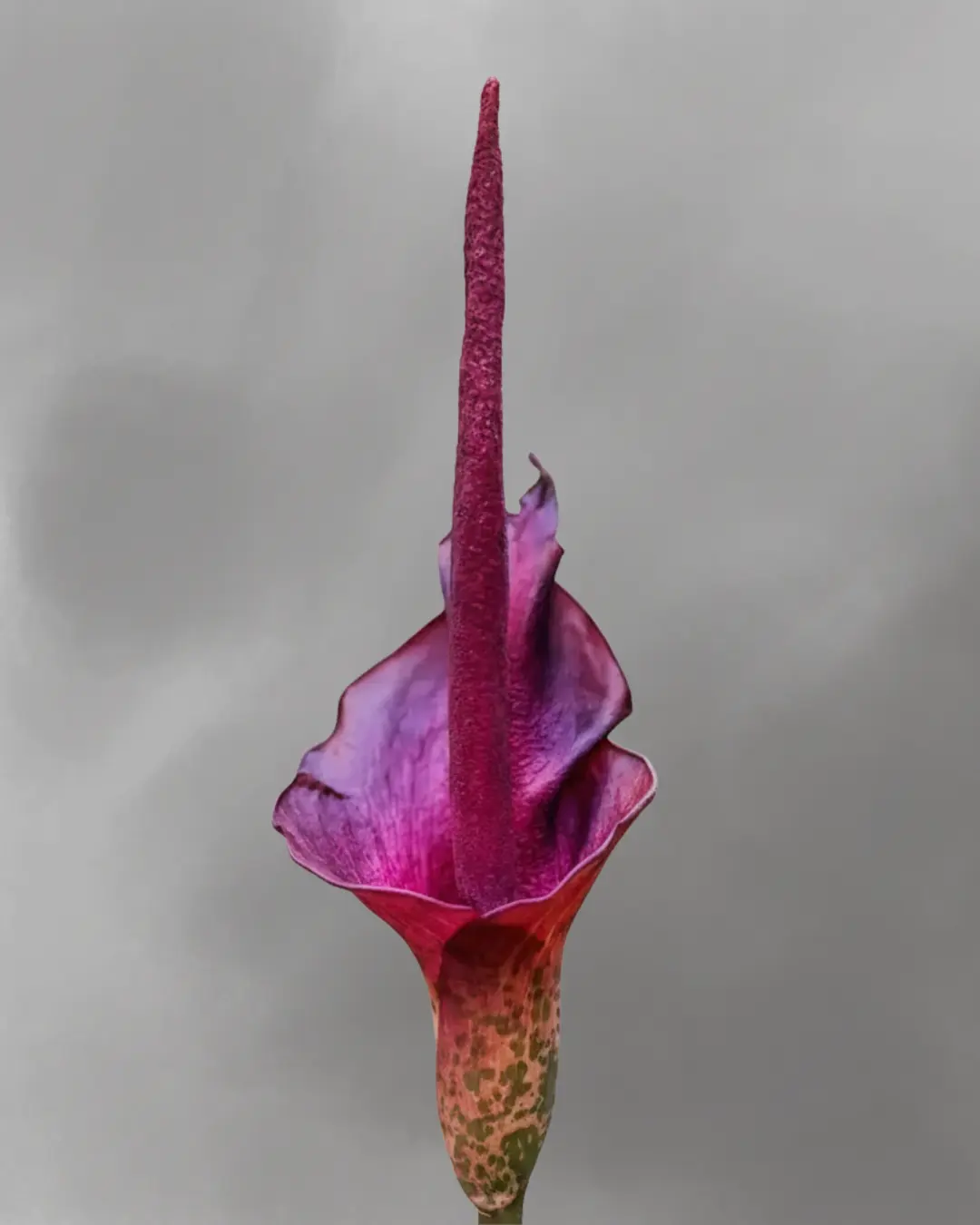
When the corm — the round underground storage bulb — reaches full maturity, the plant produces a large flower before the leaf appears. This flower structure is called an inflorescence. It consists of two parts: a pale purple to dark maroon outer hood called a spathe, and a tall central spike called a spadix. Furthermore, the full flower can reach 90 cm to 1.2 metres in height. The inflorescence releases a strong smell of rotting flesh. Primarily, this odour attracts flies and beetles, which pollinate the plant. Consequently, this dramatic, odour-producing bloom is one of the most talked-about events in the world of exotic plant collecting. After pollination, the plant produces clusters of bright red and orange berries. Each berry contains a single seed.
Dormancy and Corm Growth
A. konjac follows a clear yearly cycle. The leaf grows through spring and summer. It then dies back in autumn as the plant enters a rest period called dormancy. Furthermore, this rest period is essential for the corm to store energy for the next season. Additionally, the corm grows larger with each passing year. A young plant may take three to five years to reach flowering size. Primarily, this slow, steady growth is part of what makes A. konjac so rewarding for committed collectors. Each year brings a bigger, more impressive plant than the one before.
Global Seed Delivery & Phytosanitary Certification
Induare Agro is a professional botanical seed exporter based in Indonesia. The company is fully dedicated to supplying rare and exotic plant seeds to collectors, researchers, and growers worldwide. Furthermore, Induare Agro operates with full legal compliance on every order. Each shipment of Amorphophallus konjac seeds comes with an official Phytosanitary Certificate. This document is issued by Indonesia’s government Plant Health Authority. It confirms that the seeds are fully free from pests and disease. Consequently, it satisfies the plant import requirements of customs offices in the EU, USA, UK, Australia, Japan, and most other countries worldwide.
Packaging and Shipping
Induare Agro carefully packs every seed order before dispatch. Moisture control materials protect the seeds throughout the journey. Additionally, cushioned express packaging prevents physical damage in transit. All orders ship via Global Express courier services, such as DHL and FedEx. Furthermore, most international orders arrive within 5 to 14 business days. Every parcel includes the full set of export documents. This includes the Phytosanitary Certificate and the commercial invoice. Primarily, this complete documentation approach ensures a smooth and fast customs clearance process at every destination.
Buyer Peace of Mind
Induare Agro puts legal compliance first. Collectors never need to worry about confiscated parcels or undocumented plant material. Furthermore, every order is fully traceable from the point of packing in Indonesia to delivery at the collector’s door. Additionally, the Induare Agro team provides after-sales support to help growers at every stage. Primarily, this commitment to service sets Induare Agro apart as a trusted and professional supplier of rare Indonesian plants worldwide.
How to Grow Amorphophallus konjac
Growing Amorphophallus konjac from seed is a highly rewarding experience. Furthermore, the plant adapts well to tropical, subtropical, and temperate climates when grown in containers. Follow these steps for the best results:
Step 1 — Seed Preparation Soak the seed in warm water (25–30°C) for 24–48 hours before planting. Additionally, lightly scratch the outer seed coat with fine sandpaper. This helps water enter the seed and speeds up sprouting.
Step 2 — Growing Medium Mix 50% good-quality potting soil, 30% perlite or coarse sand, and 20% compost. Consequently, this mix drains well while holding enough moisture. It gives the developing corm the nutrients it needs to grow.
Step 3 — Sowing Plant the seed 2–3 cm deep in a pot with drainage holes at the bottom. Furthermore, keep the soil consistently moist — but never waterlogged — throughout the sprouting stage.
Step 4 — Temperature and Humidity Keep the temperature between 20°C and 30°C at all times. Primarily, warm conditions are essential for successful germination. A humidity level of 60–80% will help the seed sprout faster and more reliably.
Step 5 — Light Place the pot in a spot with bright, indirect light. Additionally, avoid direct afternoon sun at all times. Strong sunlight can scorch the young seedling and stress the growing corm below the soil.
Step 6 — Watering Water the plant regularly during the active growing season — spring through summer. Furthermore, let the top 2–3 cm of soil dry out slightly between each watering. Never let the pot sit in a pool of standing water, as this causes root rot.
Step 7 — Dormancy Care When the leaf turns yellow and falls, stop watering almost completely. Consequently, the corm needs a cool, dry rest through the winter months. Do not discard the pot. The corm will sprout again on its own when temperatures rise in spring.
Step 8 — Repotting and Feeding Repot the plant each year at the start of a new growing season. Move it to a slightly larger pot each time. Additionally, apply a slow-release organic fertiliser (NPK 10-10-10 or similar) at the start of the growing season. Furthermore, A. konjac is a heavy feeder. Regular feeding through the growing season produces larger corms and a more dramatic plant overall.
© Induare Agro — Indonesia’s professional rare seed exporter.