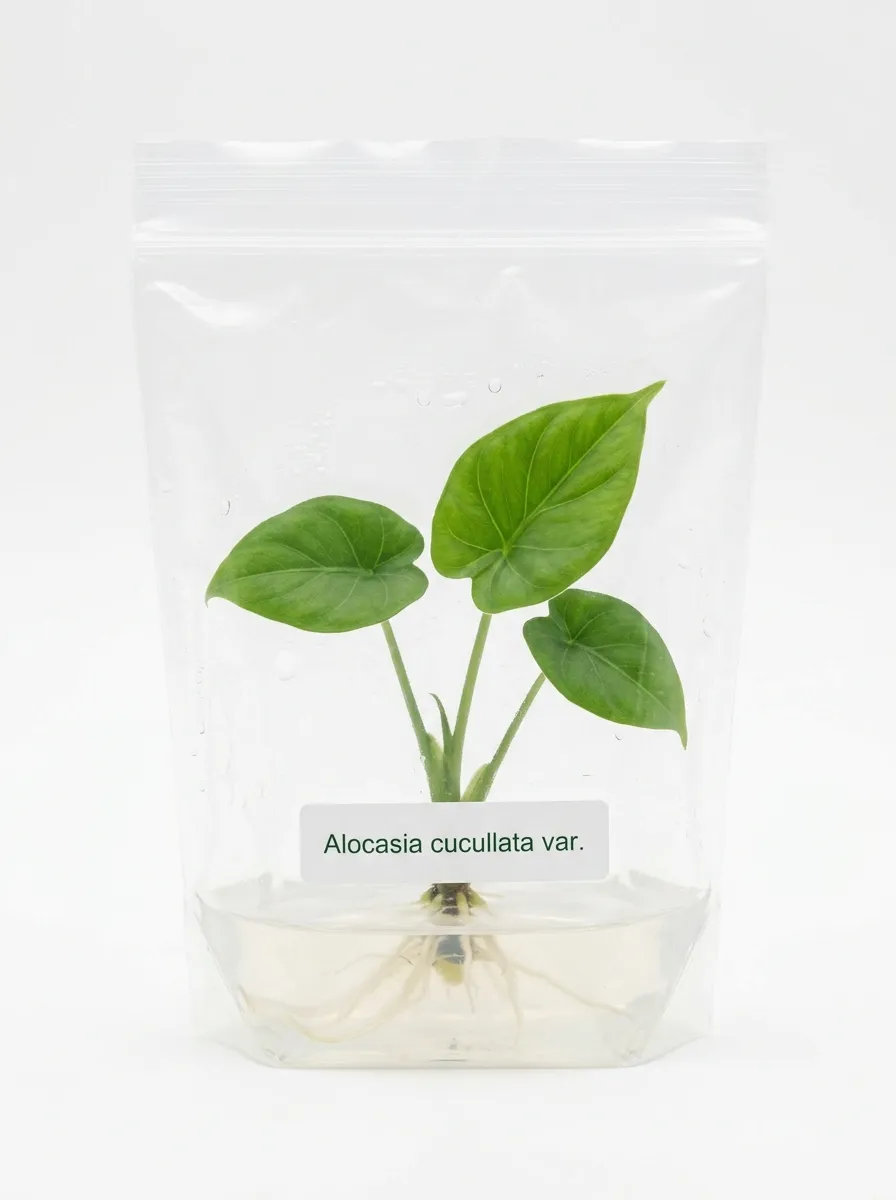
What Is Alocasia cuculata Tissue Culture?
Alocasia cuculata tissue culture refers to a plantlet grown from sterile lab propagation rather than field cuttings. This species originates from the tropical forests of Southeast Asia, including Vietnam and southern China. Additionally, it thrives naturally in warm, humid, shaded understory conditions. Wild populations remain limited, which makes clean, lab-grown stock highly valuable to collectors. Consequently, growers worldwide seek this variety for its rarity and reliable genetics.
Aesthetic Features Alocasia cuculata Tissue Culture
This species belongs to the genus Alocasia, a group known for bold, arrow-shaped leaves and dramatic foliage texture. Furthermore, Alocasia cuculata stands out among collectors for its compact size and unique leaf shape.
Leaf Structure Alocasia cuculata Tissue Culture
The leaves grow in a distinct hood-like or heart-shaped form. Additionally, thick veins run visibly across the leaf surface, adding texture and depth. Each leaf sits on a sturdy, upright petiole — the stalk connecting leaf to stem. This structure gives the plant a neat, architectural appearance.
Color and Pattern Alocasia cuculata Tissue Culture
Mature leaves display a deep green color with a slight glossy sheen. Moreover, new growth often emerges lighter in shade before darkening over time. The surface stays smooth, without heavy silver or bronze patterning found in other Alocasia types. This simplicity makes the species easy to match with any indoor plant collection.
Growth Habit Alocasia cuculata Tissue Culture
Alocasia cuculata grows as a compact clumping plant with multiple stems. Consequently, it stays manageable in size, making it suitable for small spaces. The plant produces new shoots steadily under warm and humid conditions. Primarily, this habit makes it a popular choice for tabletop or shelf display.
Why Choose Tissue Culture Over Seeds or Cuttings
Tissue culture propagation offers clear advantages over traditional seeds or stem cuttings. Furthermore, this method produces plantlets in a fully controlled, sterile lab environment.
Genetic Consistency
Every tissue culture plantlet shares identical genetics with its parent plant. This trait, called true-to-type, means buyers know exactly what leaf shape and color to expect. Additionally, this consistency removes the guesswork common with seed-grown plants. Consequently, collectors can trust the appearance of their mature plant in advance.
Disease-Free Guarantee
Lab propagation eliminates common soil pathogens and pest eggs entirely. Moreover, each plantlet grows inside a sterile container until shipping day. This process — known as in-vitro culture, meaning growth inside a sealed glass or plastic vessel — keeps the plant clean from start to finish. Buyers receive a plant with a strong, healthy starting point.
Global Plantlet Delivery & Phytosanitary Certification
Induare Agro ships living tissue culture plants safely to collectors around the world. Furthermore, every shipment follows strict international plant health regulations.
Packaging and Shipping
Each plantlet stays sealed inside its original sterile pouch until it reaches the buyer. Additionally, Induare Agro uses moisture-controlled packaging to protect the plant during transit. Orders ship through trusted global express couriers for fast delivery. Consequently, buyers receive their plantlet fresh and ready for acclimatization.
Buyer Peace of Mind
Every shipment includes an official Phytosanitary Certificate — a document confirming the plant is pest-free and approved for legal export. Moreover, this certificate allows smooth customs clearance in most countries. Induare Agro stands behind every plantlet with full transparency and care.
How to Acclimatize Alocasia cuculata
Step 1: Open the sterile pouch carefully in a clean, indoor space. Avoid direct sunlight during this first step.
Step 2: Rinse the roots gently with lukewarm water to remove leftover agar gel. This gel is the sterile growing medium used during lab propagation.
Step 3: Plant the plantlet into a light, well-draining seedling mix. Keep the surrounding humidity high during the first two weeks.
Step 4: Place the plant in bright, indirect light away from direct sun. Consequently, the leaves avoid scorching while adjusting to open air.
Step 5: Gradually reduce humidity levels over two to four weeks. This process — called acclimatization, meaning the plant’s adjustment to normal air conditions — helps the plantlet grow strong for long-term care.


