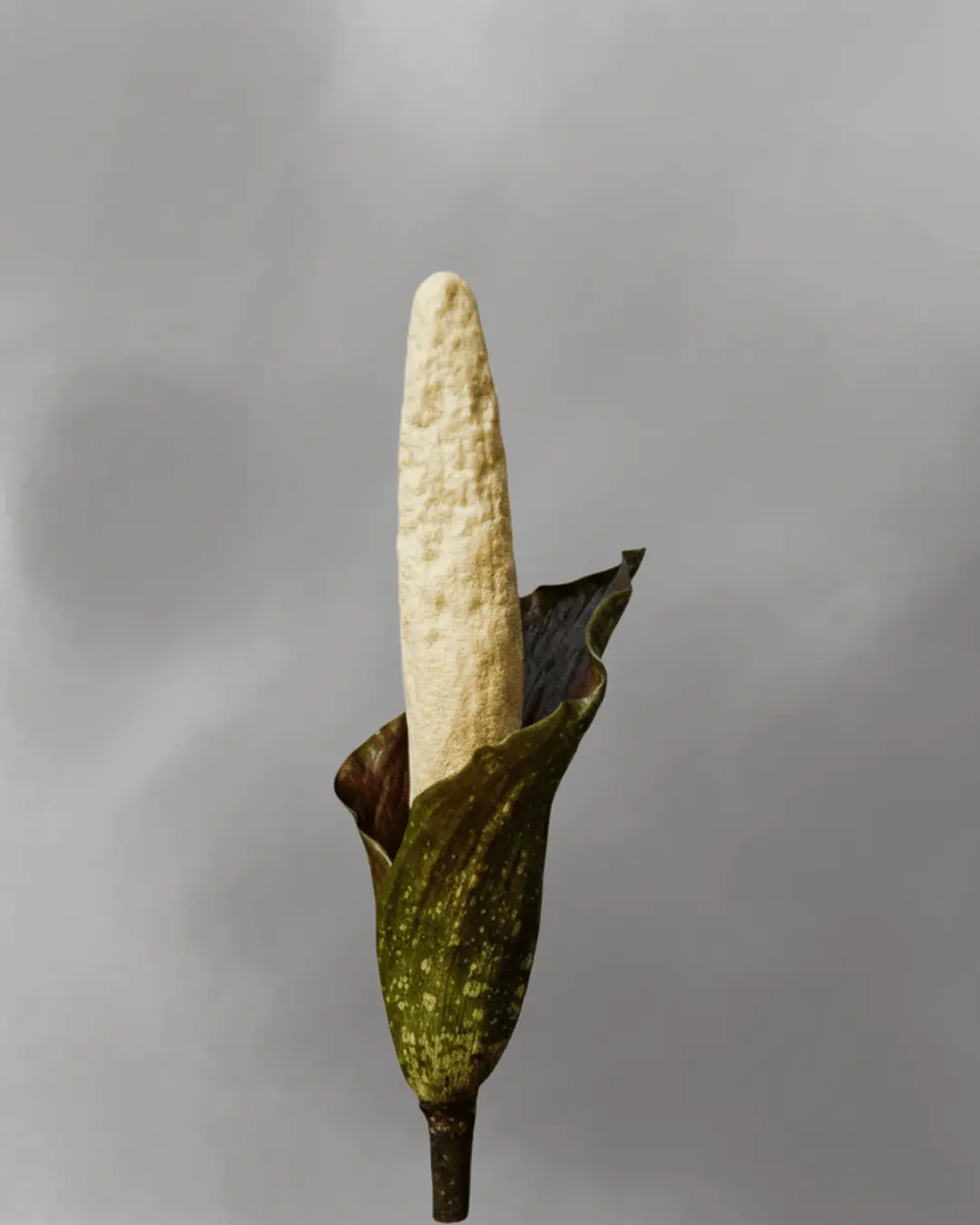
What Is Amorphophallus discophorus?
Amorphophallus discophorus is an extraordinarily rare tropical aroid. It belongs to the family Araceae. This species grows natively on the slopes of Mount Wilis in Kediri Regency, East Java, Indonesia. It thrives at elevations between 600 and 1,300 metres above sea level. Consequently, its natural habitat is a narrow band of wet tropical forest on a single volcanic mountain.
Botanists consider Amorphophallus discophorus rarer than even the famous Amorphophallus titanum — the world-renowned corpse flower. Several scientific surveys have failed to locate living wild populations. As a result, researchers now regard it as presumed extinct in the wild. Additionally, deforestation and habitat conversion over recent decades have drastically reduced its natural range.
This makes cultivated seeds of Amorphophallus discophorus genuinely precious. Collectors, botanical gardens, and conservation programmes worldwide actively seek this species. Furthermore, its extreme rarity gives every seed exceptional value. Induare Agro sources these seeds responsibly from cultivated plants. Moreover, all seeds come with full export documentation, ensuring a safe and legal journey to your door.
Aesthetic Features Amorphophallus discophorus
Amorphophallus is a genus of roughly 200 tropical tuberous plants. Many species are visually dramatic. Amorphophallus discophorus, however, stands apart even within this remarkable group. It displays a combination of striking leaf architecture, a dramatic flower structure, and a fascinating seasonal growth cycle.
Leaf Structure Amorphophallus discophorus
The plant produces a single, large compound leaf per growing season. This leaf rises from a central underground corm — a swollen, rounded stem base that stores energy. The petiole — the stalk connecting the leaf to the corm — is tall, smooth, and distinctively patterned. It often shows mottled green and cream markings, typical of the genus.
Primarily, the leaf blade divides into multiple leaflets in a complex, spreading arrangement. Each leaflet is oblong, tapered to a sharp tip, and bright green. Additionally, the overall leaf canopy can spread impressively wide, making this plant a statement piece in any collection. The leaf typically reaches its full size within a few weeks of sprouting. Consequently, the transformation from a bare corm to a lush tropical canopy is rapid and visually rewarding.
Flower and Fruit Amorphophallus discophorus
Amorphophallus discophorus produces a dramatic inflorescence — a specialised flowering structure. This structure has two main parts. The spathe — a hood-like outer leaf — wraps around the spadix — a central spike covered in tiny flowers. Together they create a visually arresting display. Furthermore, the flower emits a distinctive scent to attract pollinators.
Moreover, the flower appears before the leaf emerges each growing season. This sequence is characteristic of many Amorphophallus species. After pollination, the spadix can develop into small colourful berries — the fruit of the plant. Each berry may contain one or more seeds. Consequently, seed production from cultivated specimens is rare and valuable. This is why Induare Agro offers these seeds in strictly limited quantities.
Dormancy Cycle
Amorphophallus discophorus follows a clear annual dormancy cycle. The plant enters a rest period after its leaf naturally yellows and dies back. During this time, the corm — the underground energy store — remains alive beneath the soil. Additionally, this dormancy phase is completely normal and should not alarm new growers. The corm simply rests until warmer, wetter conditions trigger new growth. Consequently, growers must reduce watering significantly during this period. Furthermore, proper dormancy management is one of the key factors in long-term growing success.
Global Seed Delivery & Phytosanitary Certification
Induare Agro is a professional Indonesian botanical exporter. We specialise in rare, exotic, and endemic plant seeds. Additionally, we serve collectors, botanical institutions, and enthusiasts across the globe. Our mission is to make rare Indonesian biodiversity accessible worldwide — legally, safely, and sustainably.
Packaging and Shipping
Every seed order from Induare Agro is carefully prepared for international transit. We use professional, moisture-controlled packaging to protect seed viability. Additionally, all shipments travel via Global Express courier services. Consequently, delivery times are fast and trackable from Indonesia to your destination. Furthermore, we monitor each shipment to ensure safe arrival.
Each package includes a Phytosanitary Certificate issued by the Indonesian Plant Quarantine Authority. This official document certifies that the seeds are free from pests and disease. Moreover, it confirms that the seeds have passed all required agricultural inspections. Primarily, this certificate is your guarantee of quality and legal compliance. Without it, international plant material cannot legally cross most borders. Induare Agro includes this document as a standard part of every export order.
Buyer Peace of Mind
We understand that purchasing rare plant seeds internationally requires trust. Consequently, Induare Agro provides full transparency at every step. We offer pre-shipment photos of your seeds on request. Additionally, our customer support team responds promptly to all enquiries. Furthermore, we have successfully shipped rare Indonesian plants to collectors in Europe, North America, Asia, and Australia.
Our seeds are sourced from cultivated specimens — not harvested from the wild. This approach supports conservation rather than threatening it. Moreover, buying from Induare Agro means supporting responsible horticultural practices. Primarily, we believe that rare plants deserve both preservation and appreciation. Additionally, every purchase helps fund continued cultivation of endangered Indonesian species.
How to Grow Amorphophallus discophorus
Growing this rare aroid is achievable with the right approach. Follow these steps for the best results.
Step 1 — Prepare Your Growing Mix Use a well-draining, organic-rich potting mix. Combine coco coir or peat moss with perlite to ensure good drainage. Avoid dense, waterlogged soil at all costs.
Step 2 — Plant the Seed Sow the seed at a shallow depth of approximately 1–2 cm beneath the soil surface. Choose a pot with drainage holes. Primarily, a small 10–15 cm pot is sufficient for the initial germination stage.
Step 3 — Provide Warmth and Humidity Place the pot in a warm location with temperatures between 22°C and 30°C. Additionally, high humidity — above 70% — accelerates germination. A humidity tent or propagation box works very well.
Step 4 — Water Carefully Keep the soil consistently moist but never waterlogged. Consequently, check the top layer of soil before each watering. Furthermore, reduce watering significantly during the dormancy period.
Step 5 — Supply Bright Indirect Light Position the plant near a bright window with no direct harsh sunlight. Amorphophallus discophorus prefers filtered or dappled light. Additionally, grow lights work well in low-light environments.
Step 6 — Fertilise During the Growing Season Apply a gentle organic liquid fertiliser every four to six weeks during active growth. Furthermore, slow-release granular fertiliser can be mixed into the potting medium at planting. Avoid fertilising during the dormancy period.
Step 7 — Manage the Dormancy Phase When the leaf yellows and dies back, reduce watering significantly. Store the corm in slightly dry soil. Moreover, do not discard the pot — the corm will resprout in the next growing season.


