
What Is Alocasia Prince of Curup?
Alocasia Prince of Curup is an exceptionally rare exotic plant. It originates from the lush tropical valleys surrounding Curup — the administrative capital of Bengkulu Province in Sumatra, Indonesia. Unlike many other Sumatran Alocasia species, this plant does not grow on rocky hillsides. Instead, it thrives in the rich, moist valley floors of its native rainforest habitat. This unique ecology gives it a growth character unlike any other species in the genus.
The plant was introduced to the global collector market around 2021. It has not yet received a formal scientific description. Consequently, it remains one of the most mysterious and sought-after aroids in the world. Collectors across Europe, North America, and Asia actively compete for access to this plant. Furthermore, its natural habitat is geographically restricted, making wild specimens extremely scarce. This rarity drives enormous demand among serious plant enthusiasts.
Growers have noted that this cultivar contains higher levels of calcium oxalate — a natural defensive compound — than most other Alocasia. Calcium oxalate is the substance that makes many aroids irritating to the skin and mouth. Additionally, this compound contributes to the plant’s notably firm and leathery leaf texture. Always wear gloves when handling seeds or plant material.
Primarily, what sets Alocasia Prince of Curup apart is the combination of its remote Indonesian origin, its undescribed botanical status, and its jaw-dropping physical appearance. Moreover, Induare Agro is one of the very few suppliers offering export-quality seeds of this plant directly from Indonesia.
Aesthetic Features Alocasia Prince of Curup
Alocasia is a genus in the family Araceae — commonly called aroids. It contains dozens of tropical species native to Southeast Asia and the Pacific. Alocasia Prince of Curup stands at the top of this genus in terms of collector desirability. Its physical features are striking, bold, and completely unique. Furthermore, every aspect of its appearance seems designed to captivate.
Leaf Structure
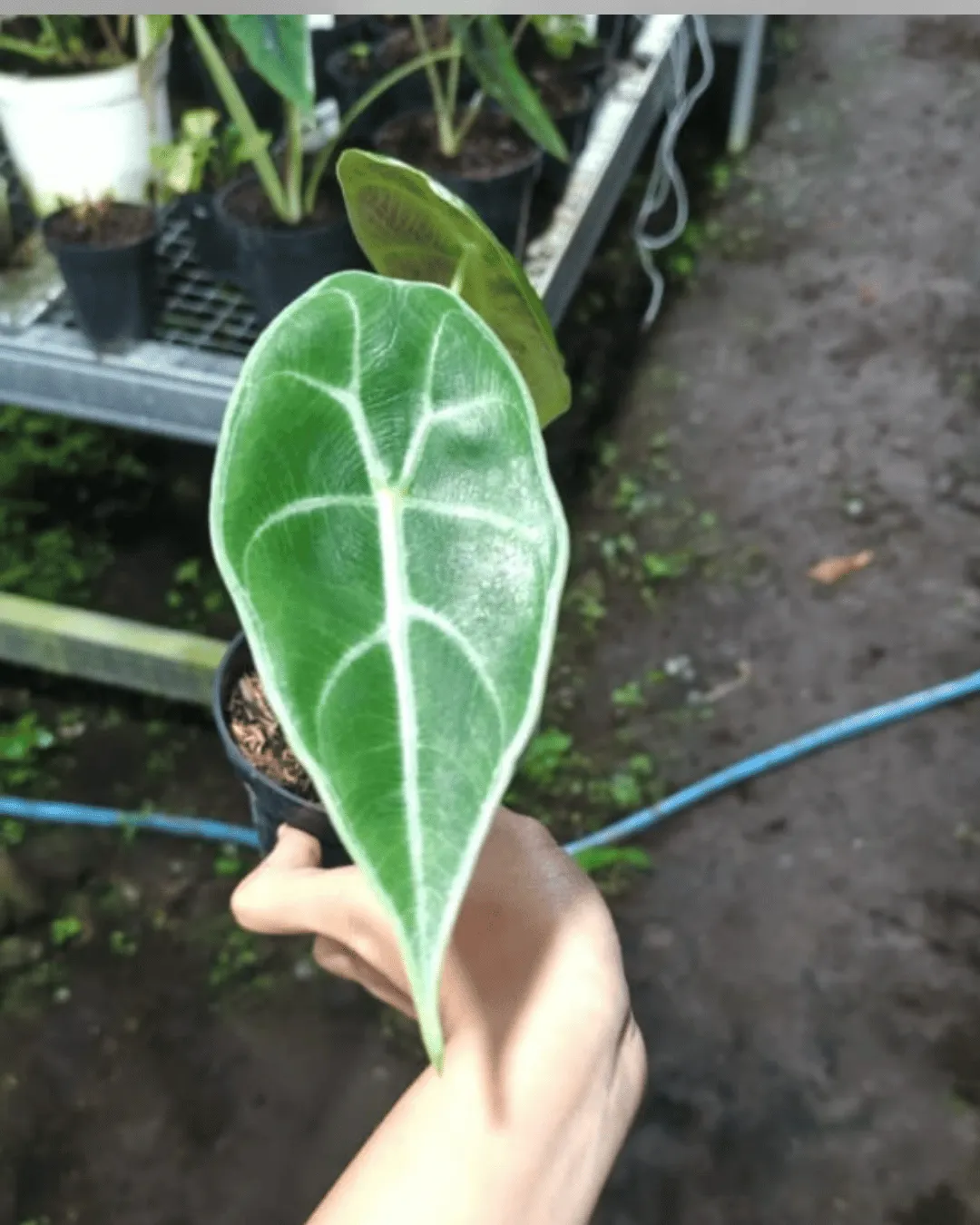
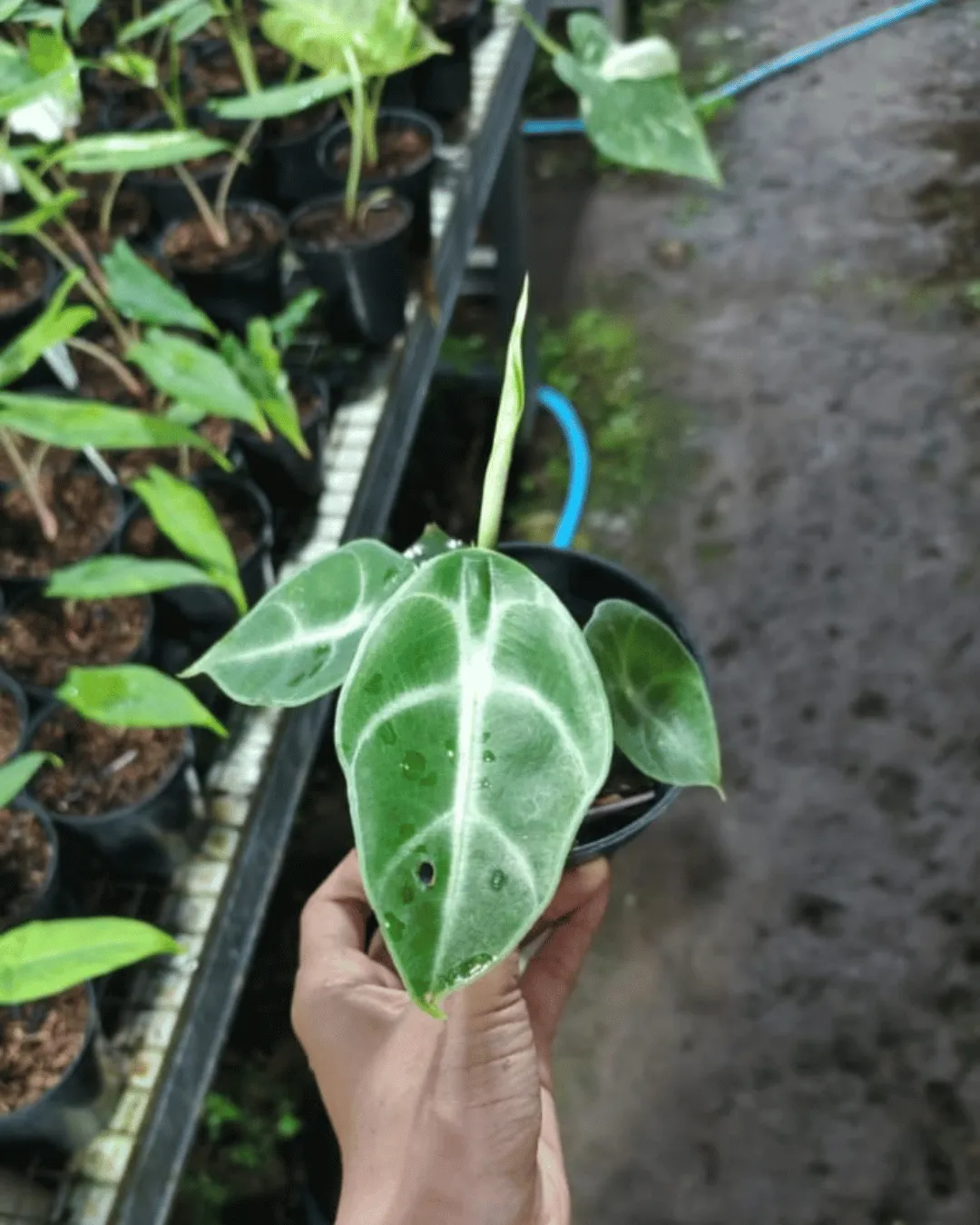
The leaves of Alocasia Prince of Curup are its most celebrated feature. They are thick, stiff, and distinctly leathery to the touch. The upper surface is deep green and carries a pronounced embossed pattern — meaning the veins rise above the leaf surface in a raised, sculptural way. This texture looks almost as if the veins were carved or pressed into metal.
The secondary venation — the network of smaller veins between the main veins — is uniquely textured. This gives the leaf an almost quilted appearance. Additionally, the leaf blade is arrow-shaped, with a strong midrib running from base to tip. Consequently, each mature leaf looks bold, architectural, and unmistakably regal.
The plant grows in a compact, upright habit. It typically reaches 60 to 90 centimetres in height under good cultivation conditions. Moreover, its compact size makes it ideal for tabletop displays, collector shelves, and indoor plant arrangements.
Flower and Fruit
No inflorescence — that is, no flowering structure — has yet been formally observed and documented in cultivation. An inflorescence in aroids usually consists of a spathe (a hood-like outer leaf) and a spadix (a central spike that carries the small flowers). Because no flowering has been confirmed, Alocasia Prince of Curup has not yet been formally described as a botanical species.
Furthermore, some researchers have noted similarities between this plant and Alocasia longiloba ‘Watsoniana.’ However, without confirmed flower data, no firm classification has been made. This botanical mystery only adds to its collector appeal. Additionally, it means seeds are extremely rare and valuable when they do become available.
Dormancy Cycle
Alocasia Prince of Curup does not enter a full dormancy period indoors. However, its growth naturally slows during cooler months or periods of lower light. During these rest periods, the plant conserves energy. Consequently, you may notice fewer new leaves emerging. This is completely normal behaviour.
Primarily, the plant grows from a corm — a swollen underground stem that stores nutrients and water. The corm allows the plant to survive brief dry periods. Moreover, it supports healthy regrowth after stress. Growing from seed produces a young plant with its own corm system from an early stage.
Global Seed Delivery & Phytosanitary Certification
Induare Agro ships rare exotic seeds to collectors in more than 50 countries worldwide. Every order is processed with full legal compliance and professional care. Furthermore, every shipment of Alocasia Prince of Curup seeds includes a Phytosanitary Certificate. This document is issued by Indonesia’s official agricultural authority. Consequently, your seeds can clear customs in virtually every major importing country.
Packaging and Shipping
Induare Agro packs every seed order using professional export-grade materials. Seeds are carefully cleaned, dried to safe moisture levels, and wrapped to prevent damage during transit. Additionally, humidity-control packaging is used where required. Each parcel is clearly labelled with the scientific name, quantity, and all required export documentation.
Shipping is via Global Express courier services. Most international orders arrive within 5 to 14 business days, depending on the destination country. Furthermore, tracking information is provided for every shipment. Induare Agro monitors each package until it reaches the buyer.
Buyer Peace of Mind
Every Alocasia Prince of Curup seed order from Induare Agro is backed by a Phytosanitary Certificate. This certificate confirms the seeds are free from pests and diseases. Consequently, import authorities in the USA, EU, Australia, and other markets recognise this document as proof of compliance. Additionally, buyers receive all necessary supporting paperwork for smooth customs clearance.
Induare Agro is committed to ethical, sustainable sourcing. Seeds are collected responsibly from cultivated plants, not from wild populations. Moreover, all export activities comply fully with Indonesian law and international plant trade regulations. This means you can buy with complete confidence.
How to Grow Alocasia Prince of Curup
Follow these steps for the best results with your seeds.
Step 1 – Prepare Your Growing Medium Use a well-draining aroid mix of coconut coir, orchid bark, and perlite in equal parts. This keeps moisture balanced while allowing air to reach the roots. Good airflow at the root zone is essential for healthy germination.
Step 2 – Sow the Seeds Press each seed gently into the surface of the moist growing medium. Do not bury the seeds deeply — a light covering of 3 to 5 millimetres is enough. Additionally, keep the medium evenly moist but never waterlogged.
Step 3 – Provide Warmth and Humidity Place your seed tray in a warm spot with temperatures between 22°C and 28°C (72°F–82°F). Cover the tray with a clear plastic lid or a plastic bag to hold humidity above 70%. Consequently, germination usually occurs within 2 to 6 weeks.
Step 4 – Light and Location Once seeds sprout, move them to a bright spot with indirect light. Avoid direct sunlight, which can scorch young seedlings. Furthermore, maintain high humidity throughout the early growth stage.
Step 5 – First Repotting When the seedling has two to three true leaves, transplant it into a small individual pot. Use the same aroid mix. Moreover, handle the tiny corm gently during this process. Water lightly after repotting and keep the plant warm.
Step 6 – Ongoing Care Water when the top 10–15% of the substrate feels dry. Feed every 4–6 weeks with a diluted balanced fertiliser during the active growing season. Additionally, avoid cold drafts and temperatures below 15°C (59°F).
