
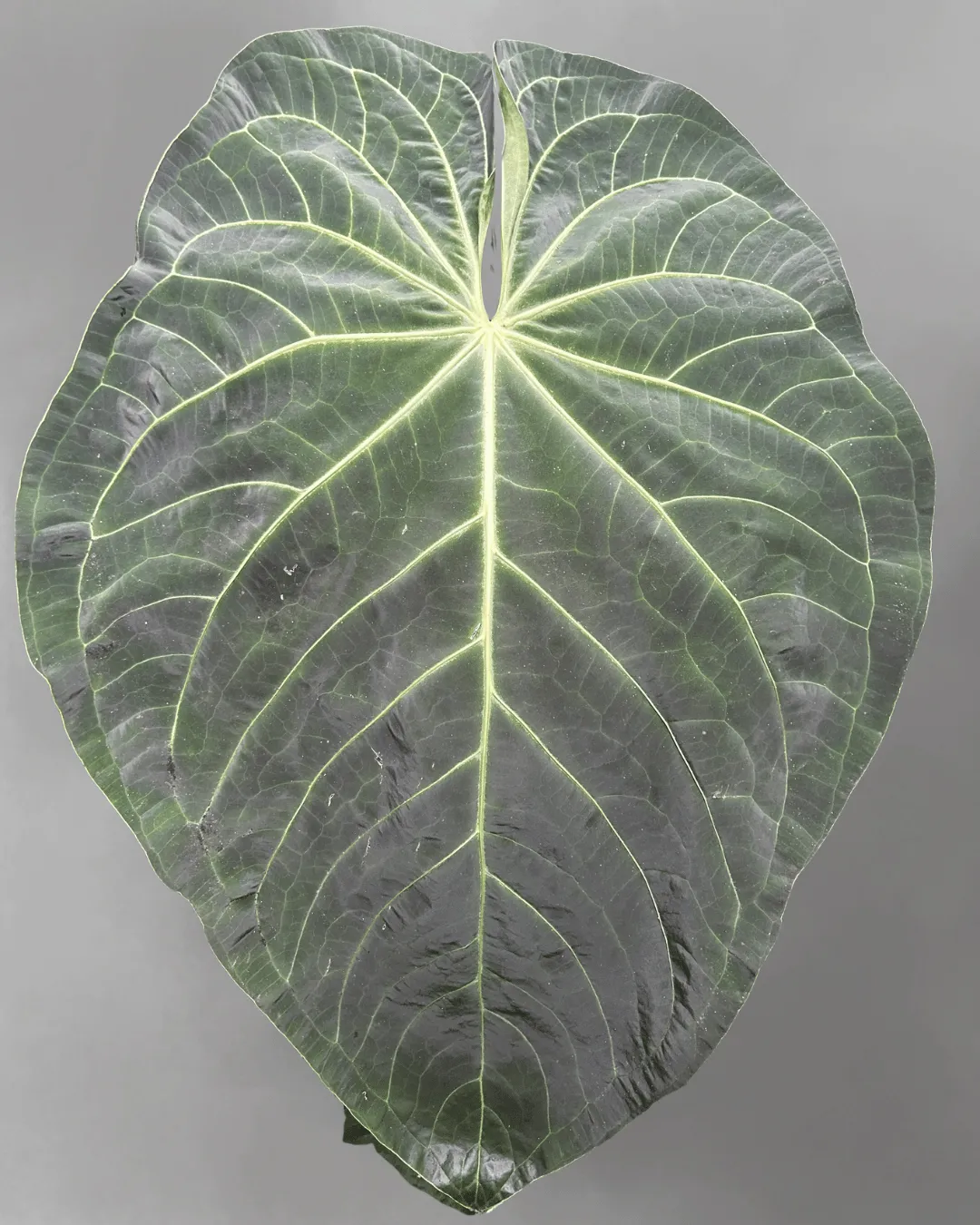
What Is Anthurium magnificum?
Anthurium magnificum is one of the most striking foliage plants in the entire aroid world. It is native to Colombia, South America. Specifically, it grows in the cloud forests of the Andes Mountains — at elevations between 800 and 2,125 metres above sea level. Furthermore, its natural range is limited to the Colombian regions of Risaralda and Cundinamarca. These are areas of consistently high humidity, filtered light, and moderate mountain temperatures.
The plant grows on the forest floor as a ground-dwelling species. It lives beneath a dense canopy of tall trees that block direct sun and keep the air moist. Consequently, this shaded, humid environment shapes every aspect of how the plant looks and what it needs to thrive. The species name magnificum means “magnificent” in Latin — and the plant fully earns that title.
Collectors worldwide regard A. magnificum as one of the finest velvet-leaf anthuriums available. Furthermore, it is genuinely rare. It is hard to find outside specialist nurseries. Seeds are especially difficult to source, as the plant requires hand pollination and takes months to produce viable berries. Induare Agro offers fresh, authenticated seeds directly from verified growers. Additionally, every order ships with a Phytosanitary Certificate. This makes Induare Agro one of the few reliable global sources for this elite collector species.
Aesthetic Features Anthurium magnificum
Anthurium magnificum is a plant of extraordinary visual impact. It is primarily a foliage plant. The leaves are its defining feature — and they are unlike almost anything else in the houseplant world. Furthermore, the overall look of a mature plant is bold, lush, and deeply tropical in character.
Leaf Size and Texture
The leaves of A. magnificum are very large. In natural habitat, they reach up to 90 cm in length. In indoor cultivation, they typically grow 40–60 cm long and 35–50 cm wide. Furthermore, the surface of each leaf is velvety — soft and matte to the touch, like fine velvet fabric. This texture comes from tiny raised structures on the leaf surface that catch and absorb light. Consequently, the leaves have a luxurious, almost three-dimensional quality that no photograph fully captures. The leaf shape is cordate — meaning wide and heart-shaped with a deep notch at the base.
Colour and Veins
Young leaves emerge in a striking deep burgundy-red colour. Additionally, they shift through orange and pale green as they expand. By the time a leaf reaches full size, it has matured to a rich, deep green. Furthermore, every leaf is marked by a dramatic network of silvery-white veins. These veins run from the centre out to the edges in a bold, symmetrical pattern. Consequently, the contrast between the dark green leaf and bright silver veins makes this one of the most visually impressive aroids in cultivation. In certain light conditions, the veins appear to almost glow.
Petioles and Flower
One key feature sets A. magnificum apart from similar species like Anthurium crystallinum. Its leaf stalks — called petioles — are four-sided rather than round. Primarily, this square cross-section is the most reliable way to identify the true species. The petioles grow 30–50 cm tall, holding the broad leaves in an upright, proud display.
The flower is small and modest. It consists of a pale green spathe — a flat, leaf-like bract — and a short, narrow spadix — a thin central spike that holds the actual tiny flowers. Furthermore, the plant produces both male and female flowers on the same spike. After successful pollination, the spadix develops small, fleshy berries — each containing one seed. Consequently, seed production is slow, seasonal, and requires careful hand pollination. This is a key reason why authentic A. magnificum seeds are so rare and valuable on the global market.
Global Seed Delivery & Phytosanitary Certification
Induare Agro is a professional botanical seed exporter based in Indonesia. The company works directly with verified growers and specialist plant sources across the tropics. Furthermore, Induare Agro ships rare seeds legally and safely to collectors, botanical institutions, and plant enthusiasts in more than 50 countries. Every single order follows a strict, fully documented export process from start to finish.
Packaging and Shipping
Induare Agro packs every seed with professional care. Each seed is individually wrapped in moisture-control material. Cushioned express packaging protects the seeds throughout the full transit journey. Shipments go via Global Express couriers such as DHL and EMS. Additionally, most international orders arrive within 5–14 business days. Furthermore, every parcel includes an official Phytosanitary Certificate. Indonesia’s Plant Health Authority issues this document. It confirms the seeds are free from pests, disease, and regulated plant pathogens. Consequently, it meets the import requirements of customs offices in the EU, USA, UK, Australia, Japan, and most other countries.
Buyer Peace of Mind
Induare Agro puts legal compliance and buyer confidence first. Every order ships with the Phytosanitary Certificate and a full commercial invoice. Furthermore, this complete documentation package ensures smooth, fast customs clearance at every destination. Additionally, the Induare Agro team provides after-sales growing support. Primarily, the aim is to help every collector successfully germinate and grow their Anthurium magnificum — from the very first seed to a full, leafing plant.
How to Grow Anthurium magnificum
Growing Anthurium magnificum from seed takes patience, but the results are deeply rewarding. Furthermore, growers in tropical, subtropical, and indoor environments can all succeed by following these steps carefully. The key is warmth, humidity, and a fast-draining growing mix.
Step 1 — Seed Preparation Rinse the fresh seed gently in clean water. Additionally, plant it as soon as possible after receiving it — Anthurium seeds lose viability quickly if they dry out.
Step 2 — Growing Medium Prepare a light, chunky mix: 40% coco peat, 30% orchid bark, and 30% perlite. Consequently, this mix drains fast, holds some moisture, and gives young roots plenty of air — exactly what this species needs.
Step 3 — Sowing Place the seed on top of the growing medium or just below the surface — no deeper than 0.5–1 cm. Furthermore, press it gently into contact with the mix. Keep the medium consistently moist but never wet.
Step 4 — Temperature Maintain a steady temperature of 22–27°C at all times. Primarily, stable warmth is critical for successful germination. A heated propagation mat helps maintain this in cooler climates.
Step 5 — Humidity Keep humidity at 70–80% during the germination stage. Furthermore, a clear humidity dome or enclosed propagation tray creates the perfect micro-environment for the seed to sprout.
Step 6 — Light Place the propagation tray in bright, indirect light. Additionally, never expose the young seedling to direct sun. Direct sunlight will scorch the tender new leaves and set back growth significantly.
Step 7 — Watering Once the seedling appears, water when the top 2–3 cm of the mix feels dry. Consequently, this prevents root rot — the most common cause of failure with this species. Always use tepid, chlorine-free water.
Step 8 — Repotting and Long-Term Care Move the seedling to a slightly larger pot once roots appear at the drainage holes. Additionally, apply a balanced liquid fertiliser (NPK 10-10-10) every 4–6 weeks during the growing season. Furthermore, a moss pole or support structure will help the plant display its large leaves at their full and impressive best.
© Induare Agro — Indonesia’s professional rare seed exporter.
