
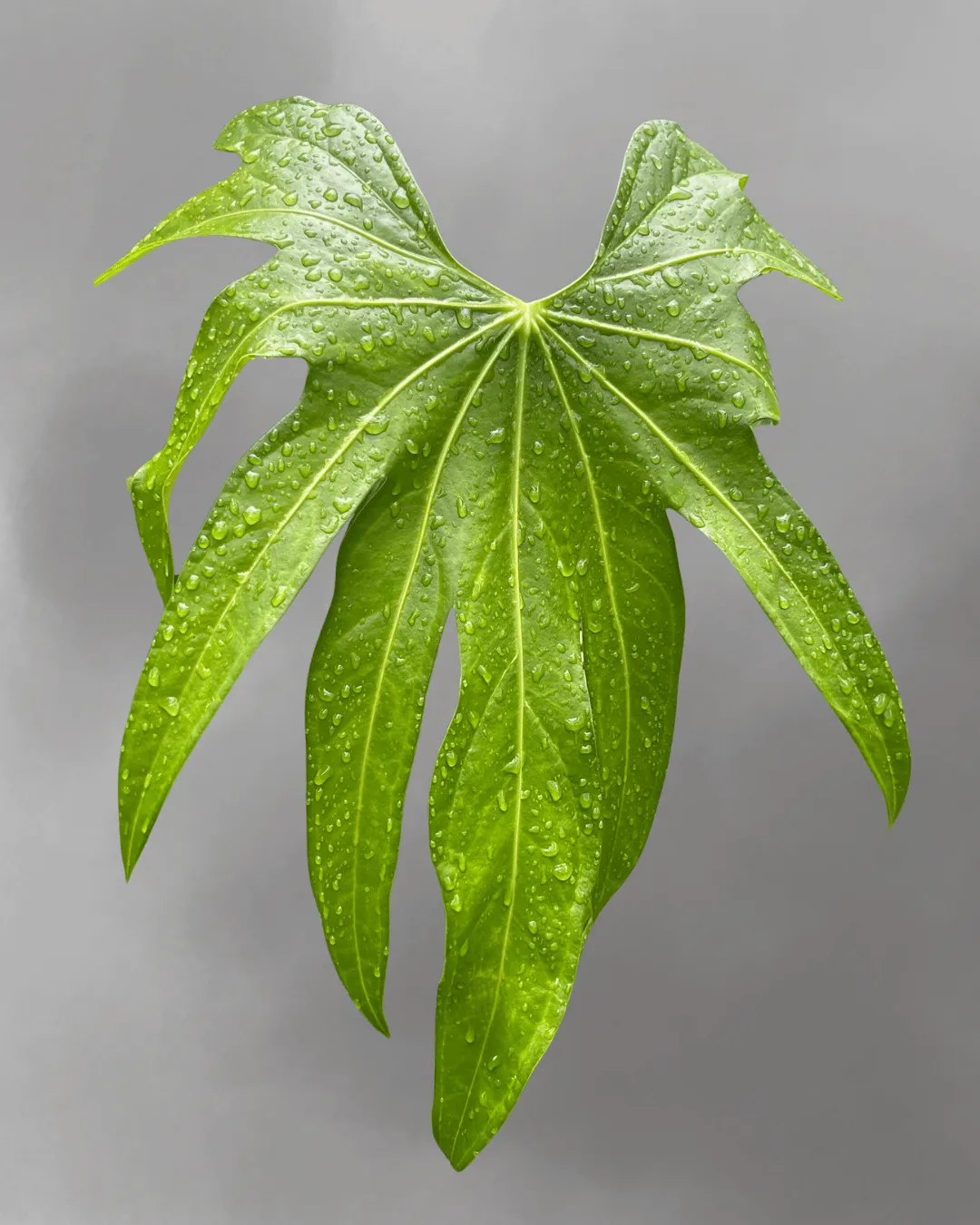
What Is Anthurium pedatoradiatum?
Anthurium pedatoradiatum is a rare and striking tropical plant native to southern Mexico. It grows naturally in the Mexican states of Veracruz, Tabasco, and Chiapas. Furthermore, it thrives at elevations from sea level up to 1,000 metres in humid, tropical rainforest zones. The plant grows on the forest floor — rooted in well-drained soil over porous limestone. Additionally, it sometimes grows on rocks or at the base of trees, where its roots get good airflow and rainwater drains freely.
The species was first formally described by botanist Heinrich Wilhelm Schott in 1859. Its scientific name tells a clear story. “Pedatoradiatum” combines the Latin words for “foot-like” and “radiating.” Consequently, the name refers directly to the plant’s most striking feature — its leaves, which fan out like fingers from a central point. This is why collectors and growers worldwide call it the Fingers Anthurium or the Finger Leaf Anthurium.
Furthermore, the plant has grown rapidly in popularity among rare plant collectors in recent years. It offers a unique leaf shape not found in most other common houseplants. Induare Agro now offers fresh, organic seeds of this rare species. Additionally, every seed ships with a full Phytosanitary Certificate. This makes Induare Agro one of the few verified global sources for this extraordinary Mexican aroid.
Aesthetic Features Anthurium pedatoradiatum
Anthurium pedatoradiatum is a bold, sculptural plant with one of the most distinctive leaf shapes in the entire Araceae family. It grows as a compact, upright plant. Indoors, it typically reaches 60–90 cm in height. Furthermore, the leaves alone can span 38–60 cm across at maturity. The overall effect is dramatic — like a large green hand reaching outward from the pot.
Leaf Shape and Texture
The leaf is the defining feature of this plant. Each leaf is deeply divided into 9 to 13 finger-like sections — called lobes — that radiate outward from a central point. Furthermore, the divisions go almost all the way to the base of the leaf. This gives the plant its distinctive “open hand” silhouette. The upper surface of each leaf is semi-glossy and rich dark green. Additionally, the underside is matte and slightly paler. The lobes are smooth and firm. Consequently, the leaves feel sturdy and healthy even at full size.
Leaf Stalk and Growth Pattern
The leaf stalks — called petioles — are long and upright. They grow between 35 and 87 cm in length. Furthermore, they are round in cross-section and medium green in colour. The plant produces one new leaf at a time. Additionally, each new leaf unfurls slowly from a central growing point, revealing its full finger-like shape over several days. Primarily, this slow unfurling process is one of the most rewarding moments for any collector watching the plant develop.
Flowers and Fruit
Anthurium pedatoradiatum produces a classic aroid inflorescence — a flower structure common in the Araceae family. It consists of a spadix — a small, upright spike — surrounded by a spathe — a leaf-like bract that wraps around the base. Furthermore, the spathe is green in colour. The spadix ranges from greenish to deep purple-violet. The inflorescence grows on a stalk 5–23 cm long. Consequently, the flowers are subtle and understated compared to the dramatic foliage. After pollination, small berries develop on the spadix. Each berry contains a seed.
Global Seed Delivery & Phytosanitary Certification
Induare Agro is a professional botanical seed exporter based in Indonesia. The company connects rare tropical plant species with collectors and institutions worldwide. Furthermore, Induare Agro ships to buyers in more than 50 countries. Every single order follows a strict, fully documented legal export process from start to finish.
Packaging and Shipping
Induare Agro carefully wraps every seed in moisture-control material before packing. Cushioned express packaging protects the contents throughout the full transit journey. Shipments go via Global Express couriers such as DHL and EMS. Additionally, most international orders arrive within 5–14 business days. Furthermore, every parcel includes an official Phytosanitary Certificate. Indonesia’s Plant Health Authority issues this document. It confirms that the seeds are free from pests, disease, and regulated pathogens. Consequently, this certificate meets import standards in the EU, USA, UK, Australia, Japan, and most other countries worldwide.
Buyer Peace of Mind
Induare Agro puts full compliance first. Every order ships with the Phytosanitary Certificate and a commercial invoice. Furthermore, this ensures smooth, fast customs clearance at every destination. Additionally, the Induare Agro team provides after-sales growing support to every buyer. Primarily, the goal is clear — help every collector successfully grow their Anthurium pedatoradiatum from seed to a thriving, finger-leaved specimen.
How to Grow Anthurium pedatoradiatum
Anthurium pedatoradiatum is one of the more rewarding aroids to grow from seed. Furthermore, it adapts well to indoor conditions in tropical, subtropical, and temperate environments. Follow these steps closely for the best results.
Step 1 — Seed Preparation Rinse the seed gently in clean lukewarm water before planting. Additionally, soak it in warm water (25–28°C) for 12–24 hours. This softens the outer coat and improves germination speed significantly.
Step 2 — Growing Medium Use a light, chunky, and well-aerated mix: 40% orchid bark, 30% perlite, and 30% coco peat. Consequently, this open mix replicates the well-drained, airy soil conditions of the plant’s natural rocky habitat.
Step 3 — Sowing Plant the seed just below the surface — about 1 cm deep. Furthermore, place it in a small pot with good drainage holes. Keep the medium lightly and evenly moist throughout the germination period.
Step 4 — Temperature and Humidity Maintain a temperature of 22–28°C and humidity of 60–80% at all times. Primarily, consistent warmth and humidity are the two most critical factors for successful germination of this species.
Step 5 — Light Place the pot in bright, indirect light. Additionally, avoid all direct midday sun during the seedling stage. A. pedatoradiatum grows naturally under forest canopy, so filtered light best matches its needs.
Step 6 — Watering Keep the medium moist but never wet. Allow the top 2–3 cm to dry slightly between waterings. Furthermore, never let the pot sit in standing water. Root rot is the most common cause of failure with this species.
Step 7 — Transplanting Move the seedling to a larger pot once it produces its second or third leaf. Consequently, more root space leads to faster, healthier leaf production. Always use a chunky, free-draining mix when repotting.
Step 8 — Fertilising Apply a diluted, balanced liquid fertiliser (NPK 10-10-10 or similar) every 4 weeks during the active growing season. Additionally, a fertiliser with added calcium and magnesium supports strong, wide leaf development in mature plants.
© Induare Agro — Indonesia’s professional rare seed exporter.
